 Save to Pins
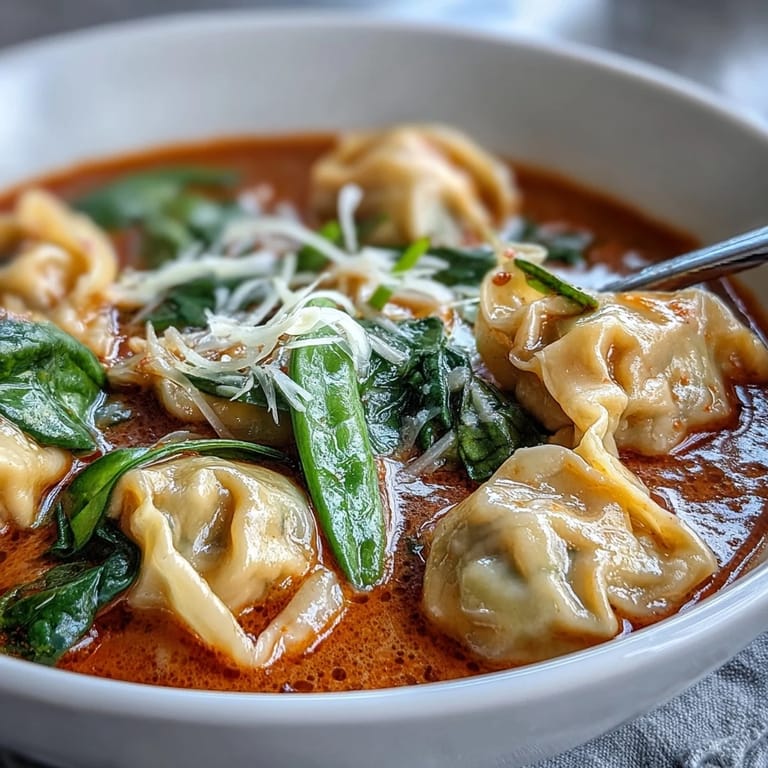
 My freezer has held onto a bag of wontons for longer than I'd like to admit, waiting for the right moment. One rainy Tuesday, I finally cracked it open, and within minutes, my kitchen filled with the warm spice of red curry paste hitting hot oil. That single aroma triggered a craving I didn't know I had—something bright, creamy, and alive with fresh greens. This soup came together so naturally that night, and now it's become my go-to when I need comfort without the fuss.
I made this for my partner on a night when neither of us felt like cooking but both of us desperately wanted something warm and interesting. Watching them taste it for the first time and pause mid-spoonful—that little moment where they registered the cilantro, the lime, the tender greens—reminded me why simple, fast meals are sometimes the most satisfying. They asked for seconds, and I realized I'd found something that bridges the gap between lazy and impressive.
Ingredients
- Vegetable oil: Use a neutral oil that won't smoke or compete with the curry; coconut oil works beautifully too if you want to lean into that flavor profile.
- Red curry paste: This is your backbone, so don't skip it or dilute it—bloom it in oil first to unlock all its aromatic depth.
- Low-sodium chicken or vegetable broth: The saltiness matters here since you're building on top of it; taste as you go rather than oversalting upfront.
- Coconut milk: Full-fat versions create a richer, more luxurious soup, but light coconut milk works if you prefer something less heavy.
- Soy sauce: It adds umami and saltiness, so adjust gradually; some brands are saltier than others.
- Sugar: Just a touch to balance the spice and acidity without making anything sweet.
- Fresh ginger and garlic: These two wake up the broth immediately and shouldn't be skipped or replaced with powder.
- Frozen wontons: Chicken or vegetarian—no need to thaw, they go straight in and cook through in minutes.
- Baby spinach or bok choy: Spinach wilts faster and softens into the broth; bok choy holds more structure if you prefer that texture.
- Snow peas: They stay crisp and add a bright pop of crunch against the tender wontons.
- Green onions: Split them between cooking and garnish so you get both cooked sweetness and fresh bite.
- Fresh cilantro and lime juice: These final touches are non-negotiable; they brighten everything and prevent the soup from feeling flat.
Tired of Takeout? 🥡
Get 10 meals you can make faster than delivery arrives. Seriously.
One email. No spam. Unsubscribe anytime.
Instructions
- Get your aromatics ready:
- Heat oil in a large pot over medium heat, then add red curry paste. Let it sizzle and darken slightly for about a minute—your kitchen will smell incredible, and you'll know it's releasing all its spice compounds. Stir in the minced ginger and garlic right after and cook for just 30 seconds so they don't burn but become fragrant.
- Build your broth base:
- Pour in the broth, coconut milk, soy sauce, and sugar all at once, stirring well to combine the curry paste into the liquid. Bring everything to a gentle boil over medium-high heat; you want it to move but not aggressively bubble.
- Cook the wontons through:
- Drop the frozen wontons directly into the boiling broth and let them simmer for 5 to 6 minutes until they're cooked through and floating on top. They'll puff up slightly and lose their icy exterior, becoming tender and delicate.
- Add the greens and vegetables:
- Toss in your chopped spinach or bok choy, snow peas, julienned carrot, and half the green onions, then simmer for just 2 more minutes. You're looking for the greens to wilt and the vegetables to soften slightly while maintaining their brightness.
- Finish with acid and seasoning:
- Stir in the lime juice and taste carefully, adjusting with more soy sauce or lime if needed. This final acid is what transforms the soup from good to memorable.
- Serve and garnish:
- Ladle into bowls and top with fresh cilantro, the remaining green onions, and chili slices if you like heat. Serve immediately while everything is still hot and the greens haven't lost their color.
 Save to Pins
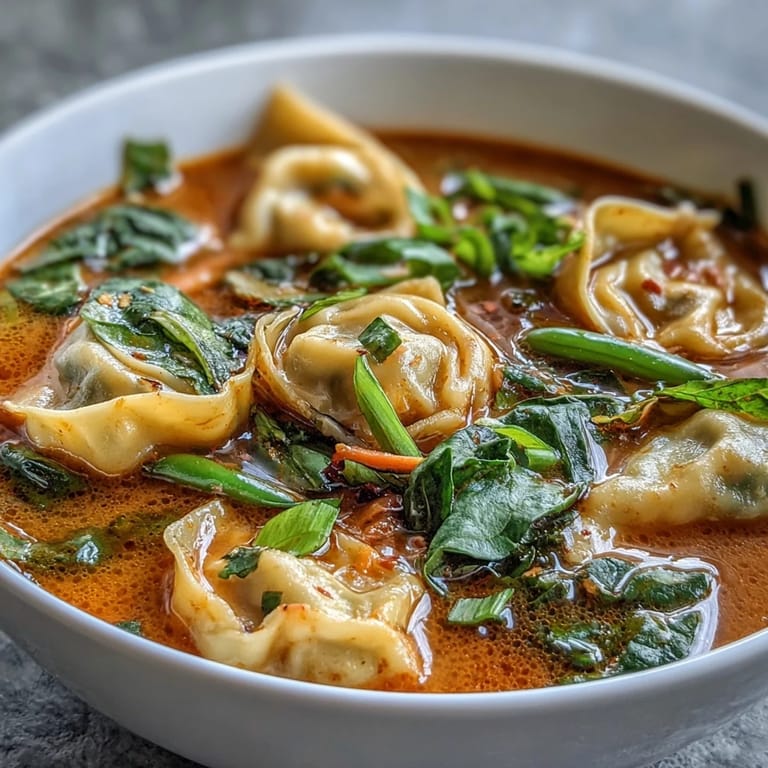
 There's something almost meditative about watching a humble frozen wonton transform into something elegant the moment it hits spiced broth. My kitchen has become warmer because of this soup, and the people I've served it to seem genuinely surprised by how much flavor comes from such a straightforward approach. It's the kind of dish that makes you feel like you've cooked your way into something meaningful, even when you barely looked at the clock.
Building Your Own Flavor
The beauty of this recipe is how forgiving it is with adjustments. I've learned through trial that you can dial the spice up or down depending on your mood or who's at the table—start with the listed curry paste and add more if you want serious heat, or reduce it slightly if you're cooking for sensitive palates. The coconut milk softens everything, so even when the broth is spicy, it never feels aggressive. Think of the curry as a suggestion, not a command.
Vegetables Beyond the Basics
While baby spinach and snow peas are my default, I've experimented with additions that surprised me. Mushrooms—particularly oyster or shiitake—add an earthy umami that plays beautifully against the bright spice. Bean sprouts bring a textural contrast if you add them at the very end so they stay crisp. Even thinly sliced cabbage or a handful of water chestnuts work if you're looking to stretch the recipe or use what's in your crisper.
Quick Variations and Pairing Ideas
One night I added a tablespoon of fish sauce and suddenly everything tasted more authentic and complex, though it's entirely optional. Another time, I stirred in a splash of rice vinegar instead of all lime juice and discovered a slightly different brightness. This soup pairs remarkably well with crispy rice, crusty bread for soaking up broth, or served alongside jasmine rice for a lighter meal.
- For a protein boost, add cooked shrimp or sliced chicken breast in the last minute of cooking.
- Keep extra lime and cilantro on the table so people can adjust their own bowls to taste.
- Leftover broth freezes beautifully on its own, so you can make just the wontons and vegetables fresh another time.
 Save to Pins
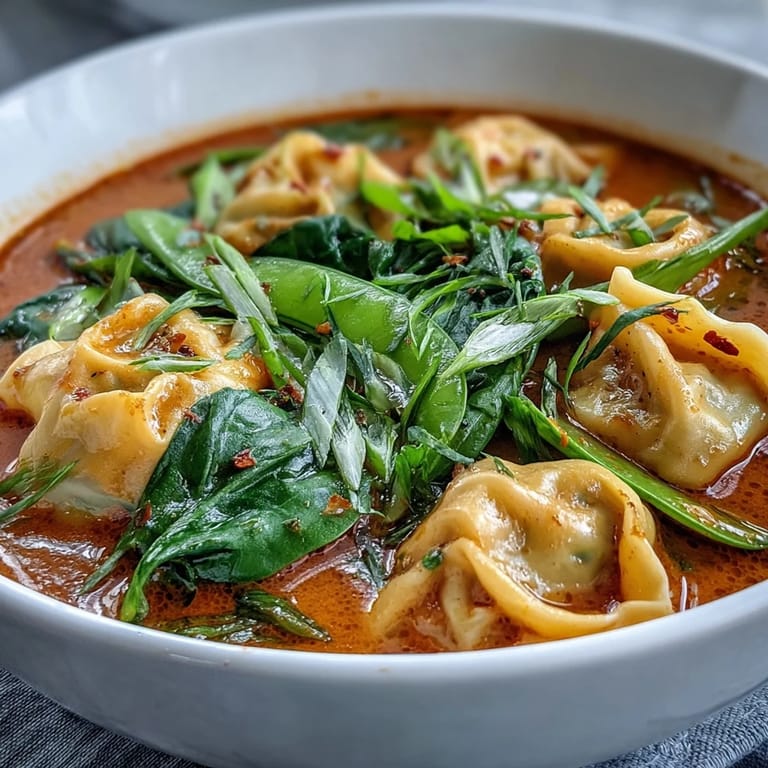
 This soup has become my answer to the question 'what's for dinner when there's no time or energy but still a need for something that tastes like care.' It's proof that good cooking isn't always about complexity—sometimes it's just about knowing which simple things to combine and when to stop fussing.
Questions & Answers
- → Can I make this soup vegetarian?
Yes, simply use vegetable broth instead of chicken broth and select vegetarian wontons. The flavor remains just as rich and satisfying.
- → How spicy is this soup?
The heat level depends on your red curry paste. Start with 2 tablespoons and adjust to your preference. You can always add more paste or fresh chili slices for extra kick.
- → Can I use fresh wontons instead of frozen?
Absolutely. Fresh wontons will cook faster, typically 3-4 minutes. Watch closely to avoid overcooking and maintain their delicate texture.
- → What other vegetables work well in this soup?
Mushrooms, bean sprouts, sliced bell peppers, or baby corn make excellent additions. Add heartier vegetables earlier so they have time to tenderize.
- → How long will leftovers keep?
Store in an airtight container for up to 3 days. The wontons may soften slightly, but the flavors will continue to develop. Reheat gently over medium-low heat.
- → Can I freeze this soup?
It's best to freeze the broth separately from the wontons, as freezing can affect their texture. Freeze the aromatic broth for up to 3 months and add fresh wontons when reheating.