 Save to Pins
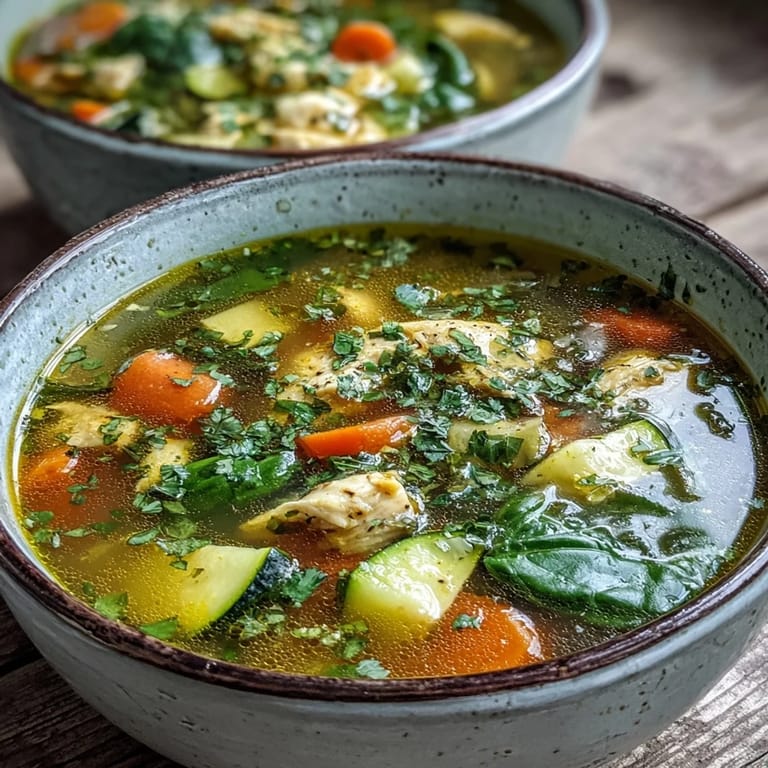
 There's something almost magical about the moment turmeric hits hot oil, the way that golden spice unfurls and fills your kitchen with a warmth that feels both ancient and immediate. I discovered this soup during a gray November afternoon when I was trying to shake off a lingering cold, and instead of reaching for the usual remedies, I found myself building this broth from instinct more than anything else. The chicken softened into the spiced broth, the spinach wilted into those final moments, and by the time I tasted that first spoonful with its bright lemon finish, I understood why people have been making versions of this for centuries.
I made this for my neighbor who'd just had surgery, and watching her face light up as she tasted it told me everything I needed to know about comfort food. She asked for the recipe before she'd even finished the bowl, which almost never happens. That's when I realized this soup has a way of making people feel cared for without any pretense.
Ingredients
- Chicken breasts: Boneless and skinless means they cook quickly and meld seamlessly into the broth without any fussing around with bones or skin.
- Yellow onion: The sweetness builds the foundation that everything else rests on, so don't skip the caramelizing step.
- Carrots and celery: These are your aromatic backbone, the reason the broth tastes clean and developed rather than flat.
- Fresh ginger and garlic: The minced forms work best here because they dissolve into the broth completely, releasing their warmth without any harsh edges.
- Zucchini: Stays delicate and adds substance without overpowering the turmeric's subtle earthiness.
- Baby spinach: Wilts in seconds at the end, adding iron and a brightness that balances the spices perfectly.
- Ground turmeric: This is your star player, so use fresh turmeric if you can find it, though ground works beautifully when you're short on time.
- Cumin and black pepper: They whisper underneath the turmeric rather than shouting, deepening the flavor without making it spicy.
- Chili flakes: Optional because some people need the heat and others find comfort in gentleness, so let the person eating decide.
- Low-sodium chicken broth: Use the best quality you can find, because the broth is essentially your entire soup.
- Olive oil: Good oil matters for that initial sauté where you're coaxing flavor from the vegetables.
- Lemon juice: The final flourish that wakes everything up and keeps the soup from tasting one-dimensional.
- Fresh cilantro or parsley: Either works, though cilantro adds a slightly peppery brightness while parsley keeps things more neutral and subtle.
Tired of Takeout? 🥡
Get 10 meals you can make faster than delivery arrives. Seriously.
One email. No spam. Unsubscribe anytime.
Instructions
- Start with the soffritto:
- Heat your oil over medium heat and let the onion, carrot, and celery get tender and slightly golden, which takes about four or five minutes. You're building the foundation here, so listen for that gentle sizzle and notice when the vegetables start to smell sweet rather than raw.
- Bloom the spices:
- Once your vegetables are soft, add the garlic, ginger, turmeric, cumin, and pepper, then stir constantly for about a minute. That brief cooking transforms the spices from dusty powder into something aromatic and alive, releasing all those warm compounds.
- Add the chicken:
- Drop in your diced chicken and let it cook for a couple of minutes until the outside turns opaque and pale. You're not cooking it through yet, just sealing the outside so it stays tender in the broth.
- Build the broth:
- Pour in your chicken broth and let it come to a gentle boil, then lower the heat and cover the pot. Simmer for about fifteen minutes while the chicken finishes cooking and everything starts getting to know each other.
- Add the vegetables in stages:
- Toss in the zucchini and let it cook for five minutes until it's just tender, then add your spinach and lemon juice right at the end. This staged approach means nothing overcooks and everything tastes bright rather than mushy.
- Season and serve:
- Taste and adjust your salt, add chili flakes if you want heat, then ladle into bowls and top with fresh herbs. The cilantro or parsley adds color and a final layer of freshness that makes everything feel intentional.
 Save to Pins
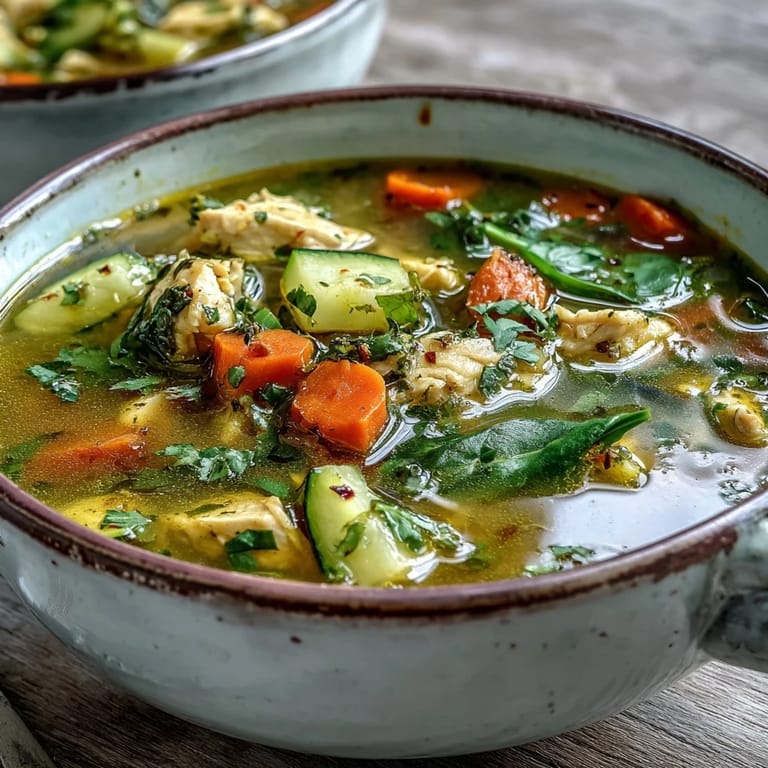
 There's a quiet moment when the spinach wilts into that golden broth, when you know you're about to eat something that will make your body feel good, and that's the moment this soup became more than just dinner to me. It became a ritual, something I reach for whenever I need to remember that taking care of yourself can taste wonderful.
When to Make This Soup
This is the soup for transition seasons when you're not quite sure what your body needs, or for those moments when someone around you isn't feeling their best. It works as a weeknight dinner because the active cooking time is minimal, and it tastes even better the next day after everything has settled and married together overnight.
Making It Your Own
I've added sweet potatoes instead of zucchini on days when I wanted something more substantial, and I've made it entirely vegetarian by swapping the chicken for white beans and using vegetable broth instead. The turmeric and ginger are flexible enough to carry the flavor regardless of what vegetables you add, so treat this as a template rather than a rigid formula.
Storage and Make-Ahead Magic
This soup keeps beautifully for four or five days in the refrigerator, and it actually tastes better after sitting overnight because the flavors have had time to settle and deepen. You can freeze it in portions too, though I'd suggest adding the spinach fresh when you reheat it so it doesn't turn to mush.
- Make a big batch on Sunday and you'll have lunch handled for most of the week.
- The turmeric's anti-inflammatory properties actually increase as the broth sits, so older soup is genuinely better for you.
- Reheat gently on the stovetop rather than blasting it in the microwave, which keeps the flavors from flattening.
 Save to Pins
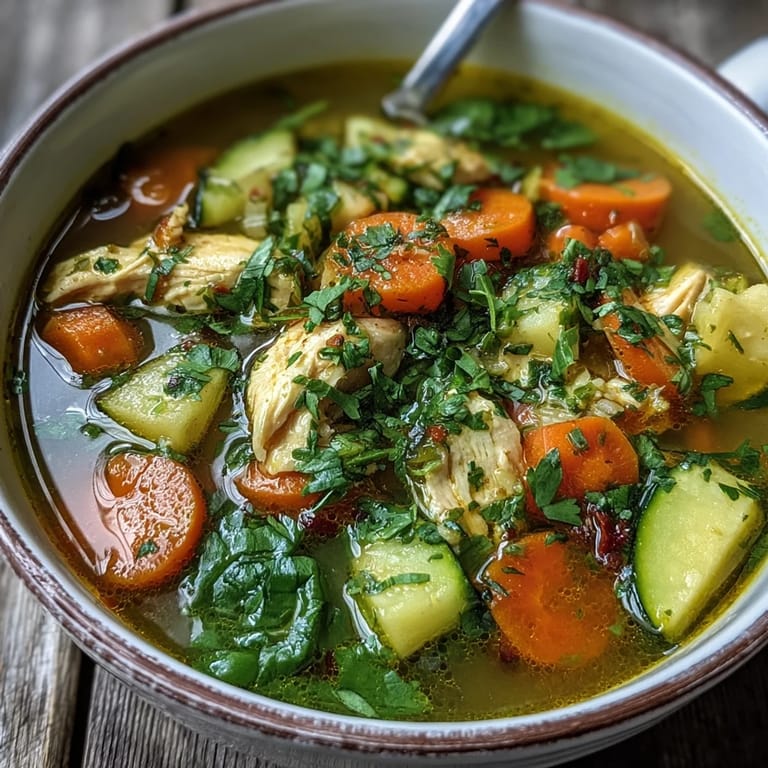
 This soup taught me that simplicity done well beats complexity every time, and that the best recipes are the ones you want to make again and again. Make it tonight and you'll understand why.
Questions & Answers
- → What makes this soup anti-inflammatory?
The combination of turmeric with black pepper enhances curcumin absorption, providing powerful anti-inflammatory compounds. Fresh ginger adds additional anti-inflammatory properties while creating a warming, soothing effect.
- → Can I make this soup vegetarian?
Absolutely. Substitute diced chicken with canned chickpeas (rinsed and drained) and swap chicken broth for vegetable broth. The turmeric and spice blend remains just as flavorful and nourishing.
- → How long does this soup keep?
Store cooled soup in an airtight container in the refrigerator for 4-5 days. The flavors actually deepen and improve after a day. Freeze for up to 3 months, though the vegetables may soften slightly upon reheating.
- → What can I serve with turmeric chicken soup?
Crusty bread, naan, or rice makes excellent sides. For a lighter meal, pair with a simple green salad dressed with lemon vinaigrette. The soup is substantial enough to stand alone as a complete meal.
- → Can I add other vegetables?
Yes. Sweet potatoes, butternut squash, or kale work beautifully. Add root vegetables earlier with the carrots, and leafy greens like kale can replace spinach in the final minutes of cooking.