 Save to Pins
 The smoky char of eggplant filled the kitchen one Saturday morning when I decided to build a brunch board instead of making the usual eggs and toast. My friend had texted asking if she could bring someone new, and suddenly I needed a spread that felt generous without the stress of timing hot dishes. I pulled out tahini, yogurt, and every colorful vegetable I could find, remembering that the best gatherings always happen around food you can share with your hands. By the time they arrived, the counter looked like a market stall, and I realized I'd never gone back to regular brunch.
I started making this board after a trip to a tiny café in Athens where breakfast was just a wooden platter of dips, olives, and bread torn by hand. The owner shrugged when I asked for a menu, pointing instead to the table already covered in small bowls. Back home, I recreated that same casual abundance, and it became my answer to every last minute invitation. There's something about arranging food this way that turns a meal into a conversation, where people linger and reach across the table without formality.
 Save to Pins
 Tired of Takeout? 🥡
Get 10 meals you can make faster than delivery arrives. Seriously.
One email. No spam. Unsubscribe anytime.
One morning my neighbor knocked just as I was spooning hummus into bowls, and I invited her to stay without thinking twice. She sat at the counter, tearing pita and dipping it into every sauce, telling me stories about her grandmother's kitchen in Lebanon. We finished the entire board between us, and she left with the baba ganoush recipe scribbled on a napkin. That's when I understood this wasn't just food, it was an invitation to slow down and sit together.
Ingredients
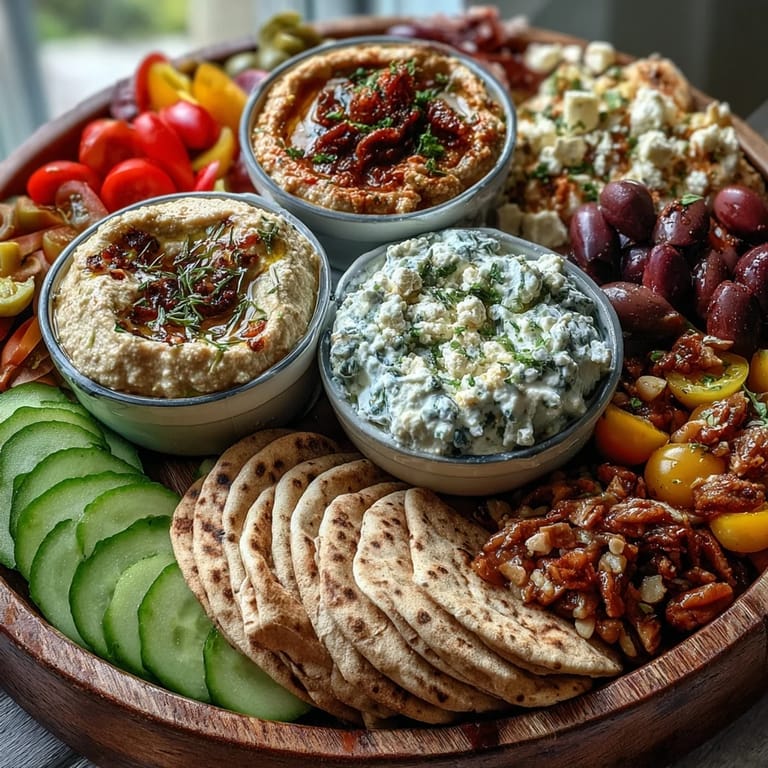
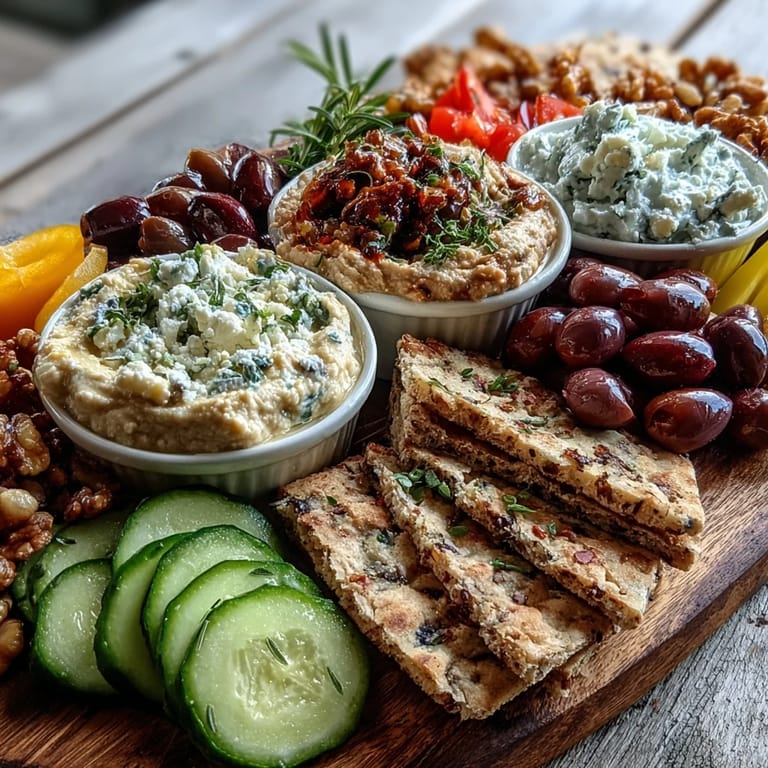
- Hummus: The creamy base of the board, and making it fresh means you control the garlic and lemon to suit your taste.
- Tzatziki sauce: Cool and tangy, it balances the richness of the other dips and clings perfectly to warm bread.
- Baba ganoush: Smoky and silky, roasting the eggplant whole over flame or in the oven gives it that unmistakable depth.
- Roasted red pepper dip: Sweet and slightly charred, it adds a pop of color and a different kind of sweetness to the spread.
- Cucumber: Crisp and refreshing, it cuts through the creamy dips and adds a light crunch.
- Cherry tomatoes: Juicy and bright, halving them makes them easier to scoop and their acidity wakes up every bite.
- Bell pepper: Sweet and sturdy, the strips hold up well to thicker dips without breaking.
- Assorted olives: Briny and bold, they bring a salty punch that makes you reach for more bread.
- Feta cheese: Crumbly and tangy, it adds a creamy salted contrast that pairs beautifully with the vegetables.
- Mixed nuts: Toasted or raw, they provide crunch and richness that balances the softer textures on the board.
- Pita breads and flatbreads: The vehicle for everything, and warming them slightly makes them soft and easier to tear.
- Olive oil: A generous drizzle at the end ties all the flavors together and makes the board glisten.
- Fresh herbs: Oregano, parsley, or dill scattered on top add fragrance and a final touch of brightness.
Instructions
- Prepare the hummus:
- Blend the chickpeas, tahini, lemon juice, garlic, and salt in a food processor until smooth, scraping down the sides as needed. Add water a tablespoon at a time until it reaches a creamy, spreadable consistency.
- Prepare the tzatziki:
- Mix the Greek yogurt, grated and drained cucumber, minced garlic, olive oil, fresh dill, and salt in a bowl until well combined. Refrigerate for at least one hour so the flavors meld and the sauce thickens.
- Prepare the baba ganoush:
- Roast the eggplant at 400°F (200°C) for 30 to 35 minutes until the skin is charred and the flesh is completely soft. Scoop out the flesh, discarding the skin, and blend with tahini, olive oil, lemon juice, and salt until creamy and smooth.
- Spoon all dips into separate bowls:
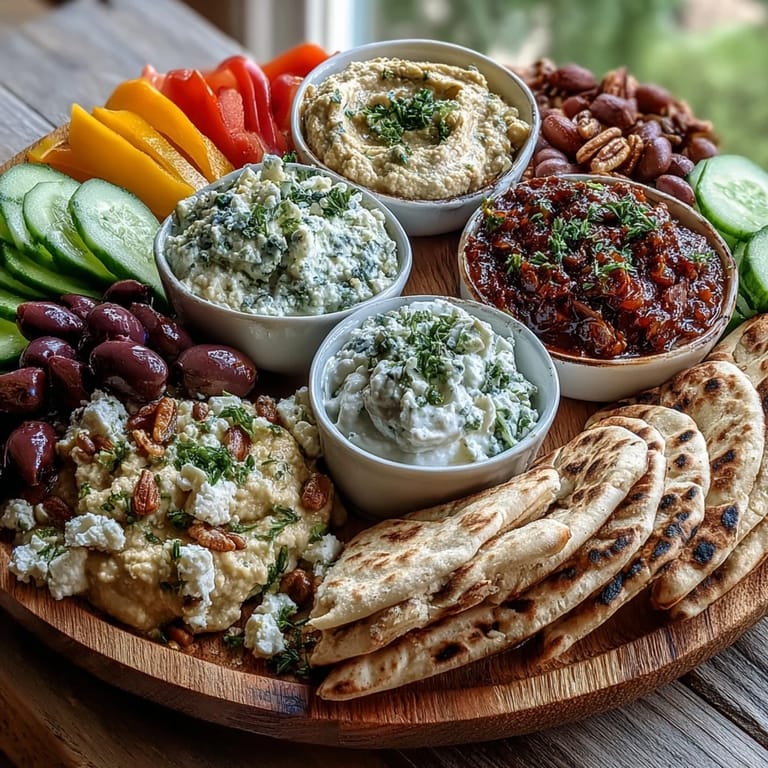
- Use small bowls or ramekins so each dip stays distinct and guests can easily identify their favorites. This also makes the board look more intentional and organized.
- Arrange the dips on a large serving board:
- Place the bowls in different sections of the platter, leaving space around them for the vegetables and bread. Spread them out so the board feels balanced and inviting.
- Place the fresh vegetables around the dips:
- Neatly arrange the cucumber rounds, halved cherry tomatoes, and bell pepper strips in clusters around the bowls. Keep the colors separate so the board looks vibrant and organized.
- Scatter the olives and feta cheese:
- Drop the olives and crumbled feta in small piles across the board, filling in gaps and adding pops of color. They should look scattered naturally, not forced into neat rows.
- Fill sections with mixed nuts:
- Tuck the nuts into any remaining empty spaces, adding texture and richness to the board. They also give guests something to snack on between dips.
- Arrange the pita and flatbread pieces:
- Place the bread around the edges of the platter or in a separate basket nearby for easy access. If the board is crowded, keep the bread on the side so it stays warm and doesn't get soggy.
- Drizzle with olive oil and garnish with fresh herbs:
- Drizzle olive oil lightly over the dips and vegetables, then scatter fresh herbs generously across the entire board. This final touch makes everything look fresh and ready to eat.
- Serve immediately and encourage mixing flavors:
- Set the board on the table and let guests dive in, combining dips, vegetables, and bread however they like. The beauty is in the freedom to create each bite differently.
Making It Your Own
Once you get the hang of the basic board, you can swap in whatever you have on hand or what looks good at the market. I've added marinated artichokes, roasted chickpeas, or even pickled turnips when I want something tangy and unexpected. Some mornings I skip the homemade dips entirely and use store bought versions, and no one has ever complained. The real magic is in how you arrange it, not in perfection.
Timing and Make Ahead Tips
The dips actually taste better the next day after the flavors have had time to settle, so I make them the night before and store them covered in the fridge. The morning of, I just pull everything out, slice the vegetables, and assemble the board in under fifteen minutes. If you're short on time, roasting the eggplant can happen up to two days ahead, and the tzatziki only gets thicker and more flavorful as it sits.
Serving and Pairing Suggestions
This board works beautifully with a crisp white wine, something like a Sauvignon Blanc or a dry rosé, but I've also served it with sparkling water infused with lemon and mint. If you want to make it a full meal, add a simple grain salad or some warm lentils on the side. The key is to keep everything relaxed and let people graze at their own pace.
- Warm the pita bread slightly in the oven or on a skillet so it's soft and pliable.
- Use a large wooden board or slate platter for a rustic, market style presentation.
- Label the dips with small cards if you're serving guests unfamiliar with Mediterranean flavors.
 Save to Pins
 Every time I set this board on the table, someone asks for the recipe, and I tell them the secret is that there isn't one. Just good ingredients, a little time, and the willingness to share.
Questions & Answers
- → Can I make the dips ahead of time?
Yes, all dips can be prepared a day in advance and stored in airtight containers in the refrigerator. This actually enhances the flavors as they meld together overnight. Bring to room temperature 30 minutes before serving for best taste.
- → What can I substitute for feta cheese?
For a dairy-free or vegan option, use plant-based feta alternatives or omit entirely. You can also substitute with crumbled goat cheese, halloumi cubes, or even diced mozzarella for a milder flavor.
- → How do I prevent the cucumber in tzatziki from making it watery?
After grating the cucumber, place it in a clean kitchen towel or cheesecloth and squeeze firmly to remove excess moisture. This step is crucial for achieving a thick, creamy tzatziki that won't become watery.
- → Can I use store-bought dips instead of homemade?
Absolutely. Quality store-bought hummus, tzatziki, and baba ganoush work perfectly well and significantly reduce preparation time. Look for authentic brands or products from Mediterranean specialty stores for the best flavor.
- → What other vegetables work well on this board?
Try adding radishes, snap peas, carrot sticks, endive leaves, or celery. Roasted vegetables like zucchini or asparagus also complement the dips beautifully. Choose colorful, crunchy options for visual appeal and textural contrast.
- → How do I warm the flatbreads before serving?
Wrap the flatbreads in aluminum foil and warm in a 350°F (175°C) oven for 5-7 minutes, or heat individually in a dry skillet for 30 seconds per side. You can also brush with olive oil and grill briefly for added flavor.