 Save to Pins
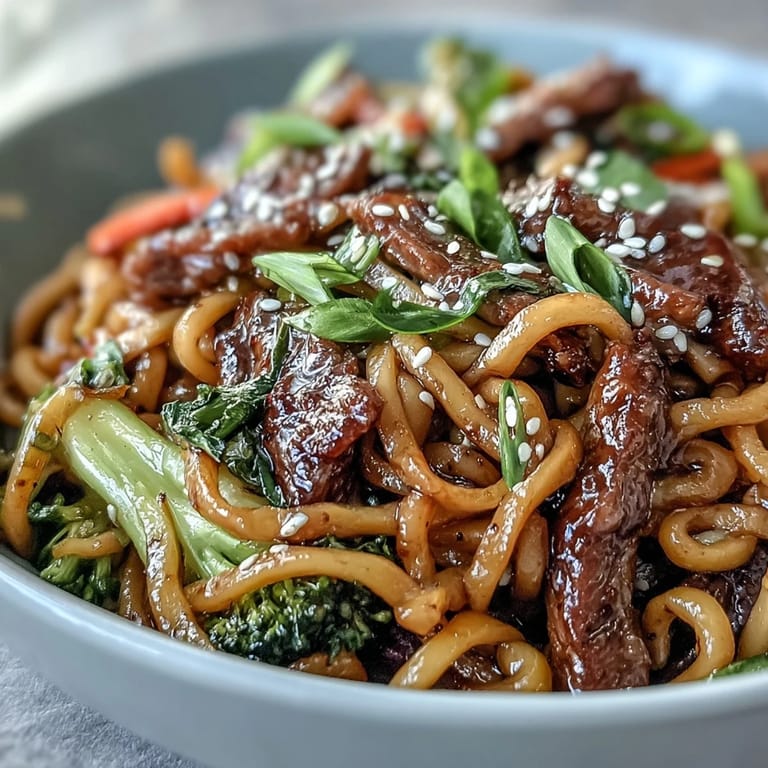
 The sizzle hit my ears before the smell even reached me, that sharp garlic-and-ginger perfume rising from the wok like a promise. I'd picked up flank steak on a whim after work, craving something hearty but quick, and suddenly I was tossing vegetables with a confidence I didn't know I had. The noodles slipped into the skillet with a soft hiss, soaking up that glossy brown sauce until every strand glistened. By the time I scattered green onions and sesame seeds over the top, I knew this bowl was going to be one of those recipes I'd come back to again and again.
The first time I made this for friends, I doubled the batch and watched three adults hover around the stove, forks in hand, sampling straight from the pan. One of them asked if I'd ordered takeout and just plated it fancy. I took that as the highest compliment, even though my wrist was sore from all the slicing and my countertop looked like a vegetable crime scene. We ate at the table with mismatched bowls, laughing too loud, and someone declared it better than the spot down the street that always got our Friday night orders.
Ingredients
- Rice noodles: These slippery strands soak up sauce like a dream and stay tender without turning mushy, just be sure not to overcook them or they'll clump together in the skillet.
- Flank steak: Slicing against the grain is the secret to keeping each bite tender instead of chewy, and a sharp knife makes all the difference when you're working with cold meat.
- Broccoli florets: They add a satisfying crunch and a pop of green that balances the richness of the beef, plus they char slightly in the hot wok for extra flavor.
- Bell pepper: Red or yellow brings sweetness and color, and I've learned to slice them thin so they cook at the same rate as the other vegetables.
- Carrot: Julienned carrots look elegant and cook quickly, and their natural sweetness plays beautifully with the soy-brown sugar sauce.
- Green onions: A handful scattered on top adds a fresh, sharp bite that cuts through the richness and makes the whole bowl look restaurant-worthy.
- Garlic and ginger: These two aromatics are the backbone of the dish, filling your kitchen with warmth and making everything smell like you know what you're doing.
- Soy sauce: The salty foundation of the sauce, and I always use low-sodium so I can control the seasoning without it getting too intense.
- Brown sugar: It melts into the soy sauce and sesame oil to create that glossy, slightly sticky coating that makes each noodle irresistible.
- Sesame oil: Just a tablespoon adds a nutty depth that ties everything together, and the aroma alone makes you feel like a real cook.
- Vegetable oil: High smoke point oil is key for getting that sear on the beef and keeping the vegetables from sticking to the skillet.
- Sesame seeds: A final sprinkle adds texture and a toasty finish that makes the dish feel complete.
Tired of Takeout? 🥡
Get 10 meals you can make faster than delivery arrives. Seriously.
One email. No spam. Unsubscribe anytime.
Instructions
- Prep the noodles:
- Cook the rice noodles according to the package directions, then drain them and toss with a tiny drizzle of oil to keep them from sticking while you work on everything else. Set them aside in a big bowl so they're ready to join the party.
- Sear the beef:
- Heat vegetable oil in a large skillet or wok over medium-high heat until it shimmers, then add the thinly sliced flank steak in a single layer and let it sizzle undisturbed for a minute before tossing. Cook for 2 to 3 minutes until browned and just cooked through, then remove it to a plate so it doesn't turn tough.
- Build the aromatics:
- In the same skillet, add the minced garlic and grated ginger, stirring constantly for about 30 seconds until the smell fills your kitchen and they turn golden. Don't walk away or they'll burn and turn bitter.
- Stir-fry the vegetables:
- Toss in the broccoli, bell pepper, and julienned carrot, stirring frequently over high heat for about 5 minutes until they're tender but still have a little snap. You want color and a bit of char on the edges for maximum flavor.
- Mix the sauce:
- While the vegetables cook, combine the soy sauce, brown sugar, and sesame oil in a small bowl, stirring until the sugar dissolves completely and the sauce looks smooth and glossy.
- Bring it all together:
- Return the beef to the skillet and pour the sauce over everything, stirring to coat the meat and vegetables evenly. Add the cooked rice noodles and gently toss with tongs until every strand is coated and heated through, about 2 minutes.
- Garnish and serve:
- Turn off the heat and scatter chopped green onions and sesame seeds over the top, then serve immediately while everything is still steaming. The contrast of the cool green onions against the hot noodles is half the fun.
 Save to Pins
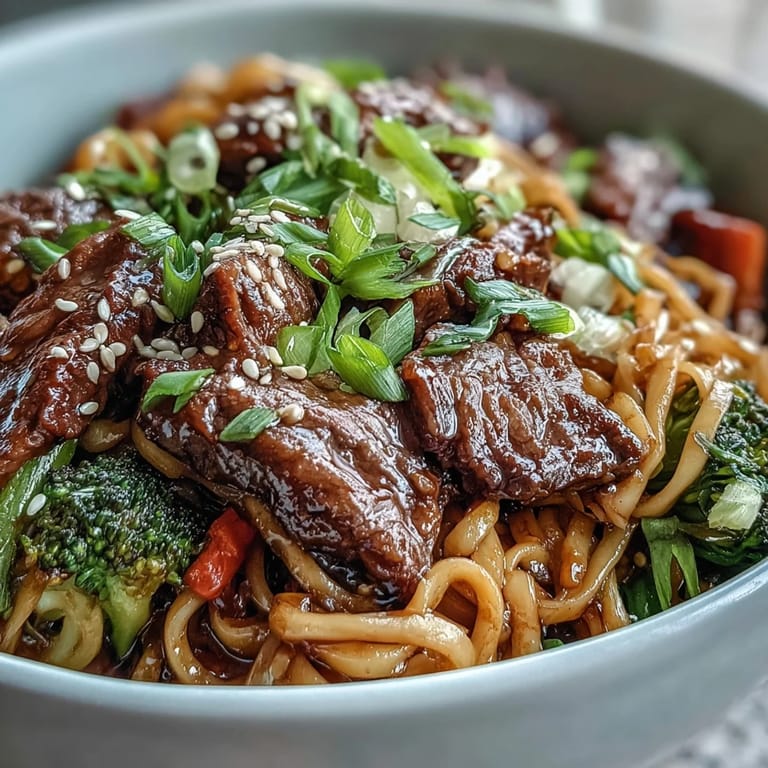
 There's a moment right after you toss the noodles with the sauce when the whole skillet glistens under the kitchen light, and you realize you've just made something that looks like it belongs in a food magazine. I stood there with my spatula in hand, feeling absurdly proud, and took a photo before anyone could dig in. That bowl became a Friday night ritual, the thing I made when I needed comfort but didn't want to spend an hour in the kitchen, and it never failed to deliver.
Storing and Reheating
Leftovers keep beautifully in an airtight container in the fridge for up to three days, though the noodles will soak up more sauce as they sit. When you reheat, add a splash of water or a drizzle of soy sauce to loosen everything up, and warm it gently in a skillet over medium heat, tossing frequently. The microwave works in a pinch, but the skillet brings back that fresh-cooked texture and keeps the vegetables from turning soggy.
Customizing Your Bowl
This recipe is forgiving and loves improvisation, so feel free to toss in snap peas, zucchini, or even baby corn if that's what's in your crisper. For a spicy kick, stir a spoonful of gochujang or sriracha into the sauce and watch it turn the dish from mellow to bold. I've also swapped the flank steak for chicken thighs or pressed tofu, and both versions disappeared just as fast as the original.
Serving Suggestions
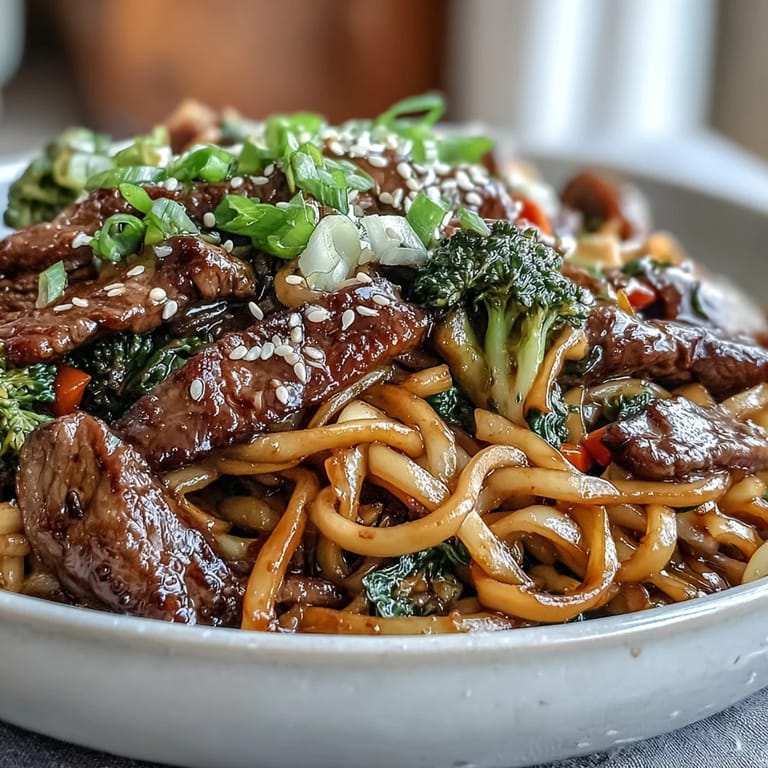
This bowl is filling enough to stand alone, but I like to serve it with a quick cucumber salad dressed in rice vinegar and a pinch of sugar for a cool, crunchy contrast. A cold beer or iced green tea on the side rounds out the meal, especially on warm evenings when you want something satisfying but not too heavy.
- Add a fried egg on top for extra richness and a runny yolk that coats the noodles.
- Serve with kimchi on the side for a tangy, fermented punch that cuts through the sweetness.
- Double the green onions and sesame seeds if you love that fresh, nutty finish.
 Save to Pins
 Every time I make this, the kitchen smells like possibility, and I'm reminded that great meals don't need to be complicated. Just a hot skillet, good ingredients, and the willingness to trust your instincts.
Questions & Answers
- → Can I use a different cut of beef?
Yes, you can substitute flank steak with sirloin, ribeye, or skirt steak. Slice thinly against the grain for the most tender results.
- → What type of noodles work best?
Rice noodles are traditional and create an authentic texture. You can also use udon, lo mein, or even spaghetti in a pinch.
- → How do I make this spicier?
Add gochujang or sriracha to the sauce, or sprinkle red pepper flakes while stir-frying the vegetables for extra heat.
- → Can I make this ahead of time?
This dish is best served fresh, but leftovers keep well for up to 3 days in the refrigerator. Reheat gently in a skillet with a splash of water.
- → What vegetables can I substitute?
Snap peas, zucchini, mushrooms, or bok choy all work wonderfully. Use whatever fresh vegetables you have on hand for variety.
- → Is this gluten-free?
It can be made gluten-free by using tamari instead of regular soy sauce and ensuring your rice noodles are certified gluten-free.