 Save to Pins
 My neighbor brought over a container of homemade cottage cheese one afternoon, and I had no idea what to do with it—until I remembered a half-forgotten recipe my grandmother once mentioned about tangy sugar cookies. That first batch came out impossibly soft, with this bright lemon zing that made everyone pause mid-bite and ask what was different. It wasn't fancy or complicated, just butter, sugar, and this secret creamy ingredient that made the texture almost pillowy.
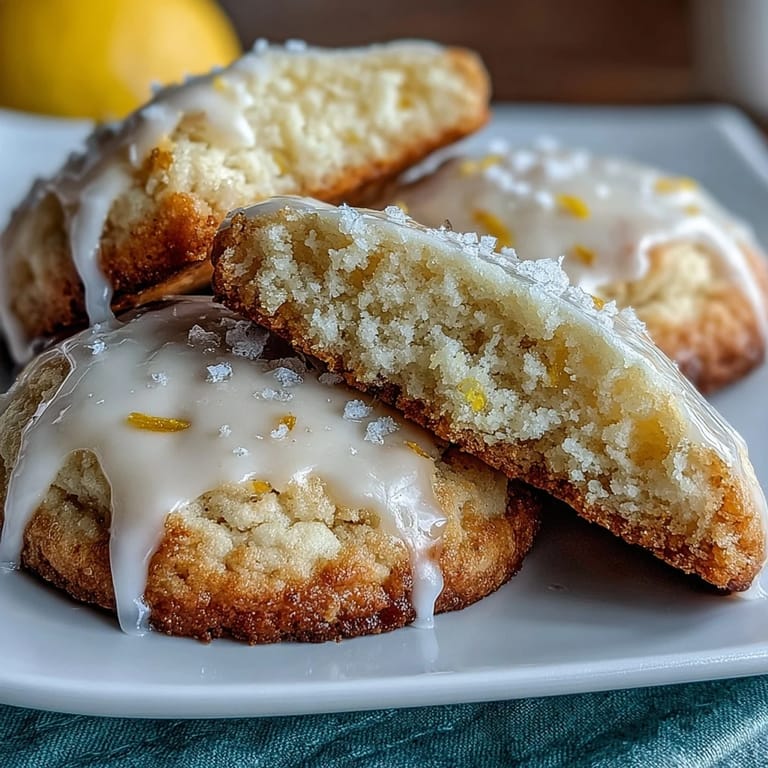
I made these for a potluck where everyone brought the usual suspects—brownies, store-bought bars, predictable things. These little golden cookies with their lemon glaze somehow disappeared first, and three people asked for the recipe. It felt silly to be proud of something so simple, but there's a quiet satisfaction in watching someone's face light up over something you made in under an hour.
Ingredients
- All-purpose flour (2 1/4 cups): This is your foundation—measure by spooning into your measuring cup rather than scooping directly from the bag, or you'll pack in too much and end up with dense cookies.
- Baking soda and baking powder (1/2 teaspoon each): These work together to give the cookies that gentle spread and tender lift, so don't skip either one or substitute one for the other.
- Salt (1/4 teaspoon): A small amount enhances the lemon flavor and balances the sugar so the cookies don't taste one-dimensional.
- Unsalted butter (1/2 cup, softened): Softened means it should be slightly squishy when you press it, not melted or cold—this is how you get that light, fluffy base.
- Granulated sugar (1 cup): This dissolves into the butter to create the cookie's tender crumb and light browning on the edges.
- Cottage cheese (1 cup, full-fat, well-drained): This is the secret weapon—it adds moisture and a subtle tang without making the cookies taste like cheese, but you must drain it or the dough gets wet and spreads too much.
- Egg (1 large): Binds everything together and helps the cookies rise slightly while staying tender in the center.
- Lemon zest (1 tablespoon) and fresh lemon juice (2 tablespoons): These give the cookies their personality—use a microplane for zest if you have one, and freshly squeezed juice tastes noticeably brighter than bottled.
- Vanilla extract (1 teaspoon): Rounds out the flavor so the lemon doesn't taste sharp or medicinal.
- Granulated sugar for rolling (1/4 cup): This creates a sparkly, slightly crisp exterior that contrasts beautifully with the soft interior.
- Powdered sugar (1 cup, sifted) and lemon juice (2 tablespoons) for glaze: The glaze should be thick enough to cling but thin enough to drizzle—sift the powdered sugar first or you'll have little lumps.
Tired of Takeout? 🥡
Get 10 meals you can make faster than delivery arrives. Seriously.
One email. No spam. Unsubscribe anytime.
Instructions
- Get your oven ready and set up your workspace:
- Preheat to 350°F and line two baking sheets with parchment paper so your cookies don't stick and bake evenly on the bottom. Having everything ready before you start mixing saves you from standing around with dough in your hands wondering what comes next.
- Mix your dry team:
- In a medium bowl, whisk together flour, baking soda, baking powder, and salt until they're evenly distributed. This step might feel unnecessary, but it ensures the leavening agents are spread throughout so your cookies rise consistently.
- Cream butter and sugar into fluffy clouds:
- Beat softened butter and sugar together for about two minutes until the mixture looks pale and airy, almost like fluffy clouds. You'll notice the color change and the texture becomes lighter—this is what gives the cookies their tender structure.
- Add the cottage cheese and make it smooth:
- Beat in the well-drained cottage cheese until it blends completely into the butter mixture with no visible lumps. If your cottage cheese is too wet, it will make the dough sticky and the cookies will spread too thin, so take an extra minute to drain it if needed.
- Brighten it up with eggs and lemon:
- Mix in the egg, lemon zest, lemon juice, and vanilla extract until everything is fully combined and the dough smells absolutely wonderful. The mixture should look smooth and slightly yellow from all that lemon.
- Fold in the dry ingredients gently:
- Gradually add the flour mixture to the wet ingredients, stirring just until incorporated—overmixing develops gluten and makes the cookies tough and cakey instead of tender. Stop as soon as you don't see any white streaks of flour.
- Scoop and roll the dough balls:
- Using a tablespoon or cookie scoop, portion out the dough and roll each piece into a ball between your palms. Roll each ball in granulated sugar—this adds texture and flavor—then place them about two inches apart on your prepared baking sheets so they have room to spread.
- Bake until barely set:
- Bake for eleven to thirteen minutes, watching for the moment when the edges turn golden but the centers still look slightly soft and undercooked. This is the hardest part because every oven is different, but underbaking is better than overbaking—these cookies continue to cook slightly on the warm pan.
- Cool with patience:
- Let the cookies rest on the baking sheet for five minutes so they firm up just enough to move without falling apart, then transfer them to a wire rack to cool completely. This resting period is crucial or they'll crumble when you pick them up.
- Make the glaze and finish strong:
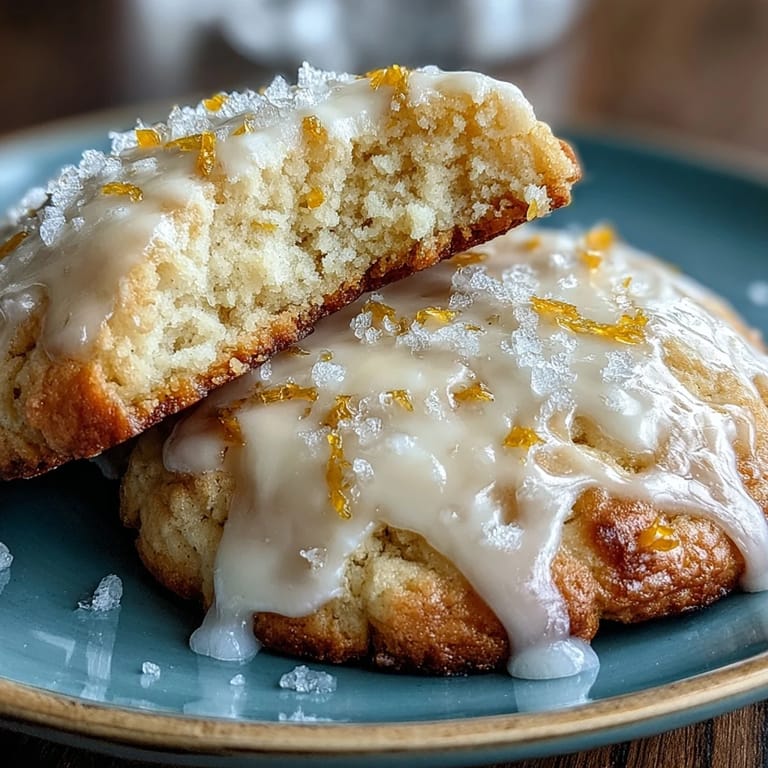
- Whisk powdered sugar, lemon juice, and optional zest until smooth and pourable—the consistency should drizzle easily but still cling to the cookies. Once the cookies are completely cool, drizzle the glaze over the top and let it set for a few minutes before serving.
 Save to Pins
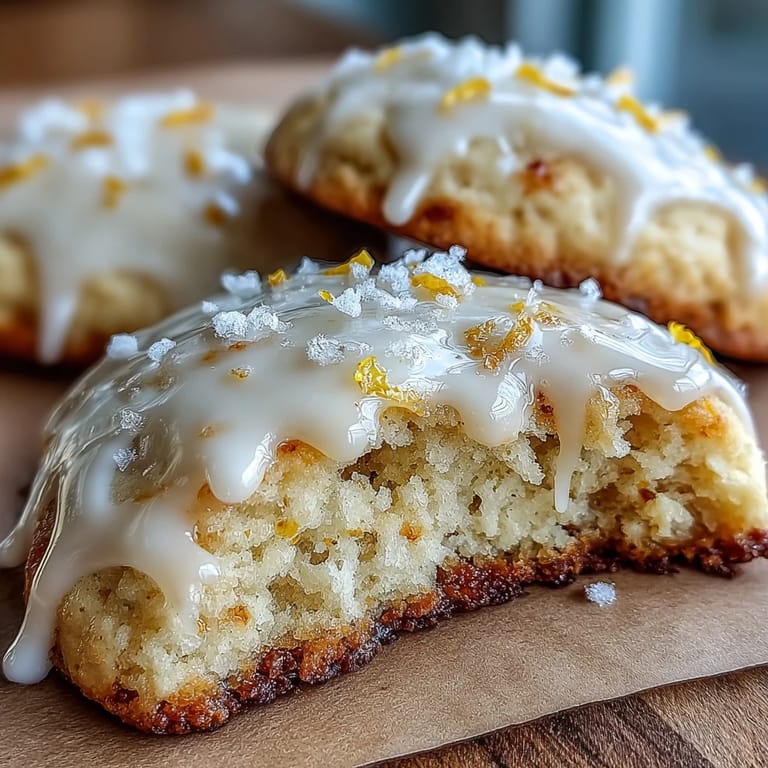
 I've made these cookies enough times now that I can recognize the exact smell right before they're done—a buttery, lemony fragrance that fills the whole kitchen. There's something satisfying about handing someone a cookie that feels like you put real thought into it, even though you made them while doing laundry and half-watching a show.
The Cottage Cheese Secret Nobody Talks About
Most people think cottage cheese belongs in savory dishes or on toast with fruit, but in baking, it's basically magic. The curds break down during mixing and create this incredibly tender crumb that regular butter and eggs alone can't achieve, plus the slight tanginess keeps everything from tasting sweet and flat. Once you understand this, you'll start sneaking cottage cheese into other baked goods—I've already tried it in quick breads and muffins.
Lemon Flavor That Actually Tastes Like Lemon
Using both zest and fresh juice is the difference between cookies that taste vaguely citrusy and cookies that make people stop and say, 'Wow, that's bright.' The zest carries oils that give you that intense lemon flavor, while the juice adds tartness and moisture, so they work together in a way that bottled juice or extract simply cannot replicate. Don't even think about using lemon extract—it tastes artificial and will make you regret it.
Storage and Keeping These Around
These cookies stay soft for three days in an airtight container at room temperature, which is genuinely impressive for a baked good. If you want to extend that, you can freeze the baked cookies for up to a month and thaw them at room temperature, though they're so easy to make that I usually just bake a fresh batch when they're gone.
- Store cookies in an airtight container with a small piece of bread if they start to dry out—the bread releases moisture and revives them.
- If you're making the glaze ahead, keep it covered so it doesn't form a skin, and gently whisk it again before drizzling.
- For gift-giving, drizzle these the morning of, so the glaze is fresh and glossy.
 Save to Pins
 These cookies are proof that simple recipes often taste the best, especially when you pay attention to the small details. Make them once, and they'll become something you return to again and again.
Questions & Answers
- → How does cottage cheese affect the cookie texture?
Cottage cheese adds moisture and tenderness, resulting in soft, delicate cookies with a slight tangy flavor.
- → Can I substitute the lemon zest and juice?
You can try using orange or lime zest and juice for a different citrus twist, though it will alter the flavor profile.
- → What is the role of rolling the dough in sugar before baking?
Rolling in sugar creates a slight crunchy exterior that contrasts nicely with the soft interior.
- → How should I store these cookies for best freshness?
Keep cookies in an airtight container at room temperature for up to three days to maintain softness and flavor.
- → Is it necessary to drain the cottage cheese?
Draining helps prevent excess moisture in the dough, which can affect texture and baking time.