 Save to Pins
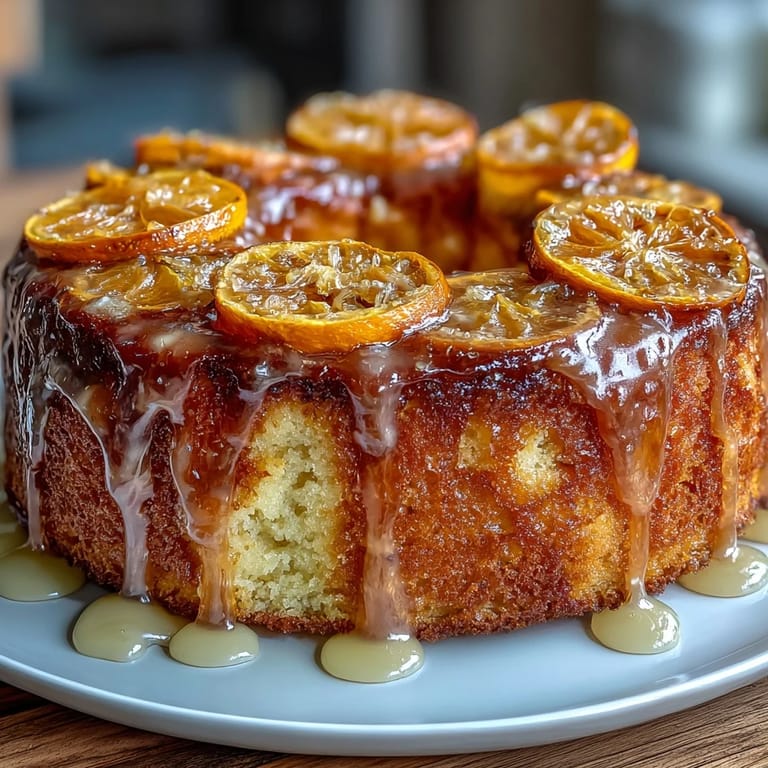
 There's something about the smell of orange syrup bubbling on the stove that makes you feel like you're doing something special, even if you're just candying fruit on a Tuesday afternoon. I discovered this cake during one of those lazy kitchen experiments where I had too many oranges and too much time, and somehow ended up with layers of glossy candied citrus suspended in the most tender, golden crumb. The olive oil gives it this subtle richness that makes people pause mid-bite and ask what's different about it, and the candied oranges catch the light like little stained glass windows when you slice through. It's become my go-to when I need something that looks impressive but doesn't require you to stress over fancy techniques.
I made this for a friend who had just moved into a new apartment, and we sat on her kitchen floor with mugs of Earl Grey and slices of still-warm cake while talking about all the things she wanted to cook in that space. She cried a little, not from sadness but from the kind of overwhelm that comes with fresh starts, and somehow having something homemade and beautiful made the moment feel less scary. That's when I realized this cake has a way of becoming part of memories instead of just existing in them.
Ingredients
- Medium oranges (2 for candying): The thinner you slice them, the more translucent and jewel-like they become during cooking, so take your time with a sharp knife or mandoline.
- Granulated sugar (1 cup for syrup, 1 cup for cake): Don't skimp on the ratio for candying—the sugar-to-water balance is what creates that glossy, tender finish on the slices.
- Water (1 cup): This creates the gentle syrup that transforms ordinary orange slices into something that tastes candied at a farmers market.
- All-purpose flour (2 cups): Measure by spooning and leveling, not scooping directly from the bag, because a densely packed cake won't have that tender crumb you're after.
- Baking powder and baking soda (1 1/2 teaspoons and 1/2 teaspoon): These two work together—the baking soda helps with browning while the baking powder gives steady lift throughout baking.
- Salt (1/2 teaspoon): It brings out the citrus and balances the sweetness in a way that makes people wonder what the secret ingredient is.
- Orange zest (from 1 orange): Use a microplane and get only the bright orange part, never the bitter white pith—this is where the real flavor punch lives.
- Eggs (3 large, room temperature): Cold eggs won't emulsify properly with the oil, so pull them out 30 minutes before you start baking and your cake will thank you with a silkier crumb.
- Extra virgin olive oil (3/4 cup): The oil replaces much of the butter, giving you that Mediterranean moisture and a subtle fruity undertone that makes people guess what makes it taste so different.
- Whole milk (3/4 cup, room temperature): The acidity helps activate the baking soda and keeps the cake tender, so don't skip the room temperature part.
- Vanilla extract (1 teaspoon): This just quiets down any sharpness from the citrus and lets the flavors blend harmoniously.
- Powdered sugar (1 cup, sifted): Sifting isn't just fussy—lumps won't dissolve into the glaze and you'll end up with a grainy finish instead of that silky drip.
- Fresh orange juice and lemon juice (2–3 tablespoons and 1 tablespoon): The lemon adds brightness and prevents the glaze from tasting one-note citrus.
Tired of Takeout? 🥡
Get 10 meals you can make faster than delivery arrives. Seriously.
One email. No spam. Unsubscribe anytime.
Instructions
- Prepare your candied oranges the day before if you can:
- Combine sugar and water in a wide skillet over medium heat and watch for the moment when the sugar fully dissolves into clear syrup—it's oddly satisfying to see. Lay your orange slices in a single layer and turn the heat down low so they simmer gently rather than cook aggressively, flipping them every few minutes for about 20–25 minutes until they turn from opaque to translucent and look almost like stained glass when you hold them up to the light.
- Set up your cake pan while the oven preheats:
- Grease a 9-inch round pan with butter or oil, then cut a circle of parchment paper to fit the bottom—this ensures your cake won't stick and you'll get that beautiful ring of candied oranges on top when you invert it. Preheat to 350°F and let the pan warm slightly so the batter cooks evenly.
- Whisk your dry ingredients together:
- Flour, baking powder, baking soda, and salt go into a bowl and get whisked together for about a minute to distribute the leaveners evenly, which is what prevents you from biting into a pocket of baking soda.
- Combine sugar with orange zest and let it sit for a minute:
- This step sounds small but it's important—rubbing the zest into the sugar releases the fragrant oils and distributes them throughout, so your cake tastes like candied orange even before you bake it. Then whisk in your room-temperature eggs, and keep whisking until the mixture turns pale and thick, which means the eggs are emulsified and ready to accept the oil.
- Stream in the olive oil slowly while whisking constantly:
- This is where people often rush and end up with a broken batter, so take your time and imagine you're pouring it as slowly as honey—the constant whisking keeps everything integrated and creamy. Once the oil is in, you've created an emulsion that will give you that tender, almost velvety crumb.
- Alternate your dry ingredients and milk, starting and ending with dry:
- Add half the flour mixture, then half the milk and vanilla, stirring gently, then repeat with what's left—this technique prevents overmixing, which would develop the gluten and make your cake tough instead of tender. Stop stirring the moment you don't see streaks of flour anymore.
- Arrange candied oranges on the bottom of your pan before pouring the batter:
- Lay them in a single layer, any pattern you like, knowing that when the cake inverts onto the cooling rack, these will be your stunning top layer. Pour batter carefully over them and smooth the surface.
- Bake for 45–50 minutes until a toothpick comes out clean:
- Your kitchen will smell like a Mediterranean orchard, and that's your signal that something good is happening—when a toothpick inserted in the center comes out with just a few moist crumbs, you're done. Let it cool in the pan for 15 minutes so it sets slightly, then invert it onto a wire rack to cool completely.
- Make your glaze while the cake cools:
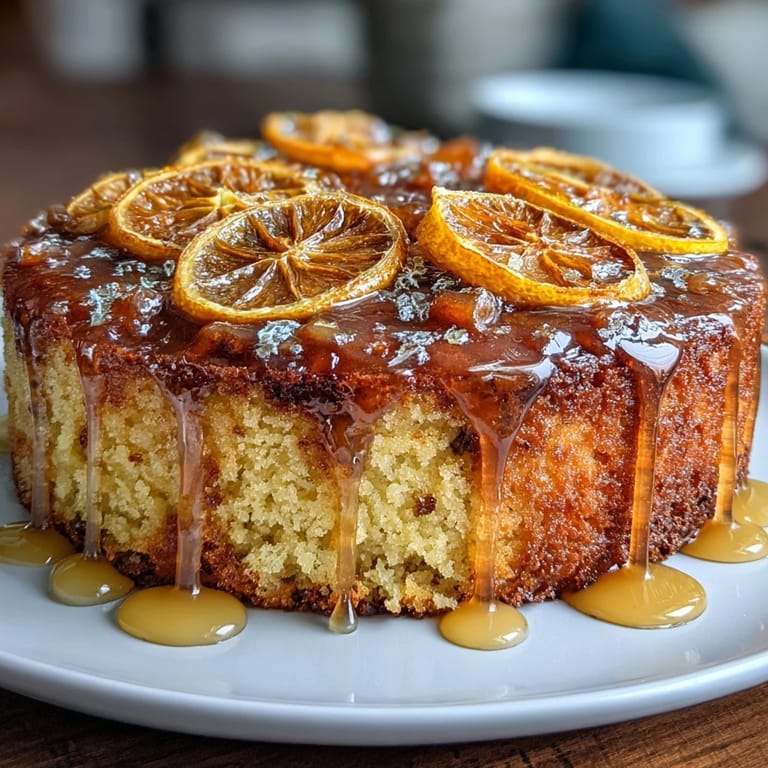
- Whisk powdered sugar with orange juice and lemon juice until you have a consistency that drizzles like silk but isn't so thin it runs off the sides—you're looking for that sweet spot between liquid and thick. Drizzle it over the cool cake and garnish with extra candied oranges if you want to show off a little.
 Save to Pins
 My neighbor brought over a slice to her book club meeting and came back the next day asking for the recipe, saying everyone assumed she'd bought it from a bakery. That's when I realized this cake has a way of making you look like you've got your life more together than you actually do, which is honestly half the reason to bake it.
The Olive Oil Difference
Using olive oil instead of butter changes everything about this cake in the best way possible—it stays moist for days, develops a subtle fruity depth, and somehow feels lighter even though it's just as rich. The oil creates a tender crumb that almost melts on your tongue, which is why this cake tastes less like traditional cake and more like something you'd find in a Mediterranean bakery where they understand that butter isn't the only path to something delicious. Quality matters here, so use a good extra virgin oil that you'd actually taste on bread, not the generic bottle hidden in the back of your cupboard.
Candying Your Own Oranges
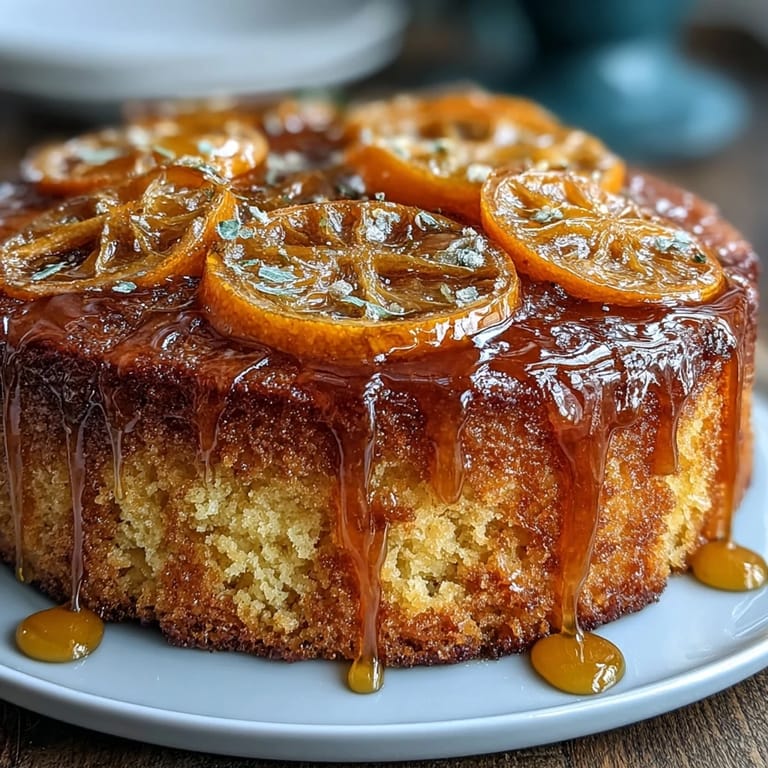
The candied oranges are what make this cake memorable, so don't skip them or substitute with store-bought candied peel—there's a reason homemade versions taste brighter and texture more tender. The process takes less than 30 minutes and the smell alone is worth it, filling your kitchen with this honeyed citrus perfume that makes everyone ask what you're making. Pro tip: make extra candied oranges beyond what you need for the cake and keep them in a jar of their syrup in the fridge for days when you want to add something beautiful to yogurt, tea, or just eat straight from the jar like tiny jewels.
Variations and Twists
This cake welcomes improvisation in the way that confident recipes do, so feel free to play with it once you've made it the traditional way at least once. Blood oranges create a dramatic rose-colored interior and intensify the tartness slightly, while blood orange juice in the glaze becomes almost burgundy and looks absolutely striking against the white powdered sugar. Greek yogurt swapped for some of the milk gives you a tangier crumb and makes the cake feel almost like dessert meets breakfast, and lemon zest added alongside or instead of some orange zest pulls the whole flavor profile in a brighter direction if you want something less sweet-forward.
- Pair with Moscato d'Asti for a dessert wine moment or Earl Grey tea for something more grounded and classic.
- Reserve a few candied orange slices before adding to the cake to use as garnish on top, creating visual layers.
- Store leftovers in an airtight container and the cake actually tastes better on day two when the flavors have settled.
 Save to Pins
 This cake has become my answer to so many kitchen questions—the one I reach for when someone needs convincing that homemade dessert is worth the effort. It's beautiful enough to impress and forgiving enough that even a slightly imperfect cake tastes like something special.
Questions & Answers
- → How are the candied oranges prepared?
Orange slices are simmered gently in a sugar and water syrup until translucent and tender, then cooled on parchment to set their sweetness and texture.
- → What makes olive oil a good choice for this cake?
Olive oil contributes a moist, tender crumb while adding a subtle fruity depth that complements the citrus flavors in the cake.
- → Can I use a different citrus for the glaze?
Yes, lemon or lime juice can be substituted or combined to vary the glaze’s brightness and balance sweetness.
- → What texture should the cake have once baked?
The cake should be moist yet springy to the touch with a lightly golden crust and a tender crumb inside.
- → How should leftover cake be stored?
Store leftovers in an airtight container at room temperature for up to three days to maintain freshness.
- → Are there suggested pairings for serving?
This cake pairs beautifully with Moscato d’Asti or a fragrant Earl Grey tea enhancing its citrus notes.