 Save to Pins
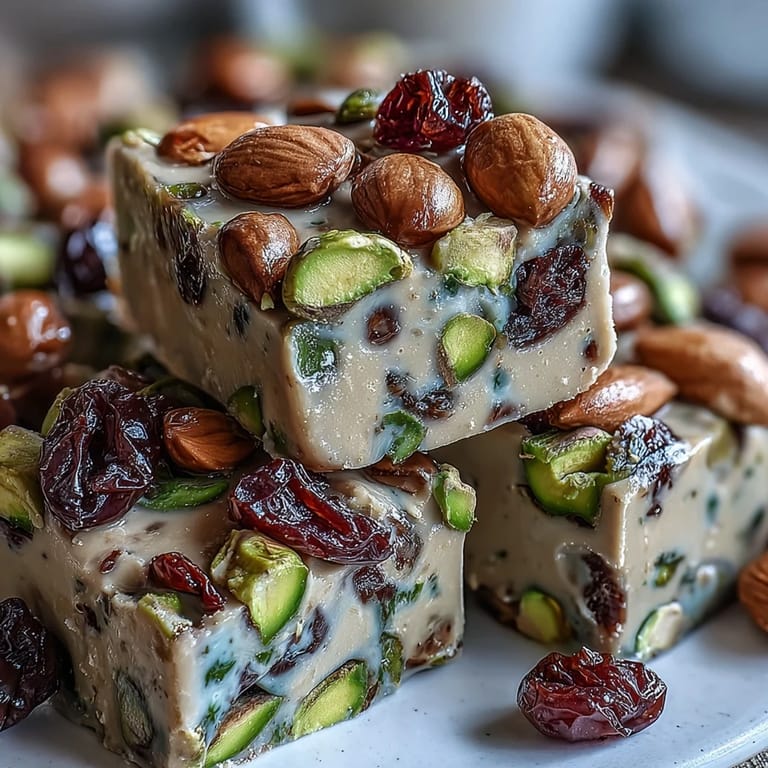
 My neighbor brought over a tin of pistachio nougat one winter afternoon, and I watched her unwrap each piece like she was revealing tiny edible treasures. The way the light caught the candied fruit specks, the satisfying chew that melted on my tongue—I was hooked instantly. A few weeks later, I found myself at the stove with a candy thermometer, determined to recreate that magic in my own kitchen. There's something almost meditative about watching sugar transform into something ethereal, especially when you know exactly what's going into every bite.
I remember making a double batch for my sister's book club and watching five different women reach for piece after piece without even talking about it. Someone finally broke the silence to ask what was in it, and I loved how their eyes lit up when I said pistachios and dried cherries. That's when I realized nougat isn't just candy—it's a moment where people slow down and actually taste what they're eating.
Ingredients
- Shelled, unsalted pistachios (1 cup / 140 g): Toast them yourself if you can, even lightly—it wakes up their flavor in a way pre-roasted nuts sometimes miss, and the kitchen smells incredible.
- Dried apricots, cherries, and cranberries (roughly 1 1/3 cups total): Dice them small so every bite has fruit, and avoid the super-soft kinds that turn to mush; you want pieces that hold their own against the nougat.
- Granulated sugar (1 1/2 cups / 300 g): This is your foundation, so don't skip it or substitute it—the chemistry here matters.
- Light corn syrup or glucose syrup (1/2 cup / 120 ml): It prevents crystallization and keeps your nougat smooth, which is the whole point of using a stand mixer instead of just whisking by hand.
- Honey (1/4 cup / 60 ml): Adds subtle depth and helps the nougat stay chewy even after a few days of sitting.
- Water (1/4 cup / 60 ml): Your medium for dissolving sugar—measure it properly because the ratio matters.
- Egg whites (2 large ones, room temperature): Cold eggs are stubborn and won't whip properly, so pull them out of the fridge 20 minutes before you start.
- Cream of tartar and sea salt (1/4 tsp each): Tiny amounts that stabilize the whites and brighten the whole flavor.
- Vanilla extract (2 tsp): Wait until the last second to add it so the heat doesn't cook off the delicate flavor.
- Edible wafer paper (optional): It prevents sticking and makes lifting the finished nougat effortless, but parchment works just fine if you brush it lightly with oil.
Tired of Takeout? 🥡
Get 10 meals you can make faster than delivery arrives. Seriously.
One email. No spam. Unsubscribe anytime.
Instructions
- Prepare your workspace:
- Line an 8 x 8-inch pan with edible wafer paper or parchment, letting the edges hang over so you can lift everything out cleanly once it sets. Having this ready before you heat anything means you're not scrambling when the syrup hits its target temperature.
- Build your sugar syrup:
- Combine sugar, corn syrup, honey, and water in a heavy-bottomed saucepan over medium heat, stirring gently until the sugar dissolves completely. Once it's clear, clip your candy thermometer to the side and stop stirring—let the heat do the work while you attend to the egg whites.
- Whip the egg whites:
- While the syrup cooks, beat your room-temperature egg whites with cream of tartar and salt in a stand mixer until they reach soft peaks. This takes about 3-4 minutes and you'll see them transform from foamy to fluffy in a way that's oddly satisfying to watch.
- Thread the hot syrup:
- When your syrup hits exactly 290°F, remove it from heat immediately and, with the mixer running at medium speed, pour it in a slow, thin stream into the whipped whites. Pouring too fast makes it seize, so pace yourself and trust the process.
- Beat until glossy:
- Crank the mixer to high speed and let it go for 7-8 minutes until the mixture becomes thick, glossy, and holds stiff peaks when you lift the whisk. You'll feel the resistance increase as air gets beaten in, and the color will lighten slightly.
- Add vanilla and fold in fruit:
- Beat in vanilla extract on medium speed for just 30 seconds, then switch to a sturdy spatula and quickly fold in the pistachios and diced fruit using gentle, deliberate strokes. Work fast here because the nougat sets quickly once it stops being agitated by the mixer.
- Set it in the pan:
- Transfer the nougat to your prepared pan and spread it evenly with a spatula, pressing gently to fill all corners. If using another sheet of wafer paper on top, press it down lightly so it adheres without trapping air bubbles.
- Let time do its work:
- Set the pan on the counter at room temperature and let it rest untouched for at least 4 hours—overnight is even better if you can wait. You'll know it's ready when it feels firm but still slightly yielding to the touch.
- Cut with precision:
- Lift the entire nougat block from the pan using the parchment overhang, then cut it into squares with a sharp knife dipped in oil and wiped clean between each slice. The oil prevents sticking and gives you clean, professional-looking pieces.
 Save to Pins
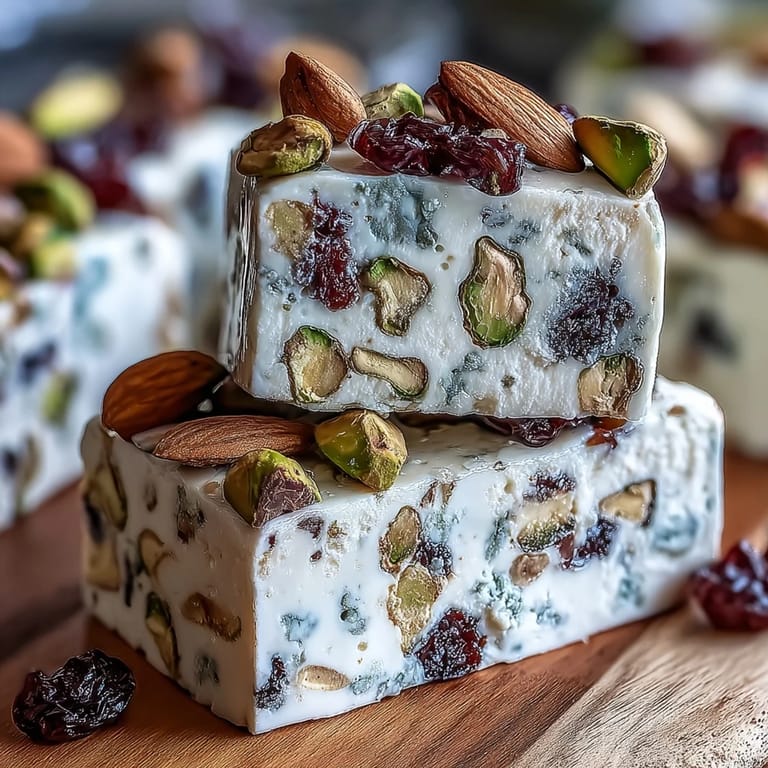
 There was a moment while beating the nougat when my wrist got tired and I almost stopped early, but my partner pointed out that the mixture still looked slightly dull. I kept going for two more minutes, and suddenly it transformed into this cloud-like texture that held peaks perfectly. That's when nougat stopped being just candy to me and became proof that sometimes the last bit of effort makes all the difference.
Choosing Your Dried Fruit
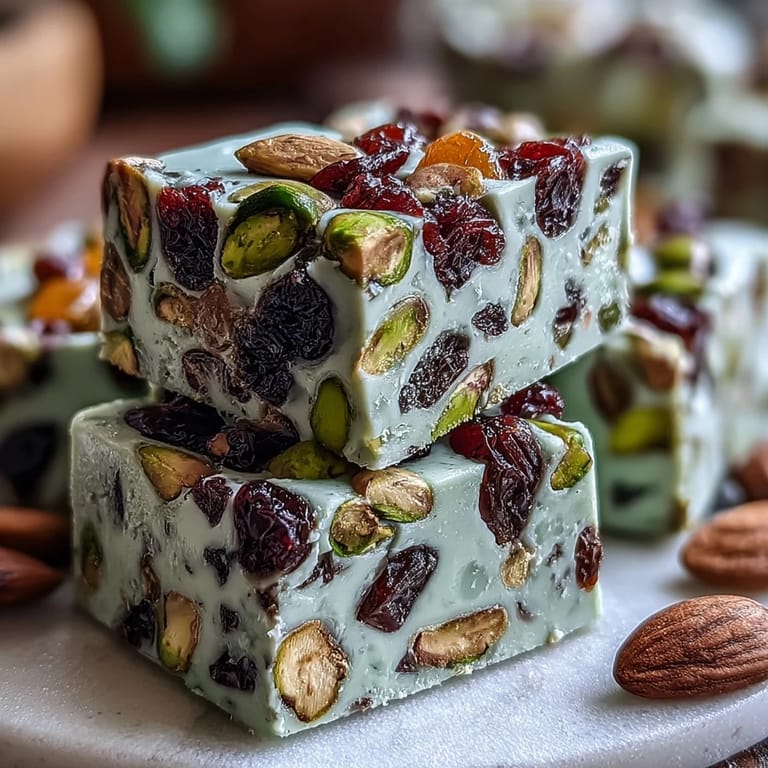
Not all dried fruit plays well with nougat. I learned this the hard way by using super-soft dried mango once and ending up with almost mushy texture. The apricots, cherries, and cranberries work beautifully because they keep their shape and offer little pockets of tartness against the sweet, chewy base. You can absolutely swap them around—raisins, diced dried figs, or candied citrus peel all work—just avoid anything that feels already wet or sticky when you touch it.
Storage and Longevity
These pieces last up to two weeks in an airtight container, and they actually get slightly chewier as they sit, which some people prefer. I keep mine in a jar on the kitchen counter at room temperature away from sunlight, and I separate layers with parchment so they don't stick together. If your kitchen is particularly warm or humid, the refrigerator buys you extra time, though cold nougat is a bit tougher to chew—just let pieces come to room temperature for a minute before eating.
Serving Suggestions and Final Thoughts
Serve these with espresso or a crisp dessert wine, or just wrap them individually in wax paper for gifting that actually feels personal. The pistachios shine when you pair them with something slightly bitter or tart, which is why they're so perfect with coffee or a glass of prosecco.
- If you're making these for gifts, wrap individual pieces in small squares of wax paper or glassine to protect them and make presentation elegant.
- A candy thermometer isn't optional here—digital ones are affordable and take the guesswork out of hitting 290 degrees exactly.
- Make sure your stand mixer is genuinely clean before you start, since any grease will prevent your egg whites from reaching their full, glossy peak potential.
 Save to Pins
 Homemade nougat is one of those gifts that genuinely impresses people because it feels like something only a pastry shop could make. Once you nail the temperature and the timing, you'll wonder why you ever bought candy again.
Questions & Answers
- → How do I toast pistachios for best flavor?
Toast shelled pistachios lightly in a dry pan over medium heat for 3-5 minutes, stirring frequently to avoid burning.
- → Can I substitute other nuts for pistachios?
Yes, almonds or hazelnuts can be used as alternatives, providing a different but delicious nutty profile.
- → What is the purpose of the egg whites in the confection?
Egg whites are whipped to soft peaks and folded with hot syrup, creating a glossy, airy texture that sets into chewy nougat.
- → Why is wafer paper used when lining the pan?
Edible wafer paper prevents the nougat from sticking and helps with easy removal and slicing after cooling.
- → How long should the nougat cool before cutting?
Allow the nougat to cool and set at room temperature for at least 4 hours to reach the desired chewy consistency.
- → Can I store nougat for later consumption?
Store in an airtight container at room temperature for up to two weeks to maintain freshness and texture.