 Save to Pins
 The first time I truly understood Turkish hospitality was around a table laden with mezze, where my friend's grandmother insisted that feeding guests well was a form of love. She'd arrange each element with the care of an artist, telling me that a proper meze platter wasn't about having the most expensive ingredients—it was about creating moments where people could slow down and connect. I've recreated that feeling countless times since, and every time I set out hummus, cheeses, and olives, I'm transported back to that warm kitchen and the quiet wisdom shared between bites.
I learned the power of a good meze platter during a chaotic dinner party when my main course ran late and I panicked. Rather than apologize, I'd arranged these appetizers with such care that my guests never noticed the delay—they were too busy debating whose homemade hummus was creamier and stealing olives from each other's plates. That night taught me that sometimes the best meals are the unplanned ones.
Ingredients
- Chickpeas: The foundation of hummus, they become silky when blended long enough—don't rush this part, as it makes all the difference between grainy and cloud-like.
- Tahini: This nutty paste is essential for authentic depth; use good quality tahini or your hummus will taste thin and one-dimensional.
- Extra-virgin olive oil: The golden thread connecting every element on the platter, so choose one you'd actually taste on its own.
- Garlic and lemon: Bright and punchy, they wake up the hummus and prevent it from tasting heavy or dull.
- Stuffed grape leaves: If you're buying store-made dolmas, taste one before committing to a brand—quality varies wildly between producers.
- Turkish cheeses: Feta, beyaz peynir, and kasseri each bring their own personality; the mix is what makes the platter sing rather than feel one-note.
- Mixed olives: Look for ones brined in their own juices, not swimming in vinegar—the subtle difference becomes obvious when you taste them side by side.
- Fresh vegetables: Cucumber and tomato add coolness and crunch; they're not just decoration, they're essential balance to the rich cheeses and creamy hummus.
- Pita bread: Warm it just before serving so it's still soft enough to wrap around fillings but sturdy enough not to fall apart.
Tired of Takeout? 🥡
Get 10 meals you can make faster than delivery arrives. Seriously.
One email. No spam. Unsubscribe anytime.
Instructions
- Blend Your Hummus:
- In a food processor, combine drained chickpeas, tahini, olive oil, minced garlic, lemon juice, cumin, salt, and pepper, then blend for a full 2–3 minutes until impossibly smooth and airy. Taste as you go, adjusting lemon or salt until it feels balanced—too much of either will overpower the subtle earthiness underneath.
- Build the Foundation:
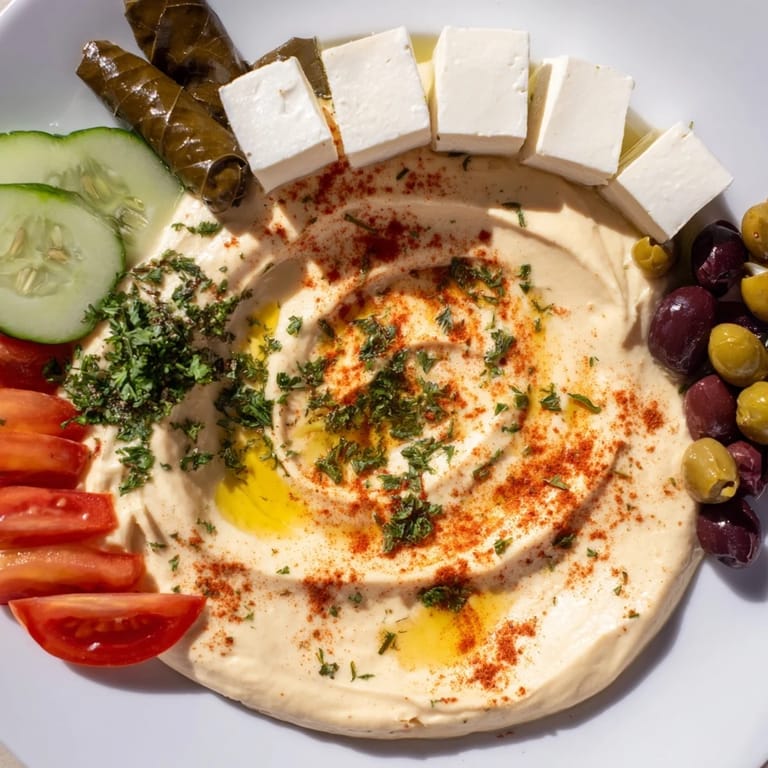
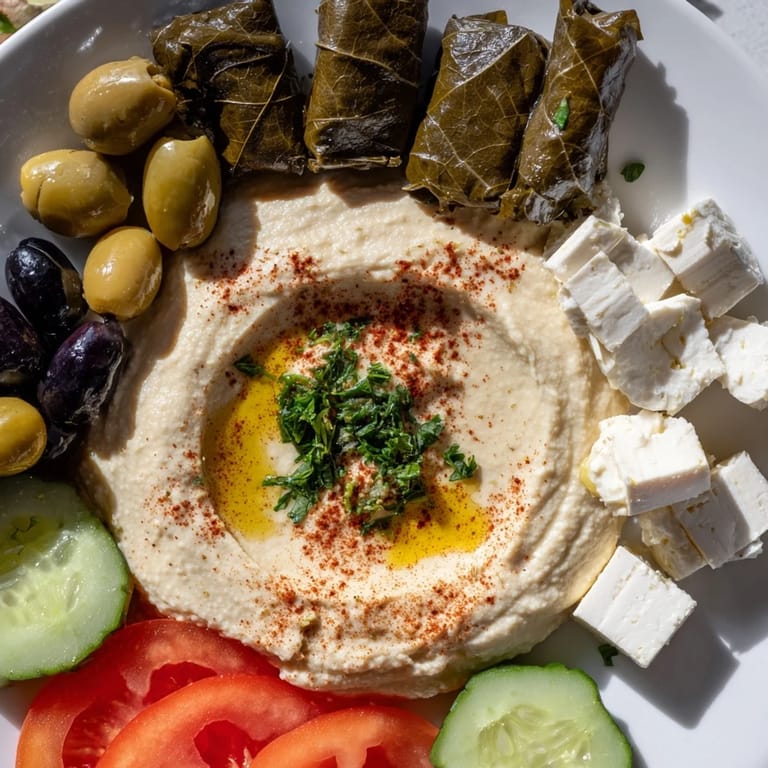
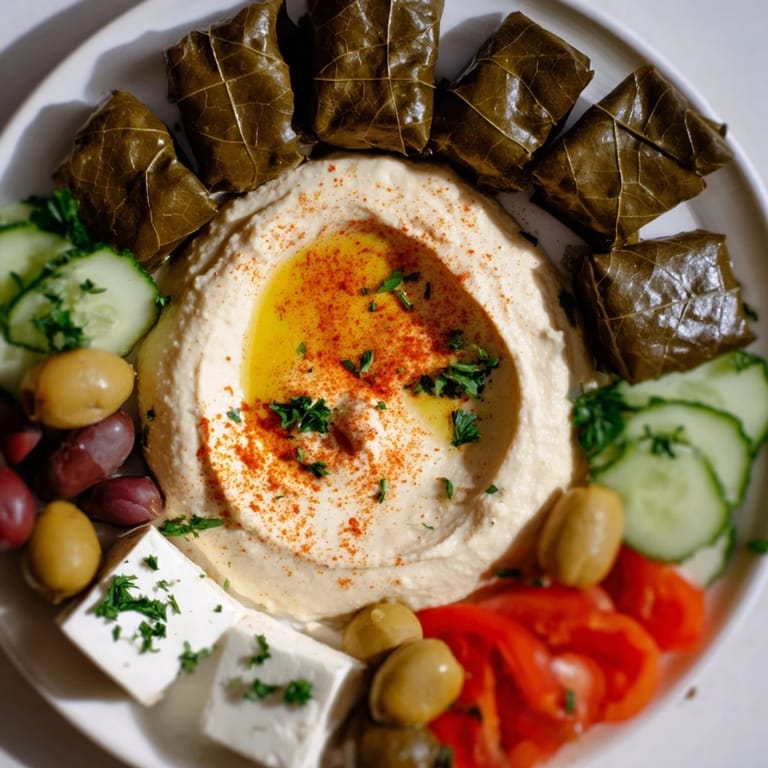
- Pour your hummus into a shallow serving bowl and create a small well in the center with the back of a spoon. Drizzle olive oil into that well and dust with paprika or sumac if you have it; this isn't just for looks, it signals to guests that something special awaits.
- Arrange the Dolmas:
- Place stuffed grape leaves in neat rolls or folds around one section of your platter, positioning them so they look intentional rather than scattered. They can be warm or at room temperature, but they taste better when there's a slight warmth to them still.
- Group the Cheeses:
- Cut feta into rough cubes, slice kasseri into thin rectangles, and crumble or cube the beyaz peynir, then cluster each type together like they're having their own conversation on the platter. This visual separation actually makes people try all three instead of gravitating toward just one.
- Season and Place the Olives:
- Toss your mixed olives with a generous pour of good olive oil and dried oregano, then transfer them to a small dish or scatter them in empty pockets of your platter. A little oregano brings them to life, making even store-bought olives taste brighter and more intentional.
- Add Color and Life:
- Arrange thin cucumber slices, tomato wedges, and lemon wedges around and between everything, then shower the whole platter with chopped fresh parsley. This final layer transforms the table from appetizers into an edible still life.
- Warm and Serve:
- Wrap pita or flatbread in foil and warm it in a 350°F oven for about 5 minutes, then cut it into triangles. Bring everything to the table at once so guests can see the full landscape of flavors before they start filling their plates.
 Save to Pins
 My most vivid meze memory isn't from a fancy dinner but from a lazy afternoon when my partner and I built a small platter just for us, then ended up talking for three hours while we grazed. We weren't hungry, exactly—we were just present, picking up different things, discovering flavors together, making each other laugh. That's when I realized a meze platter is less about the food and more about permission to linger at the table.
The Art of Arrangement
A meze platter is really about visual balance and giving your eye a reason to wander. You want clusters of similar colors and textures interrupted by contrasts—the creamy white hummus shouldn't sit next to pale feta, and the dark olives need cucumber nearby to pop. Think of it like setting a stage where every element guides people toward discoveries rather than overwhelming them all at once.
Making Dolmas from Scratch
If you're feeling ambitious, homemade dolmas are worth the effort, though they do take patience. You'll need fresh or brined grape leaves, a mixture of cooked rice, herbs like dill and mint, and gentle hands to roll them tightly without tearing. The rolling teaches you something about how to treat delicate things with respect—there's no rushing it, and the slight imperfections are what make them taste handmade.
Pairing and Serving Suggestions
A meze platter isn't an ending point; it's an opening act that sets the mood for what comes next. Serve it alongside crisp white wine like Turkish Narince, or go full tradition with raki, which has a way of making everything taste better. Even without alcohol, this platter works beautifully as a light lunch or a casual dinner when you're cooking for people you want to linger with.
- Add roasted red peppers or grilled eggplant strips for deeper, smoky flavor dimensions.
- A small bowl of spiced walnuts or pine nuts adds unexpected crunch and richness.
- If anyone at your table loves heat, set out a small dish of red pepper flakes or hot paste on the side.
 Save to Pins
 Every time you set out a meze platter, you're inviting people to slow down and notice the small differences between a really good olive and an ordinary one, between hummus that tastes like someone cared and hummus from a box. That attention is the real recipe.
Questions & Answers
- → What are the main components of the meze platter?
The platter includes hummus, stuffed grape leaves (dolmas), assorted cheeses such as feta and kasseri, marinated olives, and fresh garnishes like cucumber and tomato.
- → Can I make the dolmas from scratch?
Yes, you can prepare dolmas by cooking rice with herbs and wrapping the mixture in grape leaves before steaming or boiling them.
- → What oil is recommended for the hummus and olives?
Extra-virgin olive oil is used for both the creamy hummus and to dress the olives, enhancing their flavor.
- → How should I serve this meze platter?
Arrange all components attractively on a large platter and serve with warm pita or flatbread for dipping and sharing.
- → Are there suggestions for wine pairings?
A crisp white wine like Turkish Narince or a traditional raki complements the rich and tangy flavors well.
- → Is this meze platter suitable for vegetarians?
Yes, the platter is fully vegetarian and includes plant-based and dairy ingredients.