 Save to Pins
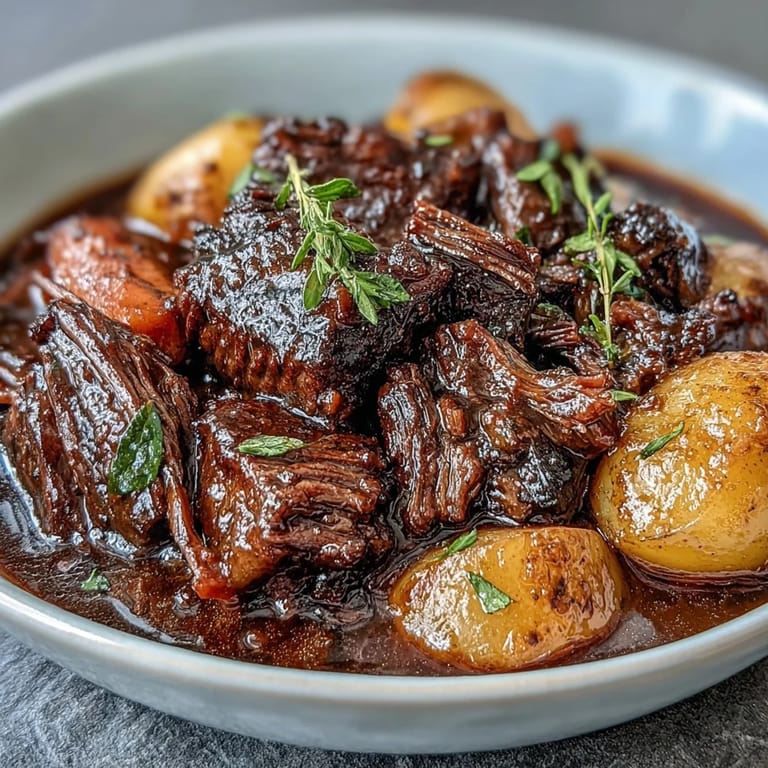
 There's something about the sound of beef hitting a hot skillet that signals comfort is on the way. My kitchen was cold that October afternoon, and I'd pulled out the slow cooker almost without thinking—the kind of automatic reach you make when the weather turns and your body just knows what it needs. This stew, with its deep caramel-colored broth and vegetables so soft they practically dissolve on your tongue, became the thing I made whenever someone needed feeding or I needed feeding myself.
I made this for my neighbor once when her son came home from college, and watching her face when she tasted it—that moment when she closed her eyes and just existed in the comfort of it—reminded me why slow cooking matters. It's not rushed food. It's the opposite of that.
Ingredients
- Beef chuck, cut into 1.5-inch cubes (2 lbs): This cut has just enough marbling to stay juicy during the long cook, and it breaks down into tender pieces that absorb all that wonderful broth flavor.
- Kosher salt and black pepper (1/2 tsp each): Don't skip the searing step—these seasonings on the beef create a crust that locks in flavor before everything goes into the slow cooker.
- Carrots, peeled and cut into 1-inch pieces (3 large): Cut them uniform so they cook evenly, and don't peel them too thin or they'll disappear entirely into the broth.
- Parsnips, peeled and sliced (2 medium): They add an earthiness that regular potatoes can't quite capture, though if you can't find them, just use more carrots.
- Yukon Gold potatoes, peeled and chopped into chunks (2 large): These hold their shape better than russets and have a buttery texture that complements the beef beautifully.
- Yellow onion, diced (1 large): This is your flavor foundation, so don't rush the dicing—it breaks down into the broth and makes everything taste more like home.
- Celery stalks, sliced (3): A secret weapon that adds depth without being obvious about it.
- Garlic, minced (3 cloves): Fresh garlic matters here more than anywhere else in the recipe.
- Tomato paste (2 tbsp): This concentrated umami bomb makes the broth taste like it's been simmering for days even though you've barely started.
- Worcestershire sauce (1 tbsp): Check your bottle if you're serving this gluten-free—this ingredient hides gluten sometimes.
- Bay leaf (1) and dried herbs—thyme and rosemary (1 tsp each): The bay leaf gives you something to hunt for at the end, and the herbs remind you of Sunday dinners.
- Beef broth (4 cups) and dry red wine (1 cup): The wine adds complexity that you can't replicate with broth alone, but if you're cooking for someone who doesn't drink, just use all broth and lose nothing essential.
- Cornstarch and cold water (2 tbsp each): This slurry thickens the stew at the end without making it taste like anything but beef stew.
Tired of Takeout? 🥡
Get 10 meals you can make faster than delivery arrives. Seriously.
One email. No spam. Unsubscribe anytime.
Instructions
- Season and sear your beef:
- Toss those beef cubes with salt and pepper, then heat your skillet until it's genuinely hot—you want that sizzle when the meat hits the pan. Work in batches so you're not crowding the skillet, and let each side brown without moving it around too much; this takes about three minutes per batch and builds flavor you can't skip.
- Build your slow cooker base:
- Transfer all that browned beef to your slow cooker, then layer in the carrots, parsnips, potatoes, onion, and celery. The order doesn't matter much, but I like putting the harder vegetables on the bottom so they get maximum time in the heat.
- Add the flavor makers:
- Stir in your minced garlic, tomato paste, Worcestershire sauce, bay leaf, thyme, and rosemary, mixing everything so the tomato paste doesn't clump. The whole thing might look sparse and dry at this point, but trust the process.
- Pour in your liquid:
- Add the beef broth and red wine, stirring gently to combine everything without breaking up the vegetables. The liquid should come almost to the top of everything, but don't worry if it doesn't quite cover everything—as vegetables cook down, they release moisture.
- Let time do the work:
- Cover your slow cooker and set it to low for eight hours, or until the beef is fork-tender and the vegetables are soft. Resist opening the lid except maybe once to give it a gentle stir around hour four.
- Thicken at the finish:
- Mix cornstarch and cold water in a small bowl until smooth, then stir it into the hot stew. Turn the slow cooker to high, leave it uncovered, and let it cook for about fifteen minutes until the broth thickens into something rich and cling-to-the-spoon perfect.
- Taste and serve:
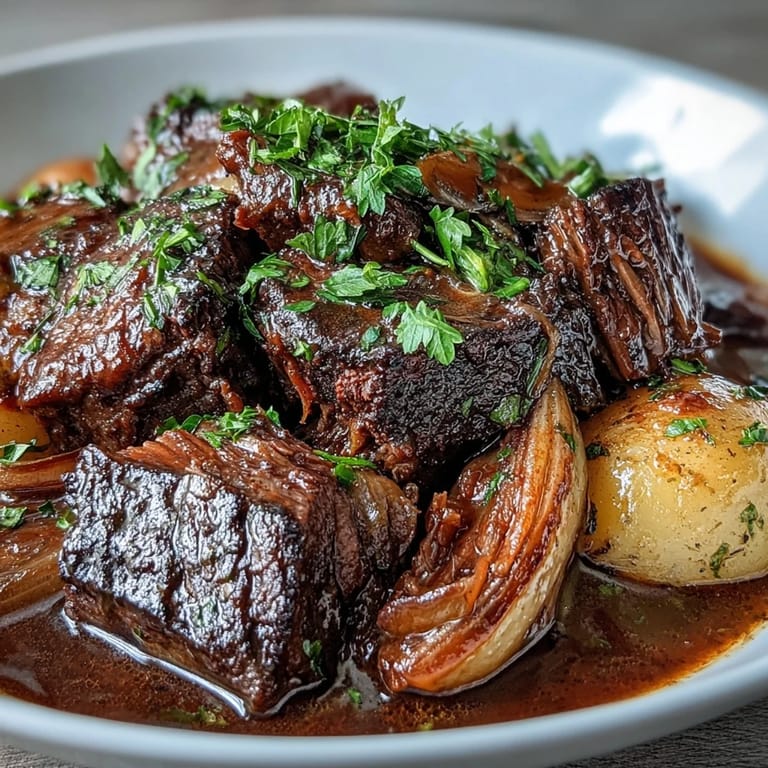
- Fish out that bay leaf, give everything a final taste, and adjust salt and pepper if it needs it. Serve this in bowls deep enough to hold all that gorgeous broth, with crusty bread waiting nearby.
 Save to Pins
 My daughter once asked why this stew tasted like someone had been cooking it all day when I'd barely done anything, and I realized that's exactly the point of slow cooking—you give time and attention in small bursts, and the food gives you back comfort in enormous waves. That's magic, but the kind you can actually replicate in your own kitchen.
Variations to Make It Your Own
This stew is forgiving enough to bend to what you have or what you're craving. I've added sliced mushrooms in the last hour of cooking and watched them become silky and rich, absorbing all the beef flavor like little flavor sponges. A handful of frozen peas stirred in at the very end adds brightness and a slight sweetness that people never expect but always love. For something earthier, swap out some of the Yukon Golds for sweet potatoes, which add a subtle sweetness that plays beautifully against the savory broth.
What to Serve Alongside
This stew wants something to soak up all that broth, and crusty bread is the obvious choice—torn pieces you use to push vegetables around your bowl and sweep up the last of the goodness. I've also ladled it over mashed potatoes and watched people forget their manners, too focused on the combination of creamy potatoes and rich stew to remember to slow down. A simple green salad on the side cuts through the richness without fighting for attention.
Make-Ahead and Storage Tips
This is one of those rare recipes that genuinely improves when you make it a day or two ahead—the flavors meld and deepen, and the whole house smells incredible when you're just reheating it. Refrigerate it in an airtight container for up to four days, or freeze it for up to three months, though I rarely have any left long enough to test that limit. When you reheat, do it gently on the stovetop over medium heat, adding a splash of broth if it's thickened too much in storage.
- Freeze it in individual portions in containers so you always have comfort available on a hard day.
- The stew reheats beautifully either on the stovetop or back in the slow cooker on low, which means minimal effort on the days you need it most.
- If you're doubling the recipe, add an extra hour to the cooking time since your slow cooker will be working harder to heat everything through.
 Save to Pins
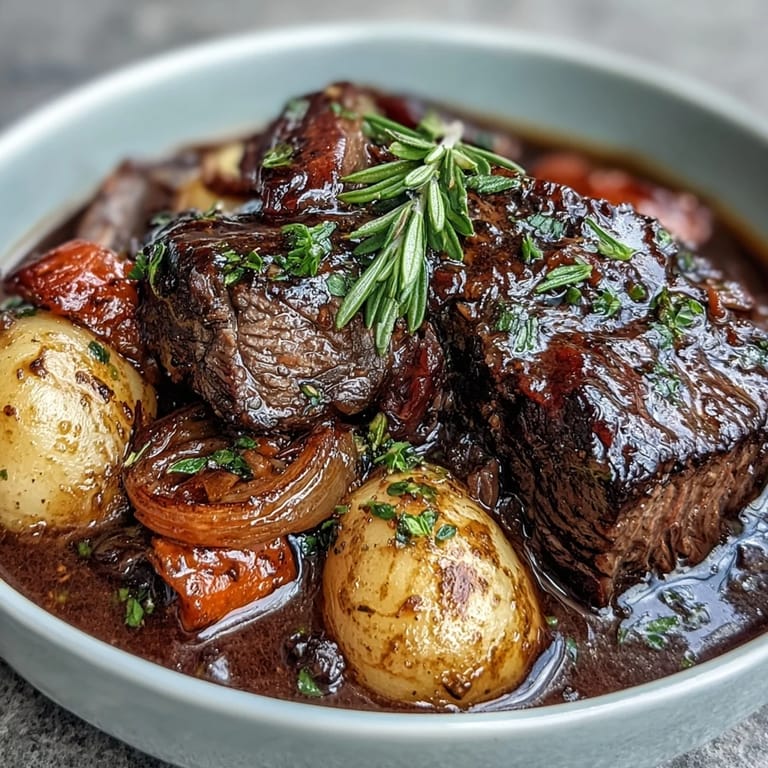
 This stew is permission to slow down on days when everything moves too fast, a bowl of warmth you can set going and then forget about until your house smells like something worth coming home to. Make it for yourself, make it for people you love, make it because the weather turned cold and your body remembers what comfort tastes like.
Questions & Answers
- → What cut of beef works best for this stew?
Beef chuck is ideal for slow cooking as it becomes tender and flavorful over long, low heat.
- → Can I use fresh herbs instead of dried thyme and rosemary?
Yes, fresh herbs can be used; add them toward the end of cooking to preserve their aroma.
- → How can I thicken the stew broth?
A mixture of cornstarch and cold water stirred in near the end helps thicken the liquid beautifully.
- → Is it necessary to brown the beef before slow cooking?
Browning beef enhances the flavor by creating a caramelized surface, adding depth to the finished dish.
- → Can this dish be made without alcohol?
Yes, simply omit the red wine and replace it with additional beef broth for a rich, alcohol-free version.