 Save to Pins
 I discovered this bowl on a lazy Sunday afternoon when I had leftover salmon from dinner and a container of rice I needed to use up. Instead of reheating everything plain, I grabbed what was in the pantry and started playing with a glaze—soy sauce, mirin, a touch of honey—and suddenly the whole thing transformed into something that tasted like it came from a trendy restaurant. My partner asked for seconds before I'd even finished plating, and that's when I knew this was becoming a regular rotation in our kitchen.
The first time I made this for friends, I was nervous about whether the sriracha mayo would actually work with the sweet glaze, but the moment they took that first bite and their eyes lit up, I relaxed. That combination of creamy, spicy, and umami-rich just clicked, and now it's what people ask me to make when they come over.
Ingredients
- Salmon fillets: Skinless fillets are easier to work with and more pleasant to eat in a bowl, but if you only have skin-on, just cook skin-side down and it adds nice texture.
- Soy sauce, mirin, honey, rice vinegar, sesame oil: These five ingredients are the backbone of the glaze—don't skip the mirin because that's where the glossy, professional-looking finish comes from.
- Garlic and fresh ginger: Mince these finely so they dissolve into the glaze and add flavor without visible chunks.
- Cornstarch slurry: This thickens the glaze so it coats the salmon instead of pooling at the bottom of the bowl; mix it with cold water right before you need it.
- Short-grain white rice: Use freshly cooked or day-old rice—day-old actually works better because the grains are less sticky and separate more cleanly.
- Avocado, cucumber, carrot: The raw vegetables stay crisp and bright against the warm salmon, and slicing everything thin makes each bite more balanced.
- Scallions, sesame seeds, nori: These finishing touches add texture and that restaurant-quality visual appeal that makes you want to photograph it.
- Mayonnaise, sriracha, lime juice: The sriracha mayo is the secret sauce—creamy, spicy, and acidic all at once, it ties the whole bowl together.
Tired of Takeout? 🥡
Get 10 meals you can make faster than delivery arrives. Seriously.
One email. No spam. Unsubscribe anytime.
Instructions
- Make the teriyaki glaze:
- Whisk together soy sauce, mirin, honey, rice vinegar, sesame oil, minced garlic, and grated ginger in a small bowl. The mixture should smell fragrant and balanced—not too salty, not too sweet.
- Marinate the salmon:
- Place salmon fillets in a shallow dish and pour half the glaze over them. Let them sit for 10 minutes while you prep everything else; this gives the exterior flavor without making the fish mushy.
- Sear the salmon:
- Heat a non-stick skillet over medium heat and add the salmon. Cook for 3–4 minutes per side until just cooked through—you want it to still have a slight softness in the center, not dry and flaky.
- Thicken the remaining glaze:
- Pour the rest of the marinade into the pan and immediately stir in your cornstarch slurry. It will thicken within a minute or two and turn glossy; return the salmon to coat it generously.
- Make the sriracha mayo:
- Mix mayonnaise, sriracha, and lime juice until smooth and creamy. Taste it and adjust the sriracha to your heat preference—you want it spicy but not overpowering.
- Assemble the bowls:
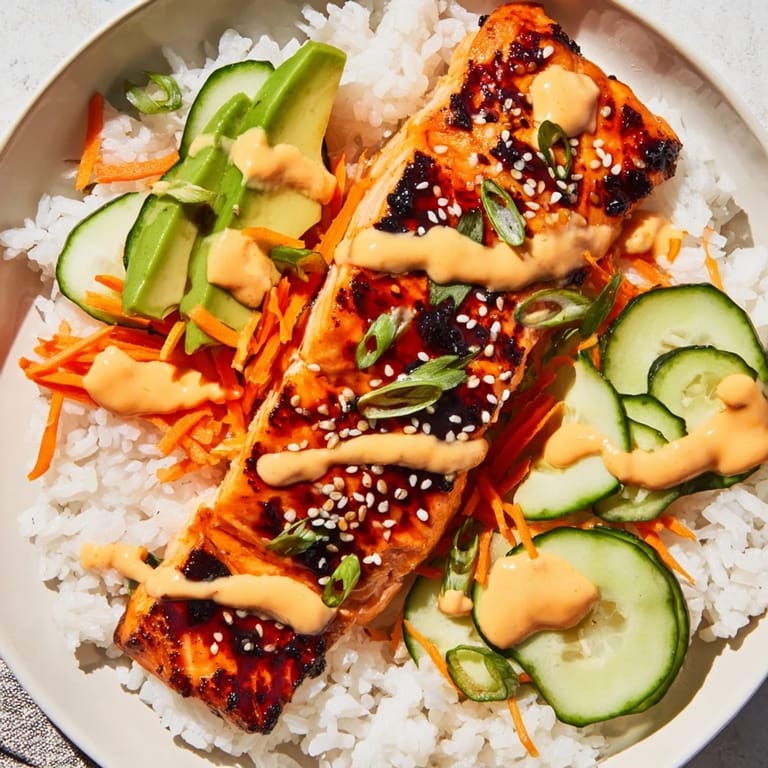
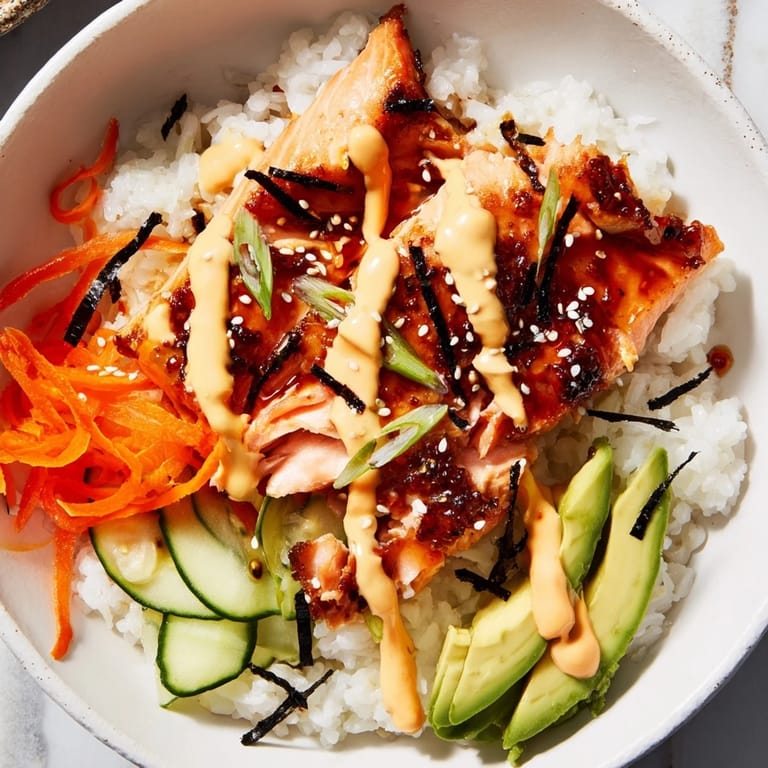
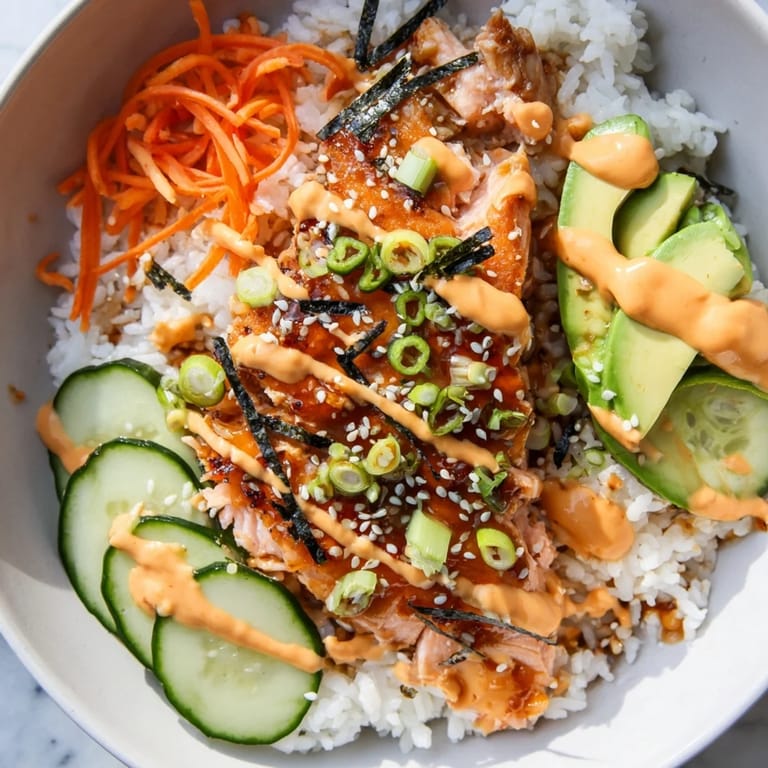
- Divide rice between two bowls, flake the glazed salmon over the top, and arrange avocado, cucumber, and carrot around it. Drizzle the sriracha mayo over everything and top with scallions, sesame seeds, and nori strips.
 Save to Pins
 I remember my sister asking if she could have the sriracha mayo on the side after her first bowl because she wanted to control how much spice hit her, and I realized this recipe is flexible enough that everyone can customize it slightly without losing what makes it special. That's when I knew it was the kind of dish you could make for anyone.
Choosing Your Rice
Short-grain white rice is my go-to because it's fluffy, holds the glaze without falling apart, and tastes neutral enough that it lets the salmon shine. I've tried this with brown rice and quinoa too, and while they work, they add an earthiness that competes a little with the teriyaki flavor rather than supporting it. If you want something heartier, brown rice works, but use it intentionally, not as a substitution you don't think about.
The Sriracha Mayo Moment
The sriracha mayo is honestly what elevates this from a simple salmon bowl to something that feels intentional and craveable. The lime juice cuts through the richness of both the mayo and the glaze, and the sriracha adds this warm, creeping heat that comes after the sweet notes settle. I've learned to make extra because people always want more drizzled on top, and honestly, it's good enough to eat on the side with a spoon.
Building Flavor and Texture
The magic of this bowl is how it plays with contrast—warm salmon against cool avocado, creamy sriracha mayo next to crisp cucumber, the nuttiness of toasted sesame against the umami punch of soy sauce. Every element has a reason to be there, and skipping any of them means losing part of that careful balance. The nori strips add a subtle briny note that ties everything back to its Japanese roots without making it feel like fusion in a way that doesn't work.
- If you can't find mirin, use an extra teaspoon of honey and a splash of water as a substitute, though the glaze won't be quite as glossy.
- Prep all your vegetables before you start cooking the salmon so assembly is fast and nothing cools down.
- Eat this immediately after assembling it because the nori gets soft and the rice starts to absorb the glaze the longer it sits.
 Save to Pins
 This bowl has become my answer to the question of what to cook when I want something that feels special but doesn't require hours in the kitchen. It's the kind of dish that reminds you that simple ingredients and a little attention to technique can create something really memorable.