 Save to Pins
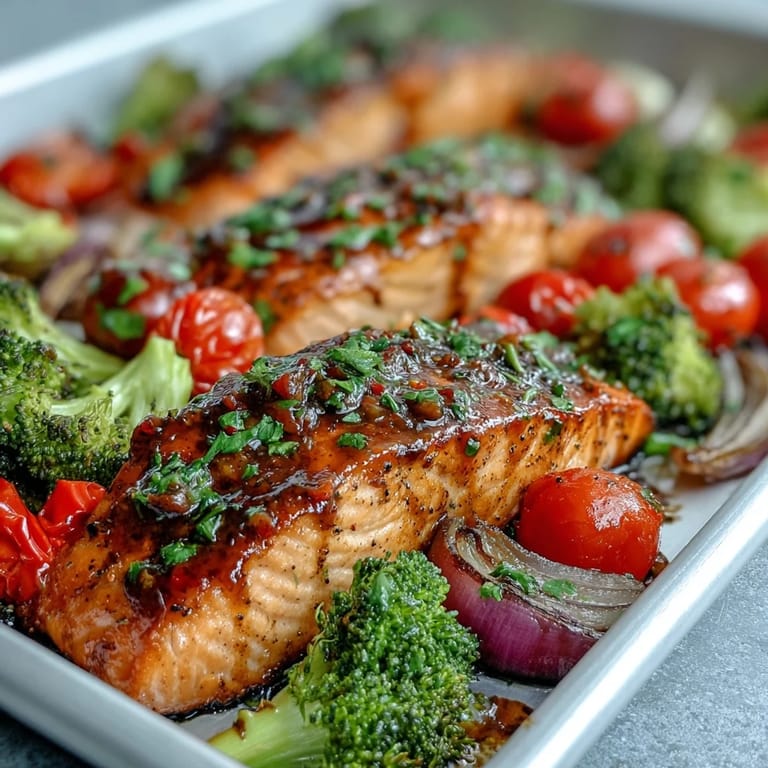
 There's something wonderfully honest about a sheet pan dinner—no pretense, no fussy plating, just honest food that happens to look beautiful. I stumbled onto this Dijon salmon combination on a Tuesday when I was tired of cooking separate components and wanted something that would come together in the oven while I poured a glass of wine. The mustard glaze caught my attention because it promised tang without heaviness, and the vegetables roasting alongside meant caramelized edges and concentrated flavors. What started as a practical solution became the meal I now make when people ask what my go-to weeknight dinner is.
I made this for my sister's surprise visit last spring, and she arrived just as the salmon was finishing in the oven—the smell of roasted vegetables and mustard filling the kitchen was honestly better than any greeting. She sat at my counter, and by the time we plated everything, she was already asking for the recipe, which felt like the highest compliment because she's the kind of cook who doesn't ask for things lightly.
Ingredients
- Salmon fillets (4 fillets, about 6 oz each): Look for bright color and firm flesh; skin-on holds the fish together beautifully but skinless works if that's what you prefer or find.
- Dijon mustard (2 tablespoons): This is the backbone of your glaze—get a good quality one because you'll taste every bit of it and cheap mustard tastes thin in comparison.
- Olive oil (3 tablespoons total): Use a decent quality oil you'd actually drizzle on bread; it matters more than people think when it's one of just a few ingredients.
- Lemon juice (1 tablespoon): Fresh squeezed changes everything, so don't reach for the bottle if you can avoid it.
- Honey (1 teaspoon): This balances the mustard's sharpness with subtle sweetness that makes the whole thing more complex than it should be.
- Garlic (1 clove, minced): One clove is enough; too much will overpower the delicate fish and you'll regret it.
- Broccoli florets (2 cups): Cut them smaller than you think because they'll roast faster and get those crispy edges you're chasing.
- Cherry tomatoes (2 cups, halved): Halving them prevents them from rolling around and helps them caramelize on their flat side.
- Red bell pepper (1 large, sliced): The sweetness of red pepper complements both the mustard and salmon better than green ever could.
- Red onion (1 medium, in wedges): Wedges keep the onion from falling apart and turning into mush, plus they caramelize beautifully.
- Dried Italian herbs (1 teaspoon): Or herbes de Provence if you have it; this is flexible depending on what's in your cabinet.
- Salt and black pepper: Taste as you go because seasoning in two stages (once for vegetables, once for salmon) gives better control.
- Lemon wedges and fresh parsley: These finishing touches aren't optional if you want the dish to sing.
Tired of Takeout? 🥡
Get 10 meals you can make faster than delivery arrives. Seriously.
One email. No spam. Unsubscribe anytime.
Instructions
- Get your oven ready and pan prepared:
- Preheat to 220°C (425°F) and line your sheet pan with parchment paper if you have it—it's not essential but makes cleanup so much easier that I almost always do it. A lightly greased pan works perfectly fine if you don't have parchment.
- Whisk together your glaze:
- Combine the Dijon mustard, olive oil, lemon juice, honey, minced garlic, salt, and pepper in a small bowl and whisk until it's smooth and the honey dissolves completely. Taste it straight from the whisk—you want it tangy but not aggressive, and the honey should be a whisper not a shout.
- Toss the vegetables with oil and seasoning:
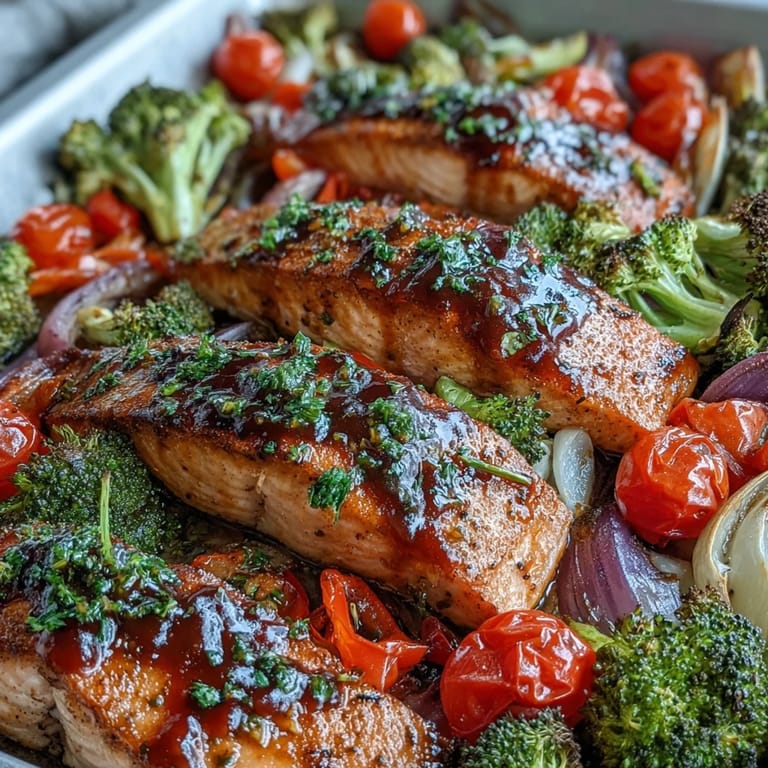
- Scatter all your vegetables across the sheet pan, drizzle with olive oil, sprinkle with herbs, salt, and pepper, then toss everything until the pieces are coated and spread them into an even layer. Leave some space in the middle or around the edges for your salmon to nestle in without crowding.
- Arrange salmon and brush with glaze:
- Nestle the salmon fillets skin-side down among the vegetables (if yours have skin), then brush each piece generously with your Dijon glaze, making sure it gets into any crevices. Don't be shy with the glaze because it'll caramelize and flavor the fish as it cooks.
- Roast until everything is done:
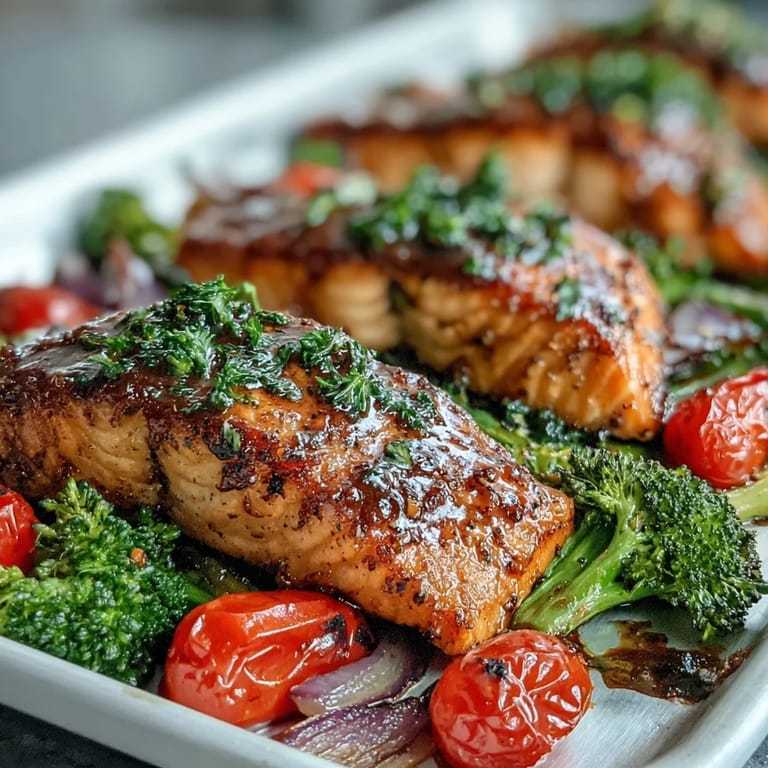
- Pop the pan into the oven for 20 to 25 minutes—the salmon is ready when it's opaque and flakes easily with a fork, and the vegetables should be tender with caramelized edges. Check at 20 minutes because ovens vary and overcooked salmon is sad salmon.
- Finish and serve immediately:
- Pull it from the oven, squeeze fresh lemon over everything, scatter parsley if you're using it, and bring it straight to the table. The whole thing is best served hot when the flavors are brightest and the vegetables still have some texture.
 Save to Pins
 The moment that made this recipe stick for me was when my neighbor came over smelling something good and I handed her a plate without thinking twice about it—and she came back three days later asking for the recipe because she'd already made it twice. That's when you know something works, when people don't just compliment your cooking but actually recreate it in their own kitchens.
The Magic of the Dijon Glaze
The glaze is honestly what separates this from just roasted salmon with vegetables. The mustard brings a sophisticated tang that you don't expect in something this simple, and the honey smooths the sharp edges so it tastes layered instead of one-dimensional. I've tried adding things to it—Worcestershire sauce, hot sauce, different vinegars—and honestly it was better before I started tinkering.
Vegetable Timing and Temperature
This is the thing nobody tells you about sheet pan cooking: vegetables and protein cook at different rates, so you need vegetables that will be ready in roughly the same time as your salmon. Broccoli and peppers are perfect because they're sturdy enough to handle the high heat without falling apart, and tomatoes actually improve when they're roasted hard because they collapse into something deeply flavorful. I learned the hard way that delicate vegetables like asparagus cook too fast and become papery, so I now swap them in only when I shorten the cooking time.
Wine Pairing and Serving Suggestions
A crisp Sauvignon Blanc or unoaked Chardonnay is genuinely the right call here because the mustard and lemon need acidity to dance with, and a buttery wine would feel heavy against the fresh vegetables. This meal is light enough that you don't need anything starchy alongside it, though I sometimes add rice or crusty bread if I want something to soak up the pan juices. Serve it straight from the pan if you're not worried about impressing anyone, or plate it nicely if you want it to look as good as it tastes.
- Cut vegetables consistently so they finish cooking at the same time.
- If your oven runs hot or cold adjust the time accordingly because overcooked salmon is worse than anything else that could go wrong.
- This reheats surprisingly well the next day if you have leftovers, though freshly made is always better.
 Save to Pins
 This is the kind of dinner that tastes more impressive than it actually is, which means you can confidently make it for people you want to impress without breaking a sweat. It's become my answer to the question what should I make tonight because it's fast, healthy, and genuinely delicious every single time.
Questions & Answers
- → What vegetables work best in this dish?
Broccoli, cherry tomatoes, bell peppers, and red onions roast beautifully together. You can substitute asparagus, green beans, or zucchini depending on season and preference.
- → How do I know when the salmon is done?
The salmon is ready when it turns opaque throughout and flakes easily when pressed with a fork. This typically takes 20-25 minutes at 425°F.
- → Can I use different mustard?
Whole grain mustard adds texture, while spicy brown mustard provides more heat. For a milder flavor, use half Dijon and half yellow mustard.
- → Should I remove the salmon skin?
Skin-on salmon stays moister during roasting and easily releases from the flesh after cooking. Skinless works fine too—just adjust cooking time by 2-3 minutes.
- → How do I prevent overcrowding the pan?
Use a large half-sheet pan and spread ingredients in a single layer. If necessary, use two pans to ensure proper roasting rather than steaming.
- → Can I prepare this ahead?
Whisk the glaze and chop vegetables up to a day in advance. Store separately in the refrigerator and assemble just before roasting for best results.