 Save to Pins
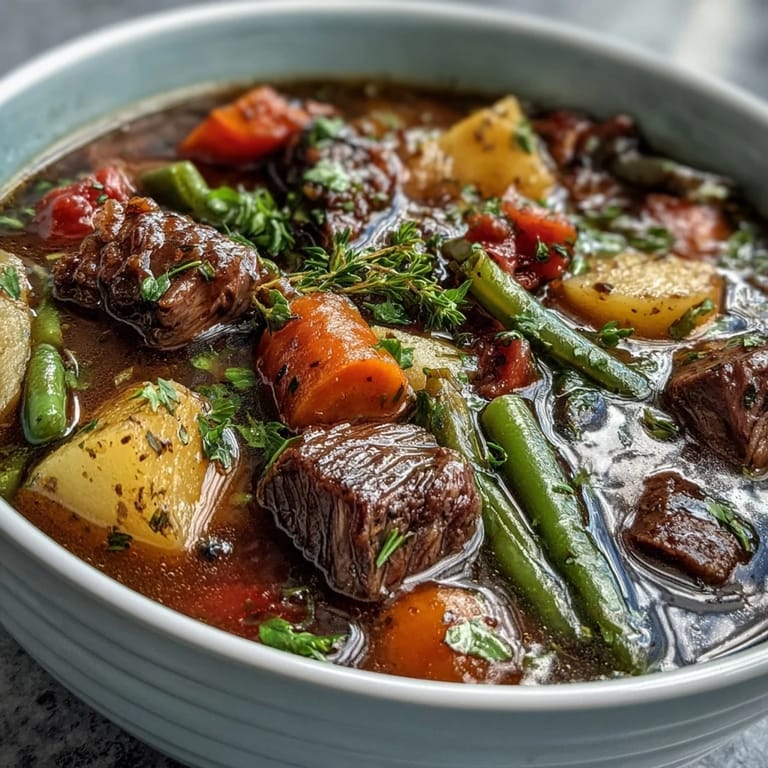
 My kitchen filled with the smell of browning beef on a gray afternoon when my daughter came home complaining about the cold, and I realized I had everything I needed to make something that would warm her from the inside out. This soup isn't fancy or complicated, but there's something about the way the beef becomes so tender it practically dissolves on your tongue, and how the vegetables soften into this golden, savory broth that makes you forget you're just eating leftovers from the crisper drawer. It's the kind of dish that tastes better each time you reheat it, almost like it's been thinking about itself overnight.
I made this for my elderly neighbor last winter after she had surgery, and she called me three days later to ask if I'd written down the recipe because her grandson had eaten it straight from the container. The look on her face when I brought that steaming pot over was worth more than any fancy dessert, and now it's become our tradition whenever someone in the neighborhood needs a little boost.
Ingredients
- Beef chuck (1.5 lbs, cut into 1-inch cubes): This cut has just enough marbling to become incredibly tender and flavorful during the long cooking time, so don't swap it out for leaner beef or you'll lose that luxurious texture.
- Olive oil (2 tbsp): Just enough to get a good sear on the meat without making the broth greasy.
- Onion, carrots, and celery (diced and sliced): These three create the flavor base that makes this soup taste like home, and they'll soften into the broth giving everything depth.
- Garlic (3 cloves, minced): Add it after the softer vegetables so it doesn't burn and turn bitter.
- Potatoes and parsnip (peeled and diced): The potatoes thicken the broth slightly as they break down, while the parsnip adds a subtle sweetness that rounds out all the savory flavors.
- Green beans and peas (trimmed and frozen): Green beans go in early so they have time to get tender, but frozen peas are added at the very end so they stay bright and slightly firm.
- Diced tomatoes (one 14.5 oz can with juice): This adds acidity that brings all the flavors into focus, so don't drain it.
- Beef broth (8 cups): Use good quality broth because it's the backbone of the whole soup, and the difference between mediocre and excellent broth will taste like the difference between good and unforgettable.
- Bay leaves, thyme, oregano, salt, and pepper: These herbs work together to create that classic soup flavor that tastes like someone's been cooking all day, even though you haven't.
- Fresh parsley (2 tbsp, chopped for garnish): This is the finishing touch that makes people say the soup tastes restaurant-quality, so don't skip it even though it's just a garnish.
Tired of Takeout? 🥡
Get 10 meals you can make faster than delivery arrives. Seriously.
One email. No spam. Unsubscribe anytime.
Instructions
- Get your pot hot and brown that beef:
- Heat your oil over medium-high heat until you see it shimmer, then add the beef in a single layer and let it sit for a minute or two before stirring so it gets a proper brown crust. This takes about five to seven minutes total, and the smell will convince you to make a bigger batch next time.
- Build your flavor foundation:
- Once the beef is set aside, add your onion, carrots, and celery to the same pot and let them soften for five minutes while you listen to them sizzle. Then add your garlic and let it get fragrant for just a minute before you do anything else, because burnt garlic will haunt you.
- Combine everything and let time do the work:
- Create a moment for the soup to think:
- Return the beef to the pot and add everything except the peas, then bring it to a boil and immediately turn it down to a simmer. This is where you can walk away for a while, maybe do some dishes or sit down with coffee, checking in occasionally to give it a stir and make sure nothing's sticking to the bottom.
- Wake up the soup with the peas:
- After an hour and fifteen minutes, the beef should be so tender it falls apart with your spoon and the vegetables should be completely soft. Add your peas now and let them cook for just ten to fifteen minutes so they stay bright green and don't turn to mush.
- Taste and adjust before serving:
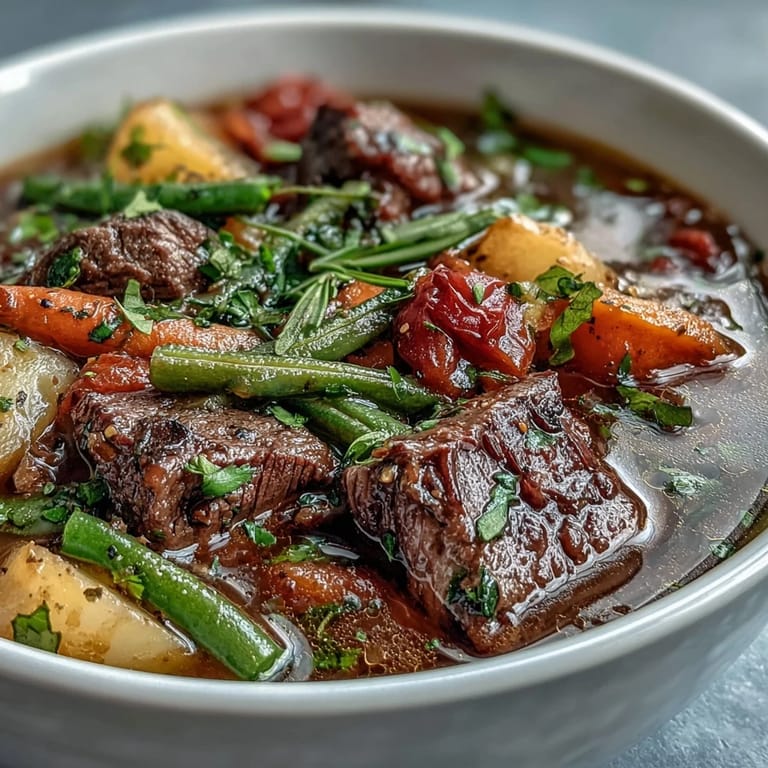
- Fish out those bay leaves, give the soup a taste, and add more salt or pepper if it needs it. Fresh parsley scattered on top makes it look like you spent all day cooking when really you were mostly just letting the oven do the work.
 Save to Pins
 There's something almost meditative about watching a pot of soup transform from a collection of raw ingredients into something that nourishes both body and soul. This is the kind of food that deserves to be shared, that makes people linger at the table a little longer and talk a little easier.
The Power of a Long Simmer
The longer this soup cooks, the better it gets, which is basically a life lesson wrapped up in a pot. The beef doesn't just become tender, it actually becomes part of the broth, and all those vegetables aren't just ingredients anymore, they're the architecture that holds everything together. There's no rushing this recipe, and honestly, that's one of its greatest gifts.
When to Serve This Soup
Winter is obviously the prime season for this soup, but I've also made it on cool fall evenings or even in the early summer when someone I love is going through something and needs comfort food. There's also something wonderful about making this on a lazy Sunday afternoon when the whole day stretches ahead and you can simmer it while you read or work on other things. It's flexible enough to fit into your life whenever you need it.
Storing and Reheating Your Soup
This soup keeps beautifully in the refrigerator for up to four days, and it actually tastes better the next day when the flavors have settled into each other overnight. You can reheat it gently on the stove with a splash of water if it's gotten too thick, and it freezes wonderfully for up to three months if you want to make a big batch. A crusty bread is essential for soaking up every last drop of broth, and honestly, that's often the best part of the whole meal.
- Store in an airtight container and let it cool to room temperature before refrigerating to avoid condensation.
- When reheating, add a little beef broth or water if the soup has thickened too much, and taste before adding more salt.
- The soup tastes even better the next day, so don't hesitate to make it ahead for dinner parties or when you're feeling under the weather.
 Save to Pins
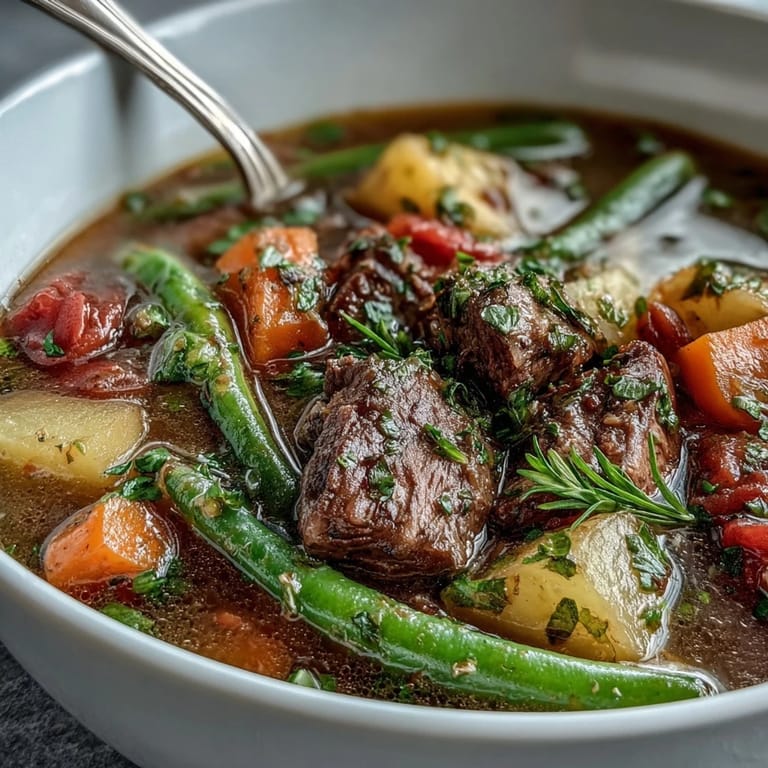
 This beef and vegetable soup is proof that the simplest foods are often the ones that matter most, the ones that show up when we need them and stay with us long after the bowl is empty. Make it this week.
Questions & Answers
- → What cut of beef works best for this soup?
Chuck beef is ideal because it becomes tender and flavorful during long simmering. Cut into 1-inch cubes for even cooking.
- → Can I make this in a slow cooker?
Yes. Brown the beef first, then add all ingredients to your slow cooker. Cook on low for 6-7 hours or high for 3-4 hours until beef is tender.
- → How should I store leftovers?
Refrigerate in airtight containers for up to 4 days. The flavors actually improve overnight. Reheat gently on the stove.
- → Can I freeze this soup?
Absolutely. Cool completely, then freeze in portions for up to 3 months. Thaw overnight in the refrigerator before reheating.
- → What vegetables can I substitute?
Try turnips, sweet potatoes, or rutabaga instead of regular potatoes. Add other hearty vegetables like butternut squash or kale.
- → How do I know when the beef is done?
The beef should fork-tender and easy to cut. If it still feels chewy after the recommended time, continue simmering until tender.