 Save to Pins
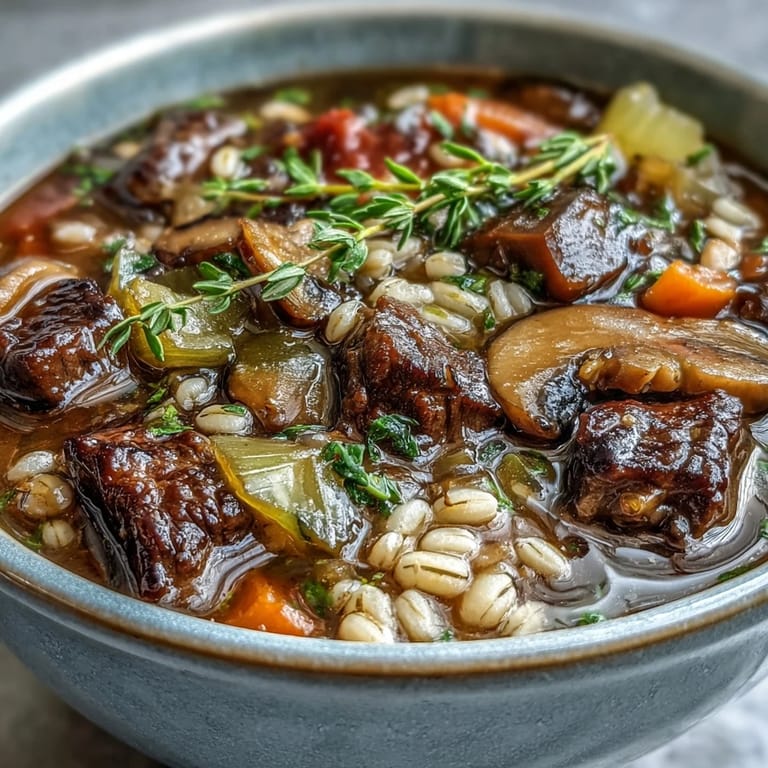
 There's something about the smell of beef browning in a hot pot that pulls me back to watching my uncle cook in his tiny kitchen on a gray November afternoon. He was making soup without a recipe, just tossing things in as he went, and I remember asking him why he didn't follow the steps like normal people do. He laughed and said the best soups are built, not followed. That lesson stuck with me, and now whenever I make this vegetable beef and barley soup, I think about how he taught me to trust my senses more than the timer.
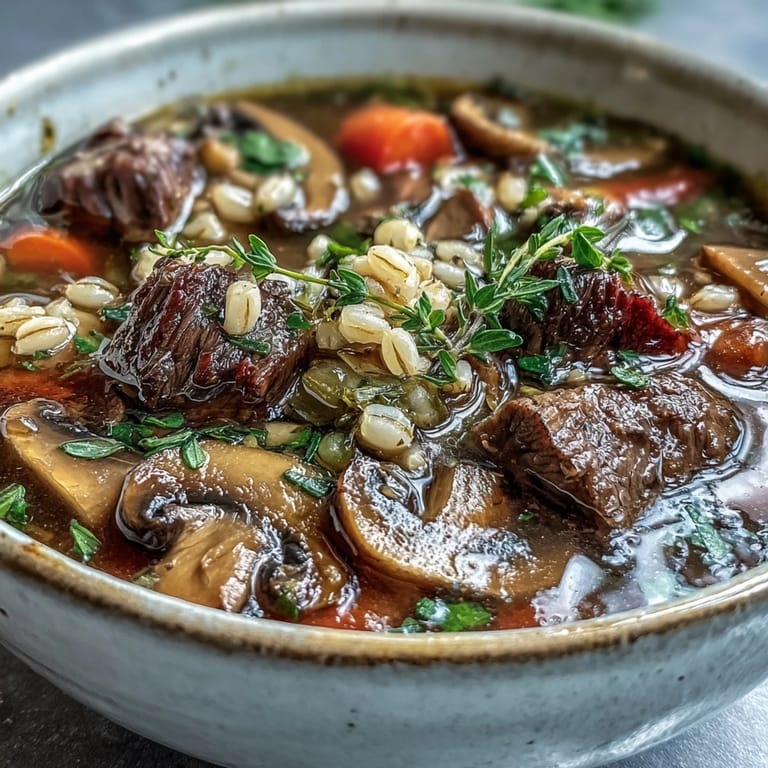
I made this soup for my book club on a snowy February evening, and everyone showed up an hour early just to eat more of it. One friend literally had three bowls and asked if I was willing to share the recipe or if it had to stay a secret. The mushrooms turned out to be the unexpected star that night, earthier and more interesting than anyone expected, and it sparked a whole conversation about ingredients people usually overlook.
Ingredients
- Beef stew meat: Look for chunks with some marbling rather than completely lean cuts, as the fat keeps them tender and flavorful during the long simmer.
- Pearl barley: Rinsing it before cooking removes excess starch and keeps the soup from becoming gummy or overly thick.
- Cremini or white mushrooms: Cremini have a deeper, earthier flavor that develops beautifully as they cook down, but white mushrooms work just fine if that's what you have.
- Onion, carrots, and celery: This trio is the foundation of the soup's flavor, and taking time to get them evenly sized helps them cook at the same rate.
- Garlic: Don't skip the mincing step or use pre-minced garlic from a jar, as fresh minced garlic adds brightness that jarred versions simply can't match.
- Potato: Choose a waxy variety like red potatoes rather than starchy russets, so they hold their shape and don't fall apart.
- Diced tomatoes: The acidity balances all the richness from the beef and helps brighten the overall flavor profile.
- Beef broth: Use a good quality broth, whether homemade or store-bought, because it's the backbone of everything you'll taste.
- Bay leaf, thyme, and parsley: These herbs add complexity without overpowering, and the bay leaf should always come out before serving to prevent anyone biting down on it.
- Olive oil: Use a regular olive oil here, not extra virgin, since high heat can make premium oil bitter.
Tired of Takeout? 🥡
Get 10 meals you can make faster than delivery arrives. Seriously.
One email. No spam. Unsubscribe anytime.
Instructions
- Get your pot ready and brown that beef:
- Heat olive oil in a large pot over medium-high heat until it shimmers, then add the beef cubes in a single layer without crowding. Let them sit undisturbed for a couple minutes so they develop a golden brown crust before you start stirring, which takes about five minutes total. This browning step isn't just for looks; it builds a flavor foundation that makes the entire soup taste deeper and more developed.
- Build your flavor base with aromatics:
- Remove the beef to a plate, then add your diced onion, carrots, and celery to the same pot without washing it out, so you catch all those flavorful brown bits stuck to the bottom. Stir them around for four to five minutes until they start to soften and turn slightly golden at the edges. The kitchen will smell amazing at this point, which is exactly how you know you're on the right track.
- Add the mushrooms and let them release their magic:
- Toss in your sliced mushrooms and cook for three minutes, stirring occasionally so they cook evenly. They'll release moisture and start to shrink, which might look like you added too much at first, but trust the process. The juices they release will add umami depth to your soup.
- Wake everything up with garlic:
- Stir in your minced garlic and cook for about one minute just until it becomes fragrant. You don't want to cook it much longer than that or it can turn bitter and lose its fresh punch.
- Bring all the components together:
- Return the beef to the pot along with the diced potatoes, tomatoes with their juices, rinsed barley, beef broth, bay leaf, thyme, and parsley. Give everything a good stir so nothing sticks to the bottom, and you'll see the broth start to look rich and full of promise.
- Start the long simmer:
- Bring the soup to a boil, then reduce the heat to low and cover the pot. Let it simmer gently for about one hour, stirring occasionally so the barley cooks evenly and the flavors keep melding together. You want a gentle bubble, not an aggressive boil, which keeps the beef tender rather than tough.
- Check for doneness and finish cooking if needed:
- After an hour, test the barley and beef to see if they're both tender. If the barley still has a slight firmness or the beef seems chewy, uncover the pot and simmer for another fifteen to twenty minutes, which also helps the soup thicken slightly as liquid reduces. This uncovered time is when the soup really starts to look like itself, darkening and concentrating in flavor.
- Season and serve:
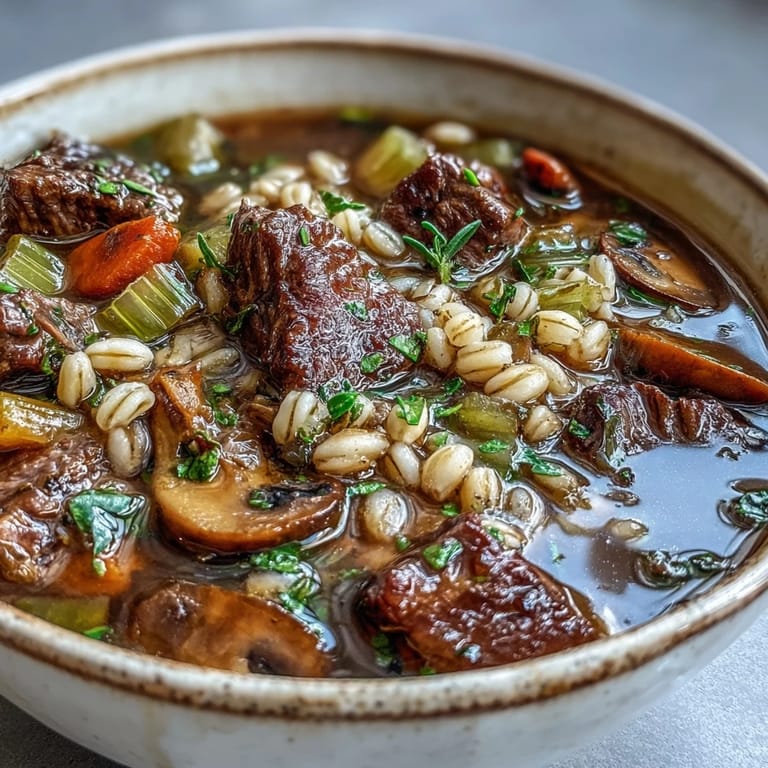
- Taste the soup and add salt and freshly ground black pepper until it tastes right to you, remembering that broth already contains salt so add gradually. Fish out that bay leaf before serving, ladle the soup into bowls, and if you have fresh parsley on hand, a little sprinkle on top adds color and a fresh note.
 Save to Pins
 My neighbor once told me that soup is the only dish where imperfection becomes an asset, where a little extra vegetable or a splash of something unexpected usually makes it better. After making this soup dozens of times now, I completely understand what she meant.
Why This Soup Works So Well
The combination of beef, barley, and mushrooms creates a texture spectrum that keeps each spoonful interesting. The beef provides protein and richness, the barley adds a satisfying chewiness and absorbs the broth beautifully, and the mushrooms contribute an earthy undertone that makes you close your eyes a little bit while eating. Everything works together without any single ingredient dominating, which is the hallmark of a truly balanced soup.
Making It Your Own
Once you've made this soup once and understand how it comes together, you can start experimenting without fear. I've added a splash of dry red wine after browning the beef, which adds a subtle complexity that people always try to identify but can't quite name. Swapping in chicken or vegetable broth creates a lighter version that still feels hearty, and adding chopped kale or spinach in the last ten minutes gives you extra greens without overpowering the soup's character.
Storing and Reheating Your Soup
This soup actually tastes better the next day as the flavors meld and develop overnight, so don't be shy about making a big batch and eating it throughout the week. Store it in an airtight container in the refrigerator for up to four days, or freeze it in portions for up to three months if you want to have homemade soup ready on a truly rough day.
- When reheating, do it slowly over medium heat rather than blasting it on high, which keeps the vegetables from becoming mushy.
- The soup may thicken as it sits, so add a splash of broth or water when you reheat it to get back to your preferred consistency.
- If you've frozen the soup, thaw it in the refrigerator overnight before reheating rather than rushing the process.
 Save to Pins
 This soup reminds me that the best meals are the ones made without pressure, where you can taste the care in every spoonful. Make it for someone you care about, and watch how a simple bowl of soup can turn into something that sticks with them long after dinner ends.
Questions & Answers
- → How long does the barley need to cook?
Pearl barley typically requires 50-60 minutes of simmering to become tender. The soup cooks for a total of about 75 minutes, which ensures the barley is fully cooked and has absorbed some of the flavorful broth.
- → Can I make this soup ahead of time?
Absolutely. This soup actually tastes better the next day as flavors have time to meld. Store in an airtight container in the refrigerator for up to 4 days. The barley will continue absorbing liquid, so you may need to add more broth when reheating.
- → What cut of beef works best?
Beef chuck or stew meat cut into 1-inch cubes is ideal. These cuts become tender during the long simmering process. For a quicker version, you can use lean ground beef as suggested in the notes.
- → Is this soup freezer-friendly?
Yes, this soup freezes well for up to 3 months. However, keep in mind that barley will continue softening in the freezer. If you plan to freeze, consider undercooking the barley slightly by about 10 minutes.
- → Can I use quick-cooking barley instead?
You can substitute quick barley, but add it during the last 15-20 minutes of cooking time to prevent it from becoming mushy. Pearl barley provides better texture for long-simmered soups.
- → What vegetables can I add or substitute?
Parsnips, turnips, or butternut squash work well in place of or alongside potatoes. For more greens, add chopped kale or spinach during the final 10 minutes as suggested. Green beans or peas can also be added in the last 15 minutes.