 Save to Pins
 I discovered this dish while setting up for a dinner party at my place, standing in front of the fridge with about thirty minutes left before guests arrived. I had beef, chicken, fresh mozzarella, and feta all staring back at me, and instead of panicking, I got this wild idea to arrange them in stripes on a platter. The balsamic glaze was simmering on the stove, filling the kitchen with this deep, sweet-sour aroma that made everyone walk in asking what I was making before they even took off their coats. It turned out to be the conversation starter that night, and honestly, it's become my go-to when I need something that looks restaurant-quality but feels completely effortless.
My sister brought her new boyfriend over once, and I made this because I wanted something that felt polished but also showed off my cooking without being fussy. He kept asking how I got the beef so tender, and she was laughing because she remembered my first attempt at searing meat where I basically cremated it. This platter became proof that I'd actually learned something in the kitchen, and somehow it mattered that he saw that.
Ingredients
- Fresh mozzarella: Buy it the day you're serving this if you can—it has this delicate texture that hardens when cold for too long, and you want it to feel almost pillowy against the warm meat.
- Feta cheese: Get the good stuff if possible; the briny bite is essential to balance the sweetness of the glaze and the richness of the meat.
- Beef tenderloin: This cut is forgiving because it's naturally tender, so even if you accidentally leave it on the heat thirty seconds too long, it doesn't turn into rubber like cheaper cuts would.
- Chicken breast: Pound it gently to even thickness so it cooks in the same time as your beef—uneven pieces will either dry out or stay raw depending on where they are in the pan.
- Olive oil: Don't skip this or use cooking spray; you need real fat for the sear to work properly and to build that golden crust.
- Balsamic vinegar: The quality here makes an actual difference in the final glaze, so grab a decent bottle if you can.
- Honey: Just a tablespoon rounds out the sharpness of the vinegar and gives the glaze this luxurious, glossy finish.
- Fresh basil: Tear it by hand instead of chopping—it looks more intentional on the platter and won't bruise and turn black before anyone eats it.
Tired of Takeout? 🥡
Get 10 meals you can make faster than delivery arrives. Seriously.
One email. No spam. Unsubscribe anytime.
Instructions
- Build your balsamic foundation:
- Pour the balsamic vinegar and honey into a small saucepan and let them get friendly over medium heat. Once it starts bubbling gently around the edges, drop the heat down and let it sit there for eight to ten minutes, stirring occasionally, until it's thick enough that a spoon dragged through it leaves a trail. This is when the kitchen starts to smell incredible.
- Get your proteins ready:
- Season your beef and chicken strips generously with salt and pepper—don't be shy, because these are relatively neutral canvases waiting for flavor. Heat your skillet over medium-high heat until it's hot enough that a drop of water sizzles and disappears immediately, then add enough olive oil to coat the bottom.
- Sear with intention:
- Work with the beef first since it's more forgiving. Lay the strips in a single layer and listen for that immediate sizzle; if you don't hear it, your pan isn't hot enough. One to two minutes per side is all you need—you're looking for a golden crust, not cooking it through completely because carryover heat will finish the job. Remove the beef to a plate and repeat with the chicken, which might need a minute or two extra depending on thickness.
- Create your visual moment:
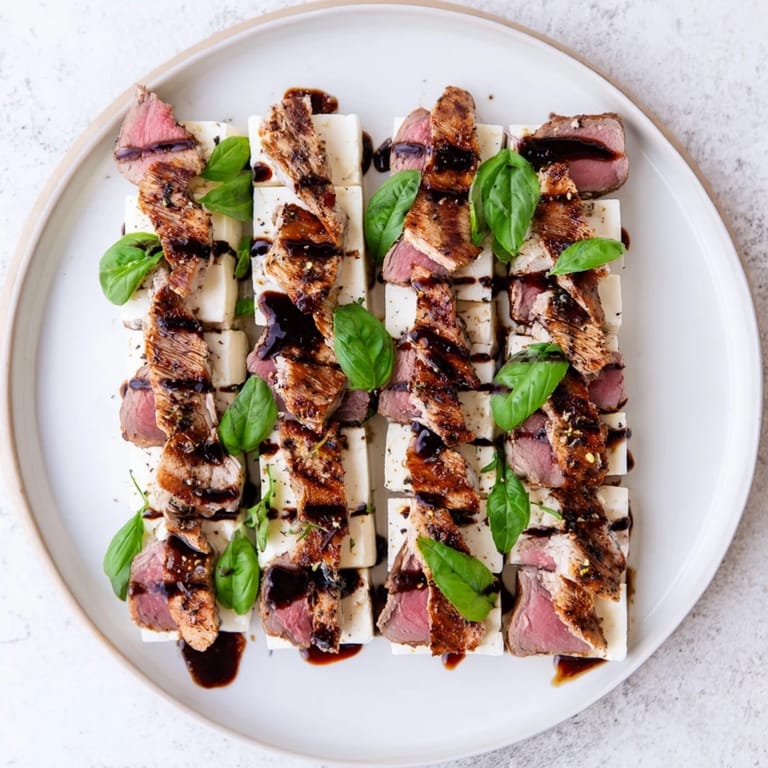
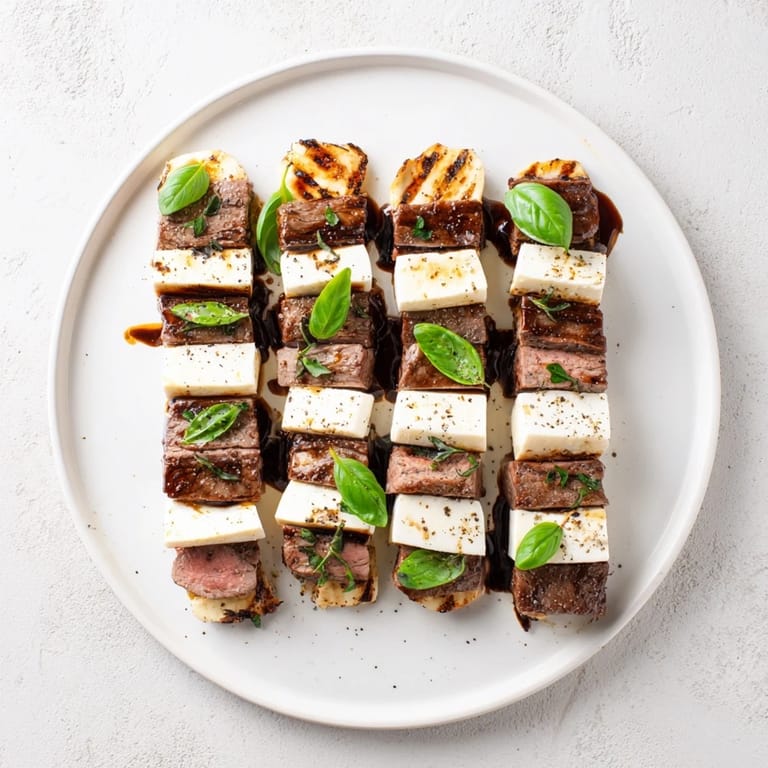
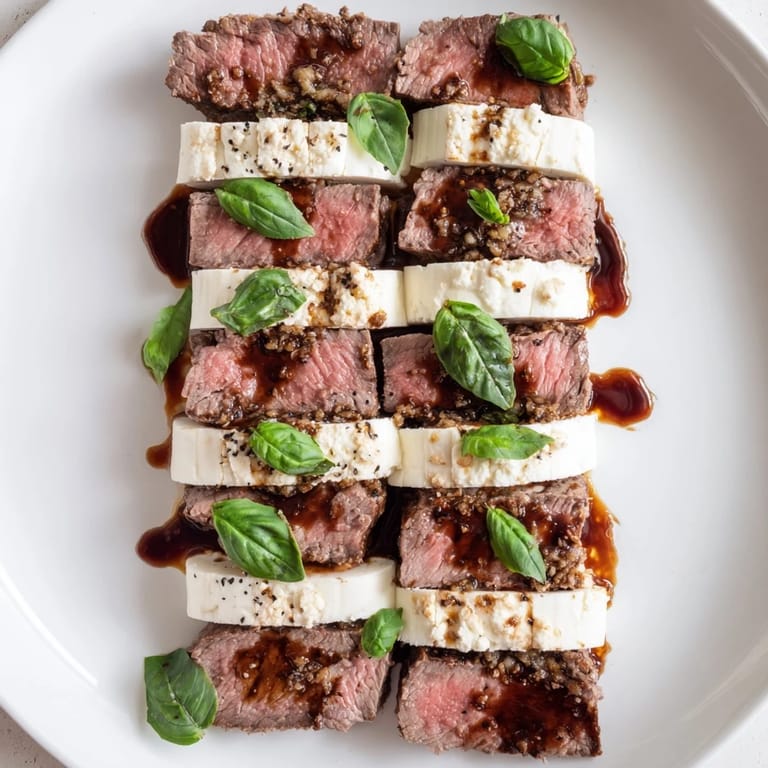
- While the meats cool just enough to handle comfortably, arrange your cheese and meat strips on the serving platter in alternating rows—white cheese, pink meat, white cheese, pink meat—like an edible flag. The visual rhythm is half the appeal here, so take your time with the spacing.
- Finish with the glaze:
- Drizzle that cooled balsamic glaze over the meat strips in whatever pattern feels right—I usually go in loose diagonal lines, but you can be as artistic or casual as you want. It'll catch the light beautifully and add another layer of sophistication.
- Garnish and go:
- Scatter torn basil leaves across the top and finish with a crack of fresh black pepper. Serve at room temperature so all the flavors and textures come through without being numbed by coldness.
 Save to Pins
 There's something almost ceremonial about plating this dish, like you're creating edible art that people feel a little guilty destroying. I remember a friend pausing before taking a piece, saying it looked too pretty to eat, and then realizing halfway through that the simplicity of the components was exactly why it worked so well. That moment when people realize good food doesn't need to be complicated, just intentional—that's when this platter feels like more than just an appetizer.
The Magic of Stripes
There's psychology in the presentation of this dish that goes beyond just making it Instagram-friendly. The alternating pattern creates a visual rhythm that prepares your eye for the flavor contrast you're about to experience—cool creamy cheese followed by warm savory meat. It's the kind of simple arrangement that makes people feel welcomed and cared for, like someone took the extra thirty seconds to think about their experience. I've noticed that people approach this platter differently than they would a bowl of random appetizers; they're more thoughtful, more present, more willing to pause and appreciate what's in front of them.
Playing with the Formula
Once you nail the basic formula, this dish becomes a blank canvas for seasonal and personal variations. I've done versions where I swapped the chicken for prosciutto because I was making it for someone who doesn't eat poultry, and honestly, the richness of the prosciutto against the feta was even more compelling than the original. The structure stays the same but the story changes, and you get to make it your own.
Beyond the Platter
What I love most about this recipe is that it teaches you fundamentals that carry into everything else you cook. The balsamic reduction shows you how to build depth with acid and sweetness, the searing technique applies to any protein you'll ever cook, and the plating reminds you that presentation is a love language in the kitchen. Every time you make it, you get a little better at the technique and a little more confident about trusting your instincts.
- If you're making this for vegetarians, grilled portobello mushroom strips have this meaty texture that works surprisingly well in the stripe pattern.
- A crisp Sauvignon Blanc or a light Pinot Noir is your friend here—the acidity cuts through the richness and echoes the balsamic glaze.
- You can make the balsamic glaze up to two days ahead and store it in a jar, which turns this from a day-of project into something you can mostly prep in advance.
 Save to Pins
 This is the kind of dish that reminds you why cooking for people matters—it's not about being complicated or impressive, it's about showing up thoughtfully. When someone walks away from your table having enjoyed something you made, something you composed with your own hands, that's when food becomes memory.