 Save to Pins
 I'll never forget the evening my friend Sarah showed up at my dinner party with a bottle of wine and the most stunning cheese board I'd ever seen—centered around an empty wine bottle like it was a piece of art. The cheeses had this deep ruby glow, the olives glistened with wine-dark juice, and somehow the whole thing told a story before anyone took a single bite. That night, I learned that a cheese board isn't just about feeding people; it's about creating a moment. Now, whenever I want to impress someone or celebrate something special, I recreate that magic with a Ruby Red Wine Stain Board.
I made this board for my sister's book club last spring, and watching eight women huddle around it, passing plates and laughing while they discovered new flavor combinations—that's when I realized this wasn't just food. It became the backdrop for an evening where everyone slowed down, savored, and really talked to each other.
Ingredients
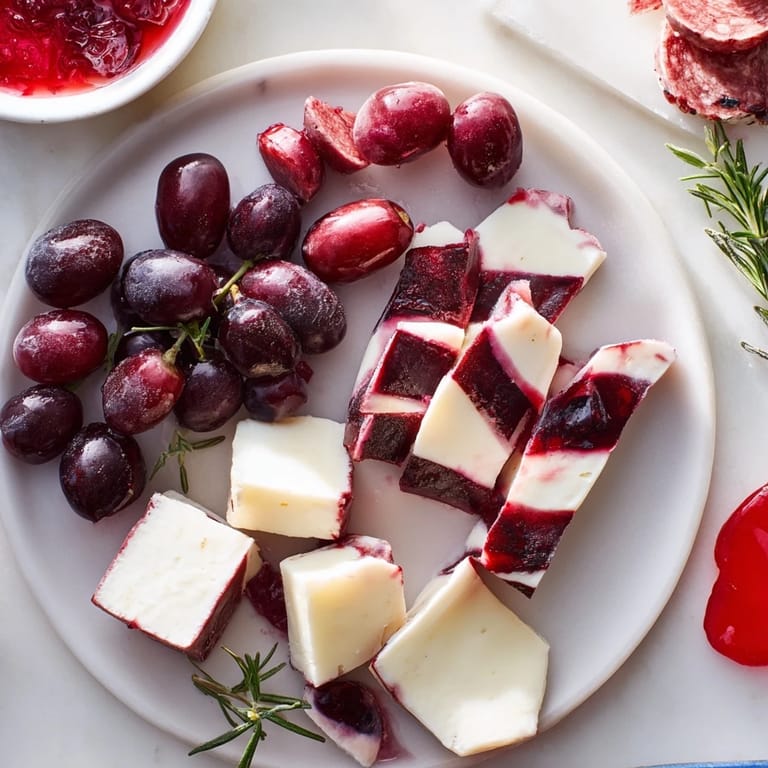
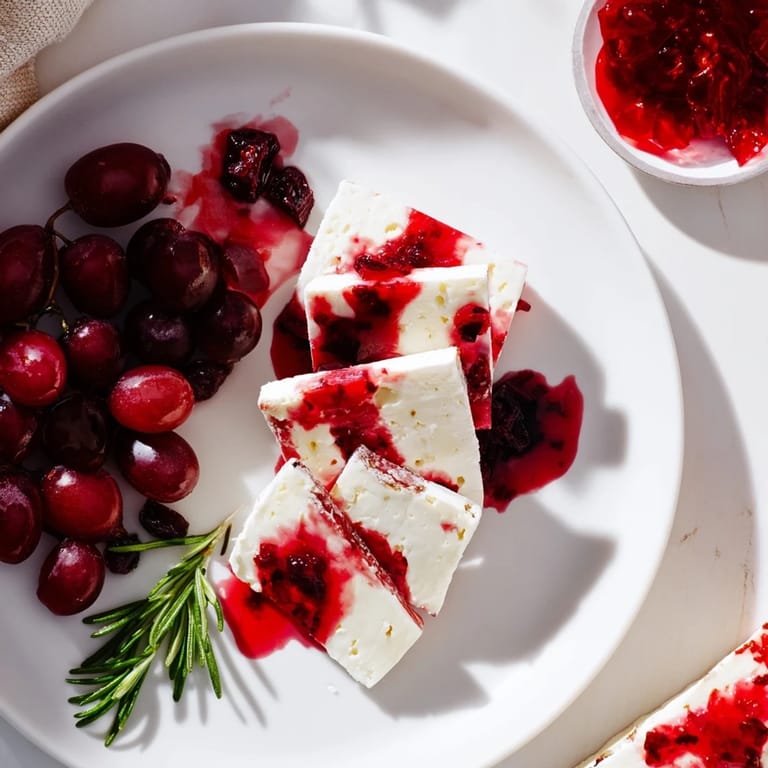
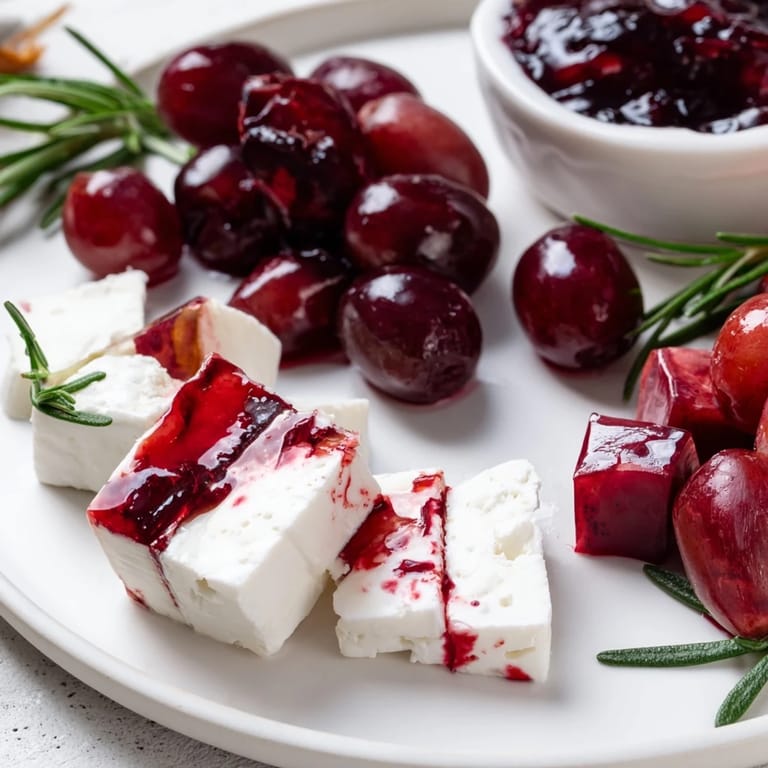
- Drunken goat cheese (200 g, red wine-soaked, sliced): This is the star—creamy, slightly tangy, with that unmistakable wine-dark exterior. The wine softens its edges and adds a subtle warmth that makes people pause mid-bite
- Red Wine BellaVitano or similar red wine-soaked hard cheese (150 g, cubed): The firm counterpart to the goat cheese; its nutty, caramel notes play beautifully against the wine. Look for it at specialty cheese counters, and don't skip it—it's worth the search
- Red wine-cured salami (100 g, thinly sliced): Optional, but it adds a salty, spiced depth that makes the wine-soaked elements sing. Choose quality over quantity here
- Prosciutto (80 g, torn into ribbons): Another optional layer, but its delicate saltiness bridges cheese and bread perfectly
- Red wine jelly (1/2 cup): Think of this as liquid jewels—glossy, tart-sweet, and it catches the light beautifully on the board
- Red wine-poached grapes (1/2 cup): These become little flavor bombs, soft and wine-infused; the recipe for these is in the notes, and they're absolutely worth making fresh
- Red wine-infused dried cherries (1/4 cup): Their tartness cuts through the richness; they're the tiny punctuation marks that make each bite interesting
- Red wine-marinated olives (1/3 cup, kalamata or green): The brine becomes even deeper, more complex. Keep them in their marinade until the last moment
- Baguette (1 small, sliced): Fresh, crusty, a canvas for everything else. Slice it just before serving so it doesn't dry out
- Red wine and rosemary crackers (1 cup): These crackers double down on the wine theme and add an herbal note that grounds the whole board
- Fresh rosemary sprigs: Not just garnish—brush your fingertip over them to release the oils and let their aroma drift across the table
- Edible flowers (optional, for color): Pansies, nasturtiums, or violas add surprise pops of color and a delicate beauty that photographs beautifully
Tired of Takeout? 🥡
Get 10 meals you can make faster than delivery arrives. Seriously.
One email. No spam. Unsubscribe anytime.
Instructions
- Prepare your stage:
- Start with a large wooden cheese board or platter—I use one that's at least 16 inches across because you want room for drama. If your wine bottle still has a label, peel it off gently under warm water. A naked bottle is more sculptural, more intentional. Stand it right in the center of your board.
- Build around the anchor:
- This is where it gets fun. Take your sliced drunken goat cheese and arrange it in an arc around the base of the bottle, letting some pieces lean against it like they're drawn to the warmth. The angles matter—they create visual flow. Then scatter your cubed red wine BellaVitano between those slices, filling gaps but respecting the composition.
- Add the meats with intention:
- If you're using salami and prosciutto, don't just dump them on. Fan the salami into small overlapping piles—three or four little clusters around the board. Tear the prosciutto into loose ribbons and drape them like fabric. The way you arrange meat sets the tone for the whole board.
- Create pockets of flavor:
- Pour your red wine jelly into a small shallow bowl and settle it among the cheeses—position it so it catches the light. Use small bowls for your olives too; let them glisten in their marinade. Scatter the wine-poached grapes in loose clusters, then sprinkle the dried cherries like you're distributing treasure. Nothing should feel gridded or over-thought; it should feel like these flavors naturally found each other.
- Add the bread pathway:
- Slice your baguette on a slight angle and arrange the pieces in a gentle arc or two, creating a natural path for guests to reach and graze. Scatter your wine and rosemary crackers in another section—think of them as an alternative route through the same journey.
- Finish with ceremony:
- Tuck fresh rosemary sprigs into the gaps, especially around the base of the bottle. If you're using edible flowers, place them now where they'll be visible but not competing with the star ingredients. Step back. Look at it. Is there a section that feels empty? A spot that catches your eye? Adjust until it feels alive.
- Serve with generosity:
- Present it as is, and encourage people to make their own combinations. Put a small cheese knife near the cheeses, a spreader near the jelly, and let the discovery begin.
 Save to Pins
 There was a moment last winter when my mother picked up a piece of that drunken goat cheese, closed her eyes as she tasted it, and said, 'This is what elegance tastes like.' Simple words, but they captured something I'd been chasing—that intersection where effort meets generosity, where beauty serves taste, not the other way around.
The Story Behind Wine-Soaked Cheeses
Wine-soaked cheeses have roots in European tradition, especially in regions where wine production is woven into daily life. Cheesemakers began experimenting with wine baths as a way to preserve their craft while adding complexity to flavor. The idea is simple but transformative: wine softens the exterior, introduces tannins and fruit notes, and creates a visual marker that says 'something special happened here.' When you eat these cheeses, you're not just tasting them—you're tasting the marriage of two of humanity's oldest crafts. That history, that intention, is why a board built around wine-touched ingredients feels like more than snacking.
Customizing for Your Crowd
The beauty of this board is that it bends to your preferences without losing its soul. Vegetarian guests? Skip the salami and prosciutto entirely, and add roasted marcona almonds, candied walnuts, or a small bowl of whipped ricotta mixed with wine reduction. Don't have red wine BellaVitano? Any aged cheese that's been touched by wine will work—look for Ubriaco Rosso, Castelvetrano, or even a wine-washed Taleggio. The core idea remains: surround your bottle centerpiece with ingredients that have been transformed by wine, and let the color story unfold.
Pairing Wine and Creating Harmony
Serve this board with a fruity, medium-bodied red wine—a Pinot Noir, Merlot, or even a Grenache works beautifully. The tannins and fruit in these wines echo the flavors already on the board, so every sip feels like continuation, not contrast. Pour glasses as people arrive, and watch how the wine and the board become conversation together. And here's a secret: save a little of whatever wine you serve to drizzle over the jelly or to refresh the olive marinade if it looks tired by the end of the evening. Small gestures, big impact.
- Chill your glasses slightly before pouring to keep the wine refreshing throughout the evening
- Don't hide the wine bottle once you've used it as your centerpiece—keep the bottle standing (or place a full one nearby) so guests can pour and refill without asking
- If you're serving non-alcoholic guests, a sparkling cider or non-sparkling apple juice echoes the fruit notes and feels celebratory
 Save to Pins
 A beautiful board is just arrangement and ingredients until someone tastes it, shares it, and makes it theirs. That's when it becomes memory. Make this for the people you want to linger with.
Questions & Answers
- → How do I make red wine-poached grapes?
Simmer seedless red grapes in dry red wine with sugar and a cinnamon stick for 10 minutes, then cool before serving.
- → Can I make this board vegetarian?
Yes, simply omit the meats and add extra cheese or roasted nuts for variety.
- → What cheeses pair well with red wine?
Red wine-infused cheeses like drunken goat and BellaVitano create rich flavor contrasts and complement the wine notes.
- → How should I arrange the ingredients?
Place an empty wine bottle center stage, then artfully arrange cheeses, meats, and accompaniments around it in clusters for visual appeal.
- → What accompaniments enhance this board?
Red wine jelly, poached grapes, marinated olives, fresh rosemary, and edible flowers add depth and aroma.
- → What bread options work best here?
Small baguette slices and red wine-rosemary crackers provide ideal textures for pairing with the board's rich ingredients.