 Save to Pins
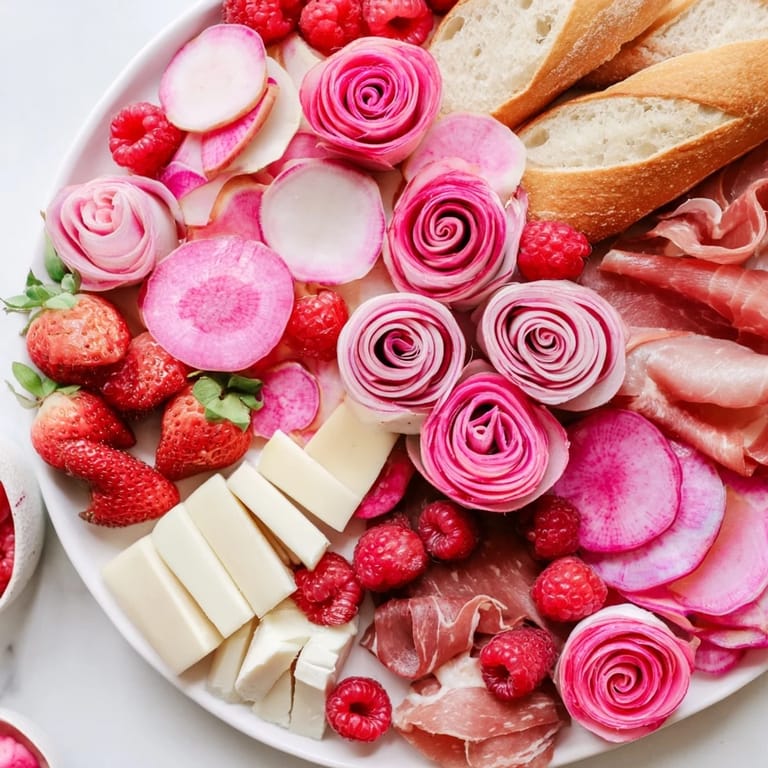
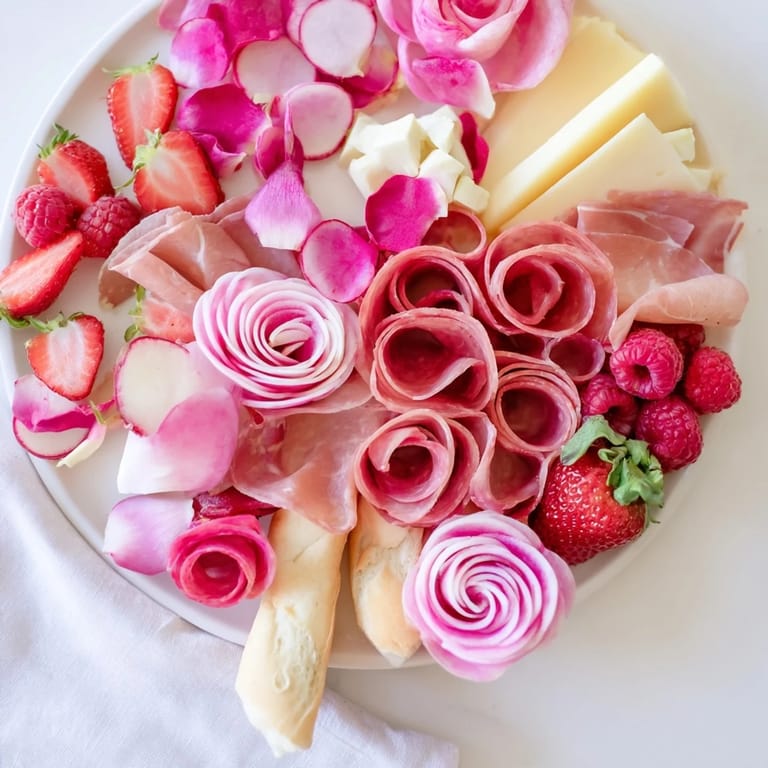
 I'll never forget the first time I arranged a pink petal watercolor platter for my sister's spring wedding shower. I'd spent weeks imagining how to make a charcuterie board that didn't just taste wonderful but looked like edible art. As I layered the prosciutto roses, the blushing radishes, and cascading raspberries across that white marble board, something magical happened—guests stopped mid-conversation just to admire it before reaching for a bite. That afternoon taught me that food could be a canvas, and the most memorable moments at the table often start with something beautiful to behold.
What I loved most about making this for brunches was watching people's faces light up when they realized it was meant to look this beautiful. A dear friend once said, "It seems like such a luxury to eat something this pretty," and that's exactly the feeling this platter creates—it makes ordinary Sunday brunch feel like a special occasion worth celebrating.
Ingredients
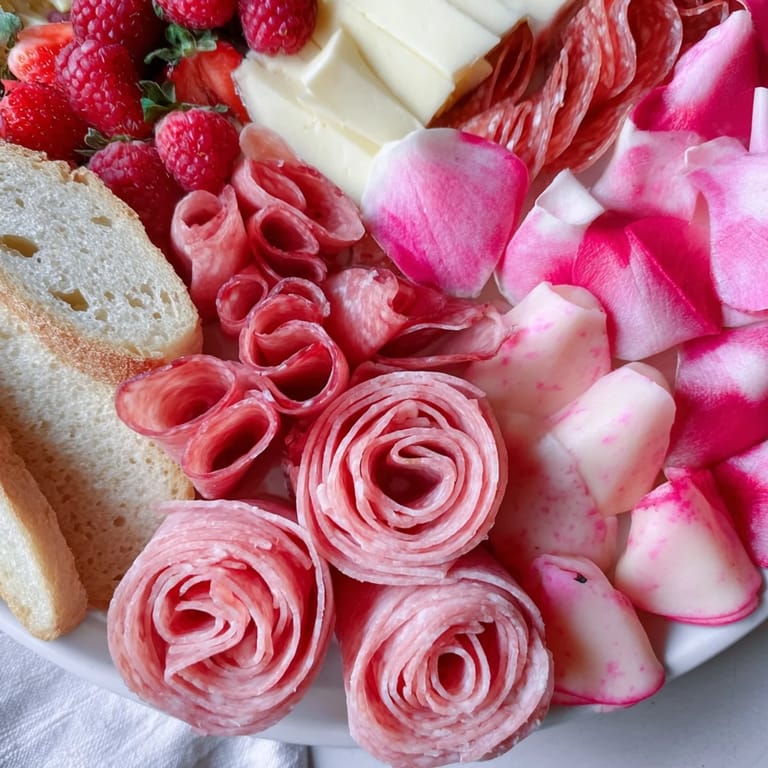
- Prosciutto, 100 g, thinly sliced: The silky foundation of your arrangement—roll each slice gently into rose shapes and they become sculptural centerpieces. I learned to keep them slightly loose; too tight and they lose their delicate appeal.
- Mortadella, 100 g, thinly sliced: Its pale pink and subtle spice create soft folds that catch the light beautifully when layered in loose, casual drapes across the platter.
- Pink radishes, 6–8 small, thinly sliced: These are your watercolor strokes—slice them paper-thin with a mandoline if you have one, and the translucent edges will glow when light passes through.
- Watermelon radish, 1, thinly sliced: This ingredient is pure magic on a platter; the blush pink interior with its delicate white striations mimics actual watercolor perfectly.
- Beet, 1 small, cooked and thinly sliced: Choose a golden or candy-striped beet if you can find one to keep the palette in the pink family—it adds depth without overshadowing the delicate hues.
- Pink-hued cheese, 100 g (port wine Derby or rosé goat cheese): This is your secret weapon for tying the whole color story together; hunt for it at specialty shops and let it be a star of the arrangement.
- Brie or camembert, 100 g, cut into wedges: Its creamy ivory contrasts beautifully with the pinks and gives guests a rich, buttery anchor point.
- Baguette, 1 small, sliced: Toast the slices lightly to give them structure and warmth—they become the perfect vehicle for the soft meats and cheeses.
- Rice crackers, 1 package: Keep these in reserve for texture contrast and for guests who prefer a gluten-free option.
- Fresh strawberries, 1 cup, halved: These add a pop of brighter pink and a whisper of sweetness that bridges savory and subtle.
- Raspberries, 1 cup: Scatter these last, just before serving, so their dusty burgundy holds its depth and they don't get crushed under the weight of the arrangement.
- Edible rose petals or microgreens (optional): A final garnish that says, "I care about every detail." Even a small handful transforms the presentation.
Tired of Takeout? 🥡
Get 10 meals you can make faster than delivery arrives. Seriously.
One email. No spam. Unsubscribe anytime.
Instructions
- Start with your canvas:
- Choose your largest, most beautiful platter or board—this is the stage where your colors will perform. White, pale gray, or natural wood backgrounds let the pinks sing. Take a breath and look at the empty space; you're about to fill it with intention.
- Create prosciutto roses:
- Take each slice of prosciutto and gently roll or fold it into a loose rose shape with your fingers. Don't worry about perfection—the rumpled, organic quality is exactly what makes them beautiful. Group these in clusters around the platter, leaving space between for the vegetables to breathe.
- Layer the mortadella:
- Fold the mortadella slices into loose, casual shapes and nestle them beside the prosciutto. Think of how watercolor paints pool and blend naturally—let these slices overlap and fold in a way that feels relaxed and artful.
- Paint with vegetables:
- This is where the magic happens. Arrange your radish slices in slightly overlapping, fanned patterns, imagining you're making brush strokes across a canvas. Vary the direction and placement so the eye moves around the platter naturally. Let some slices overlap, and leave tiny gaps where the board shows through—these small negative spaces make the composition stronger.
- Scatter your cheeses:
- Create small clusters of your pink cheese slices and brie wedges, tucking them into the spaces between vegetables and meats. The colors should flow into one another naturally, not grouped by ingredient.
- Arrange bread and crackers:
- Gently curve your baguette slices and rice crackers along one edge or weave them throughout in small stacks. They should feel like they're part of the composition, not an afterthought.
- Add berries for brightness:
- Scatter strawberry halves and raspberries in small piles where they'll catch the light. These add not just color but dimension—they're little jewels against the flat slices.
- Final flourish:
- Just before guests arrive, add a whisper of edible rose petals or microgreens to the empty corners. This final gesture transforms good into unforgettable.
- Serve with presence:
- Bring this to the table with confidence. Invite guests to mix flavors and textures, to create their own little bites—that's when the real joy begins.
 Save to Pins
 The most unexpected compliment I ever received about this platter came from a guest who was a painter. She said it reminded her why she fell in love with color theory in the first place—how similar tones can be placed beside each other to create harmony, and how a single bright element can make everything around it feel more alive. That's when I realized this platter was more than appetizer; it was a conversation piece, a moment of shared appreciation for beauty and thoughtfulness.
The Art of Arrangement
Think of yourself as an artist, not just someone making a platter. The key is asymmetry—if you place elements too evenly or in a grid, it looks formal and stiff. Instead, create little pockets of visual interest by grouping ingredients in odd numbers and varying the heights and angles. Let some elements overlap and some stand alone. The empty spaces on the platter are just as important as what you place; they give the eye places to rest and make the arrangement feel spacious and sophisticated.
Building Flavors That Whisper Together
This platter works because every element supports the others without shouting. The richness of the meats is balanced by the crispness of the radishes and the sweetness of the berries. The creamy cheeses become vehicles for the textural contrast of the vegetables. When you build it thoughtfully, each bite is an opportunity for someone to discover new combinations—sweet strawberry with salty prosciutto, peppery radish with creamy camembert. The goal isn't to eat everything at once but to encourage guests to explore and enjoy small, intentional bites.
Make It Your Own
The beauty of this platter is that it's a starting point, not a strict recipe. Spring in your region might call for different vegetables—try thinly sliced fennel, shaved asparagus, or delicate carrot ribbons. For a vegetarian version, double down on the cheeses and vegetables, and perhaps add some marinated vegetables or an elegant nut butter for richness. In late spring, when fresh herbs are abundant, a handful of chervil or parsley leaves adds another layer of visual and flavor interest.
- Try pickled red onions or quick-pickled vegetables for a tangy note that cuts through the richness.
- Pink peppercorns scattered across the platter add both visual pop and a subtle floral heat.
- Serve alongside a crisp rosé wine or sparkling elderflower cordial to echo the pink palette and extend the theme.
 Save to Pins
 Making this platter has taught me that presentation and taste are inseparable—when food looks beautiful, people slow down and truly taste it. That moment when a room goes quiet because everyone's admiring what's on the table, that's when you know you've created something worth remembering.