 Save to Pins
 There's something about the smell of garlic hitting hot olive oil that stops me mid-conversation every time. I discovered this orzo dish on an unexpectedly warm evening when my fridge held nothing but cherry tomatoes, a wedge of Parmesan, and a box of orzo I'd forgotten about. Twenty-five minutes later, I had something so effortlessly elegant that my neighbor asked for the recipe before finishing her plate. It became my go-to when I need something that feels intentional but doesn't demand hours in the kitchen.
I made this for my sister when she came home exhausted from a terrible day, and she literally sat at the kitchen counter eating straight from the pan while we talked about everything unrelated to her day. That's when I knew this wasn't just dinner—it was the kind of simple food that lets you breathe. Now whenever she texts asking what I'm making, I know she's hoping for this one.
Ingredients
- Orzo pasta: It's the shape that makes this work—those tiny grains catch sauce like nothing else, and they actually hold their texture without turning mushy if you nail the timing.
- Cherry tomatoes: Don't use the big beefsteaks here; cherry tomatoes have enough natural sugar to caramelize slightly, and halving them ensures they release their juice into the pan.
- Garlic: Finely minced matters because you want it to dissolve almost immediately into flavor, not sit there in chunks.
- Fresh basil: Add it at the end so it stays bright and green; cooking it down turns it bitter and muddy.
- Parmesan cheese: Freshly grated makes all the difference—pre-shredded varieties have anti-caking agents that don't melt as smoothly.
- Extra-virgin olive oil: Use something you actually like tasting, because it's the main flavor carrier here; skip the fancy stuff if you're going to cook with it, but save decent oil for finishing.
- Salt and black pepper: Taste as you go—the starch in the pasta water plus the saltiness of the cheese means you need less than you'd think.
Tired of Takeout? 🥡
Get 10 meals you can make faster than delivery arrives. Seriously.
One email. No spam. Unsubscribe anytime.
Instructions
- Boil your orzo like it matters:
- Bring a large pot of salted water to a proper rolling boil—don't skimp on salt, it's your only seasoning for the pasta itself. Add the orzo and stir it once so nothing sticks to the bottom, then cook until just shy of what the box says, maybe a minute or two before you think it's done. When you drain it, save that starchy cooking water in a measuring cup; you'll need a quarter cup.
- Wake up your garlic:
- Heat two tablespoons of olive oil in a large skillet over medium heat, then add your minced garlic. You're listening for a soft sizzle here, not a violent pop—just 30 seconds, until the kitchen smells like something good is about to happen.
- Let the tomatoes give everything they have:
- Add your halved cherry tomatoes to the same skillet and let them sit there, stirring occasionally, for three to four minutes. You want to see the skin split and hear the sizzle, and watch as the pan goes from dry to glossy with tomato juice. This is where the flavor actually builds.
- Bring it all together:
- Tip your drained orzo into the skillet along with that quarter cup of pasta water you saved. Toss everything gently for a minute or two just until it's all hot and loosened up; you're not trying to reduce anything at this point, just unite the flavors.
- Finish with feeling:
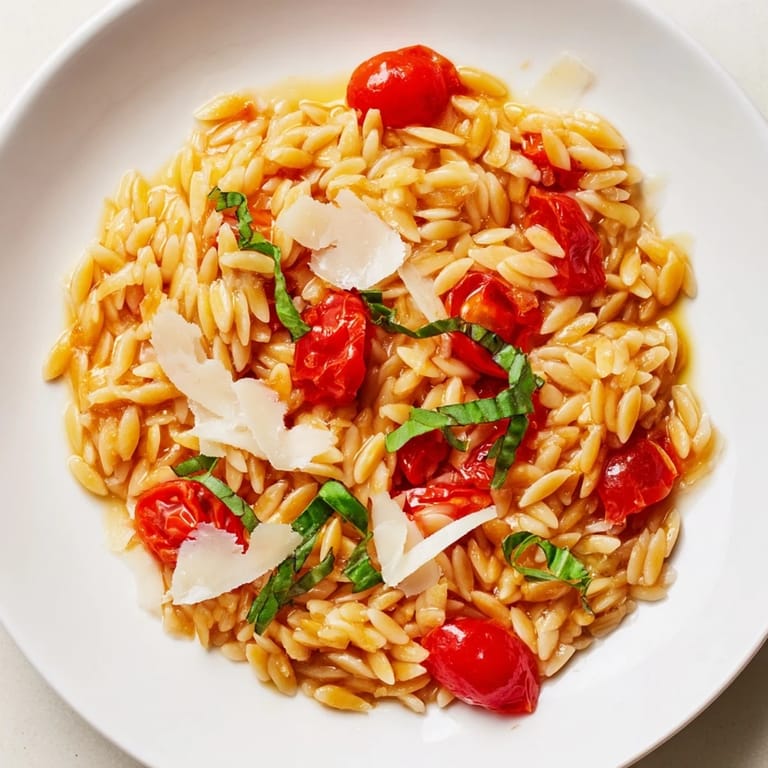
- Turn off the heat, then add that last tablespoon of olive oil, most of your Parmesan, the chopped basil, salt, and pepper. Toss until everything looks creamy and cohesive—the heat from the pasta will melt the cheese into this luxurious coat that clings to every grain.
- Serve while it's still warm:
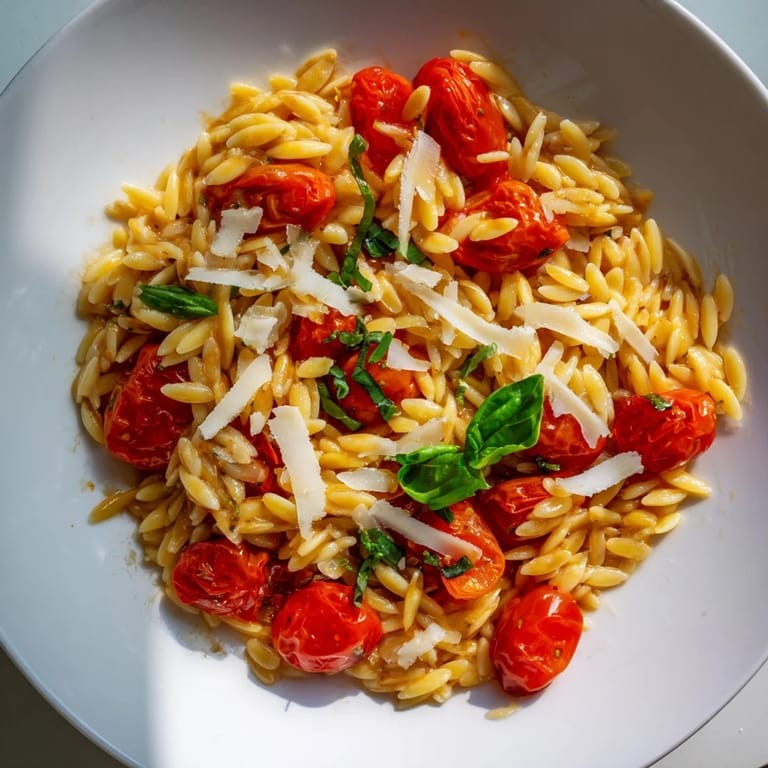
- Divide into bowls and top with extra Parmesan and fresh basil leaves, because the first bite is always the most important one.
 Save to Pins
 The first time I made this without a recipe, just from memory, I added the basil too early and watched it turn grey and bitter in the residual heat. That mistake taught me everything about timing and when to trust the ingredient. Now I see that nearly-burnt basil as the moment I actually learned to cook this dish instead of just following steps.
Why This Works as Both Main and Side
If you're serving four people and making this the main event, it's completely satisfying on its own—the Parmesan gives it weight and the tomatoes give it brightness. But I've also made half the recipe as a side dish for grilled chicken or fish, and there's something elegant about that too, like a small edible garden next to the protein. The key is knowing your crowd and your hunger level, then adjusting freely.
Making It Yours
This recipe is so simple that it begs for your own touches. I've learned that the best version of a dish is the one that fits your pantry and your mood, not the one that follows the rules most faithfully. Think of this as a base that invites customization rather than a law that demands obedience.
- Scatter red pepper flakes into the garlic oil if you want heat and bite.
- Try Pecorino Romano instead of Parmesan for something sharper and more assertive.
- Add a handful of sautéed spinach or arugula at the end if you want earthiness and greens in the same bowl.
The Ritual of Simple Cooking
There's a meditation in making something this straightforward—the way you focus on one task at a time, waiting for the water to boil, listening for the garlic to whisper, watching the tomatoes split. It's the kind of cooking that reminds you why you started cooking in the first place, which is rarely for the Instagram photo and usually for the moment when someone closes their eyes after the first bite and says nothing, because there's nothing better to say.
 Save to Pins
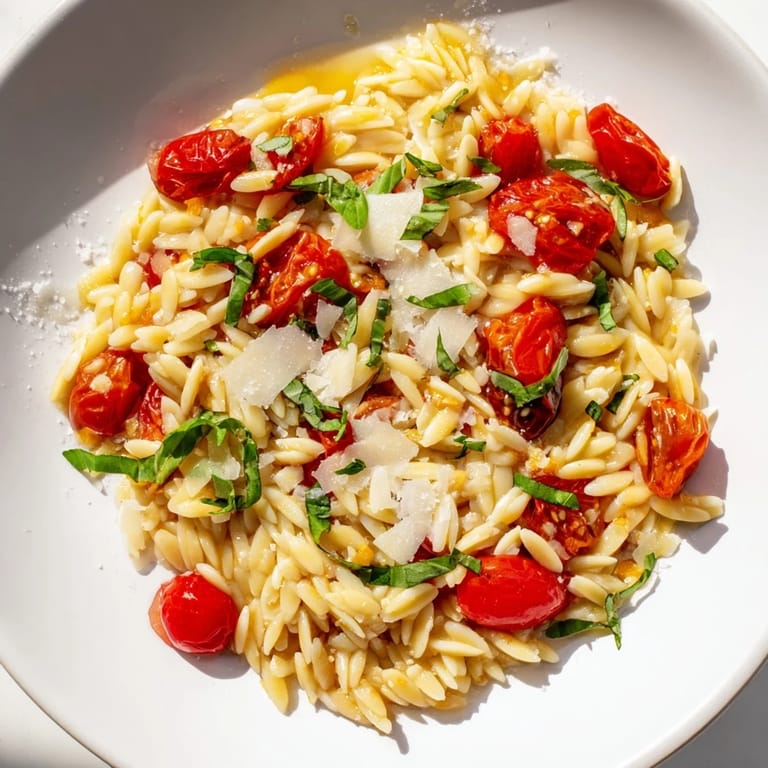
 This dish has lived in my kitchen for years now, showing up whenever I need to feed people something good without the fuss. It's proof that you don't need complicated techniques or a long list of ingredients to cook something that matters.
Questions & Answers
- → What type of pasta is used?
Orzo pasta, a small rice-shaped variety, is used for its tender texture and ability to absorb flavors.
- → Can I substitute Parmesan cheese?
Yes, Pecorino Romano can be used for a sharper taste, or vegan cheese alternatives for dairy-free options.
- → How should the tomatoes be prepared?
Use halved cherry tomatoes sautéed briefly to release their juices and develop sweetness.
- → Is this dish suitable for vegetarians?
Yes, it contains vegetarian-friendly ingredients including pasta, tomatoes, cheese, and herbs.
- → What oil is recommended for cooking?
Extra-virgin olive oil is preferred for its fruity flavor and to enhance the Mediterranean profile.
- → How do I achieve a creamy texture?
Stirring in Parmesan cheese along with reserved pasta cooking water and olive oil creates a smooth, creamy coat.