 Save to Pins
 The first time I tasted sabich, I was standing in a narrow alley in Tel Aviv, the morning sun already fierce on the pavement, watching a vendor pile crispy eggplant into a pita with the speed of someone who'd done it a thousand times. I didn't expect much from what looked like humble street food, but that first bite—the soft give of the eggplant against the tahini, the brightness of lemon cutting through everything—made me understand why this sandwich had become such a fixture of Israeli breakfasts and casual lunches. Now I make it at home whenever I want that same feeling of warm, satisfying comfort wrapped in bread.
I made this for my roommate on a Tuesday afternoon when we were both tired and hungry, and I watched her expression change from polite interest to genuine delight as she took the first bite. She went back for seconds, then thirds, and by the end we were laughing about how such a simple idea—fried eggplant in bread—had managed to feel both exotic and comforting at the same time. It became our Thursday lunch ritual after that.
Ingredients
- Eggplants: Two medium ones, sliced into 1/2-inch rounds—thin enough to fry quickly but thick enough to stay creamy inside, not collapse into mush.
- Salt: A teaspoon for salting the eggplant, which draws out moisture so they crisp up instead of steaming.
- All-purpose flour: 1/2 cup to dust the slices for a light, delicate crust that crisps in the oil.
- Vegetable oil: One cup for frying—use something neutral that can handle the heat without burning.
- Large eggs: Four of them, hard-boiled and sliced, which add richness and protein to balance the fried eggplant.
- Tomatoes: Two medium ones, diced small, because the juice and seeds matter more than big chunks here.
- Cucumber: One medium, diced to match the tomatoes—it should be fresh and crisp, not soft.
- Red onion: 1/4 of one, finely chopped and raw, which gives sharp bite to the salad.
- Fresh parsley: Two tablespoons, chopped, for grassy freshness that ties everything together.
- Fresh lemon juice: One tablespoon for the salad and two more for the tahini sauce—real lemons only, never bottled.
- Extra-virgin olive oil: One tablespoon to dress the salad and bring out its flavors.
- Tahini paste: 1/2 cup—the heart of the sauce, creamy and nutty and essential.
- Water: 1/4 cup to thin the tahini, added slowly so you can get the texture just right.
- Garlic: One small clove, minced fine, which adds a whisper of sharpness without overpowering.
- Pita breads: Four large ones, preferably still warm or warmed before serving.
- Pickled mango sauce (amba): 1/2 cup if you can find it—tangy, complex, and the secret weapon that makes this sandwich sing.
- Fresh cilantro: 1/4 cup, chopped, for brightness and an herbal note that lingers.
- Pickles: 1/4 cup, sliced, optional but highly recommended for crunch and acidity.
- Hot sauce: To taste, because you should always have the choice to bring the heat.
Tired of Takeout? 🥡
Get 10 meals you can make faster than delivery arrives. Seriously.
One email. No spam. Unsubscribe anytime.
Instructions
- Salt and rest the eggplant:
- Slice your eggplants into 1/2-inch rounds and lay them on paper towels or a clean kitchen towel. Sprinkle each slice with salt and let them sit for fifteen minutes—you'll see beads of moisture forming on the surface, which is exactly what you want. Pat them dry completely before frying, or they'll steam instead of crisp.
- Coat and fry until golden:
- Dust each dried eggplant slice lightly in flour—you want just enough to coat, not a thick breading. Heat your oil in a large skillet over medium-high heat until it shimmers, then carefully lay in the eggplant slices and fry for about two to three minutes per side until they're a deep golden brown and smell sweet and nutty. Work in batches so you don't crowd the pan, and drain each batch on fresh paper towels.
- Hard-boil the eggs:
- While the eggplant is resting, put your eggs in a saucepan, cover them with cold water, and bring to a boil. Once it's boiling, pull the pan off the heat, cover it, and let it sit for nine minutes. Transfer the eggs to ice water to stop the cooking, then peel and slice them—you want them creamy in the middle, not rubbery.
- Make the Israeli salad:
- Dice the tomatoes and cucumber small and even, chop your red onion fine, and tear up the parsley. Toss everything together with the lemon juice and olive oil, season with salt and pepper, and taste it—it should be fresh and bright, with the lemon balancing the sweetness of the tomato.
- Whisk the tahini sauce:
- Put your tahini paste in a bowl and start whisking in the water a little at a time, because tahini thickens as you add liquid at first before it loosens. Once it's smooth, add the lemon juice and minced garlic, then salt to taste. Keep thinning until it's the consistency of thick yogurt—it should drizzle easily but not be runny.
- Warm your pitas:
- Wrap them in a damp paper towel and microwave for thirty seconds, or char them briefly in a dry skillet until they're soft and warm. Make a pocket in each one by carefully slicing it open.
- Assemble and serve:
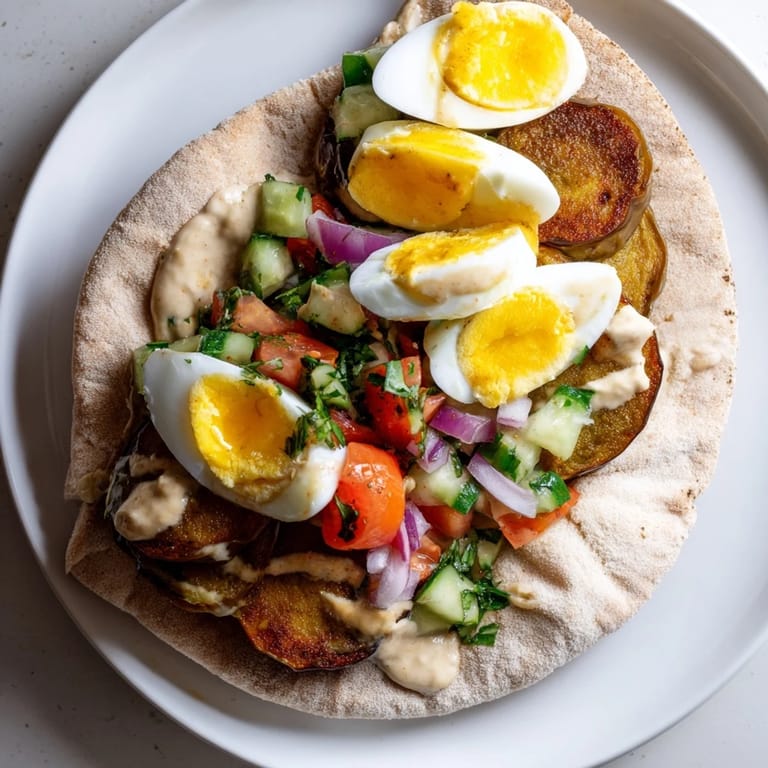
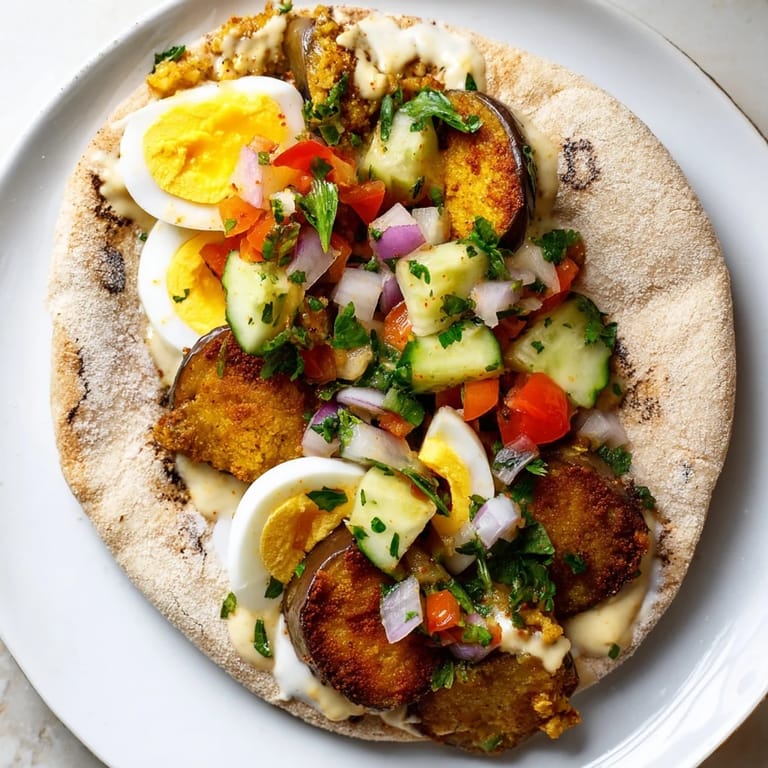
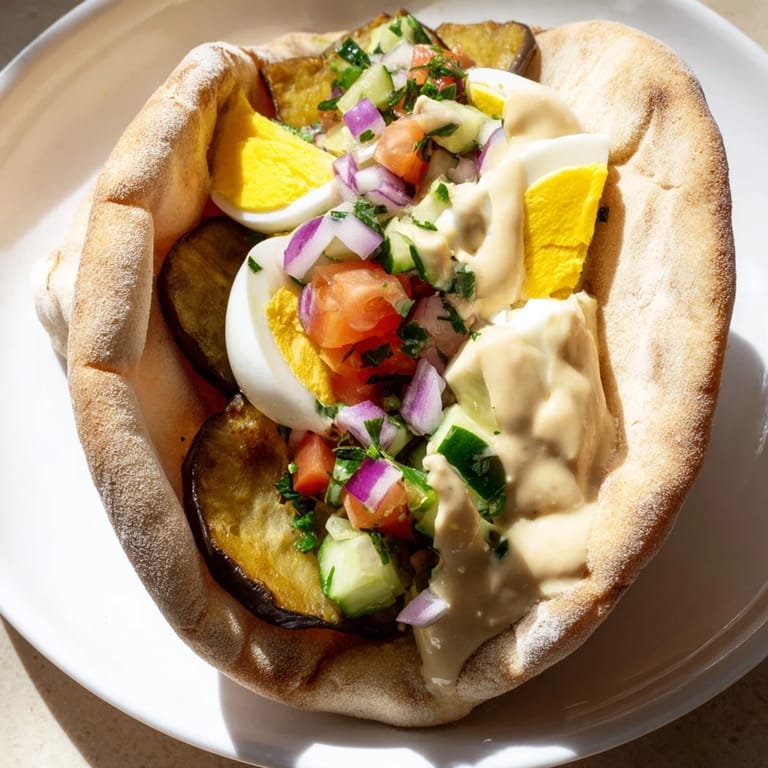
- Drizzle tahini sauce into each pita pocket, then layer in the crispy eggplant, sliced eggs, and Israeli salad. Top with amba if you have it, a few pickles, cilantro, and a dash of hot sauce. Serve immediately while everything is still warm and the contrasts are sharp.
 Save to Pins
 What I love most about sabich now is how it's become the thing I make when I want to feel resourceful without fussing—a dish that makes fried vegetables feel like celebration instead of indulgence. There's something democratic about it too, the way everyone can customize their own with hot sauce or pickles, making it feel personal on the plate.
The Secret of Good Frying
The eggplant is the star here, and it only works if you respect the oil. I learned this the hard way when I tried to rush the cooking and ended up with slices that were golden on the outside but still waterlogged in the middle. The oil needs to be hot enough to crisp the flour coating immediately, but not so hot that it burns before the eggplant has time to soften. Watch for the oil to shimmer, then do a test with a small piece—it should sizzle and rise to the surface. If you hear it just sit there quietly, the oil isn't ready yet.
Why Tahini Is Worth Taking Seriously
Tahini can seem intimidating if you've only ever had it too thick and bitter or too thin and dull. The key is quality—use tahini paste that's smooth and slightly nutty, not harsh and old-tasting. When you whisk it with cold water, it transforms into something creamy and luxurious that coats the back of a spoon. The lemon juice is equally important because it brightens the earthiness of the sesame, and the garlic adds a small, sharp note that keeps it from tasting one-dimensional.
Building Layers of Flavor and Texture
Israeli salad is a study in controlled chaos—every element matters but nothing dominates. The dice should be small and even so each bite has all the pieces, and the lemon juice should hit you first, before the sweetness of the tomato. Amba, if you can find it, is the unexpected note that ties everything together; it's tart and slightly sweet and tastes like nothing else, so if you're making this for someone new to sabich, use it sparingly at first so they can taste all the other layers.
- Always taste your tahini sauce before assembly and adjust the salt—it should be bold enough to stand up to the fried eggplant and the acidic salad.
- If your eggplant has cooled completely, warm it briefly in a dry skillet before assembling, because the warmth is part of what makes this work.
- Don't overthink the optional garnishes—cilantro, pickles, and hot sauce are not really optional if you want the full experience.
 Save to Pins
 Sabich is one of those dishes that reminds me why street food exists—it's delicious, it's efficient, and it makes people happy. Make it this week and see for yourself.
Questions & Answers
- → How do I prepare the eggplant for sabich?
Slice the eggplant into rounds, salt them to draw out moisture, then lightly coat with flour before frying until golden and crispy.
- → What ingredients make up the salad component?
The salad includes diced tomatoes, cucumber, red onion, chopped parsley, lemon juice, olive oil, salt, and pepper, tossed together for a fresh and tangy flavor.
- → How is the tahini sauce made?
Whisk tahini paste with water, fresh lemon juice, minced garlic, and salt until smooth, adjusting liquid to preferred consistency.
- → Can this dish be made vegan?
Yes, by omitting the eggs or substituting with tofu, and ensuring any bread used is free of animal products.
- → What optional additions enhance the sandwich?
Optional toppings include pickled mango sauce (amba), sliced pickles, hot sauce, and fresh cilantro for extra flavor layers.