 Save to Pins
 I wasn't much of a fish person until a friend convinced me to try salmon with a proper glaze instead of just lemon and butter. The moment that ginger-soy sauce hit the hot pan, the kitchen smelled like the best kind of takeout. I've been making this ever since, usually on nights when I want something that feels special but doesn't require much effort.
The first time I made this for my family, I was nervous about overcooking the fish. I kept peeking under the fillets, convinced they'd stick or fall apart. Instead, the skin crisped up beautifully, and when I spooned that warm glaze over the top, everyone went quiet for a few bites. My brother asked for the recipe before he even finished his plate.
Ingredients
- Skin-on salmon fillets: The skin protects the fish and crisps up like a savory cracker if you leave it undisturbed in the pan.
- Kosher salt and black pepper: Just enough to let the salmon shine without competing with the glaze.
- Low-sodium soy sauce: Gives you control over the saltiness, since the glaze reduces and intensifies as it cooks.
- Honey: Balances the salty soy and helps the glaze cling to the fish with a subtle sweetness.
- Freshly grated ginger: This is where the magic happens, sharp and warming, it cuts through the richness of the salmon.
- Garlic, minced: Adds depth and a gentle bite that rounds out the glaze.
- Rice vinegar: A splash of brightness that keeps the glaze from feeling too heavy.
- Sesame oil: Just a teaspoon brings a toasty, nutty note that makes the whole dish smell incredible.
- Toasted sesame seeds and green onions: Optional, but they add a nice crunch and a pop of color that makes it feel finished.
Tired of Takeout? 🥡
Get 10 meals you can make faster than delivery arrives. Seriously.
One email. No spam. Unsubscribe anytime.
Instructions
- Prep the salmon:
- Pat the fillets completely dry with paper towels, this helps the skin crisp up. Season both sides with salt and pepper, going a little lighter than you think since the glaze is salty.
- Mix the glaze:
- Whisk together soy sauce, honey, grated ginger, garlic, rice vinegar, and sesame oil in a small bowl until the honey dissolves. Set it aside where you can reach it easily.
- Heat the pan:
- Get your skillet nice and hot over medium-high heat. You can add a small drizzle of neutral oil, but if your pan is well-seasoned, you might not need it.
- Sear skin-side down:
- Lay the salmon fillets skin-side down and resist the urge to move them. Let them sear for a full 4 minutes until the skin releases easily and turns golden brown.
- Flip and cook:
- Turn the fillets gently and cook for another 2 to 3 minutes. The flesh should start to turn opaque around the edges.
- Add the glaze:
- Lower the heat to medium-low and pour the glaze evenly over the salmon. Spoon it over the fillets as it bubbles and thickens, about 2 to 3 minutes, until the salmon is just cooked through and the sauce clings like syrup.
- Serve:
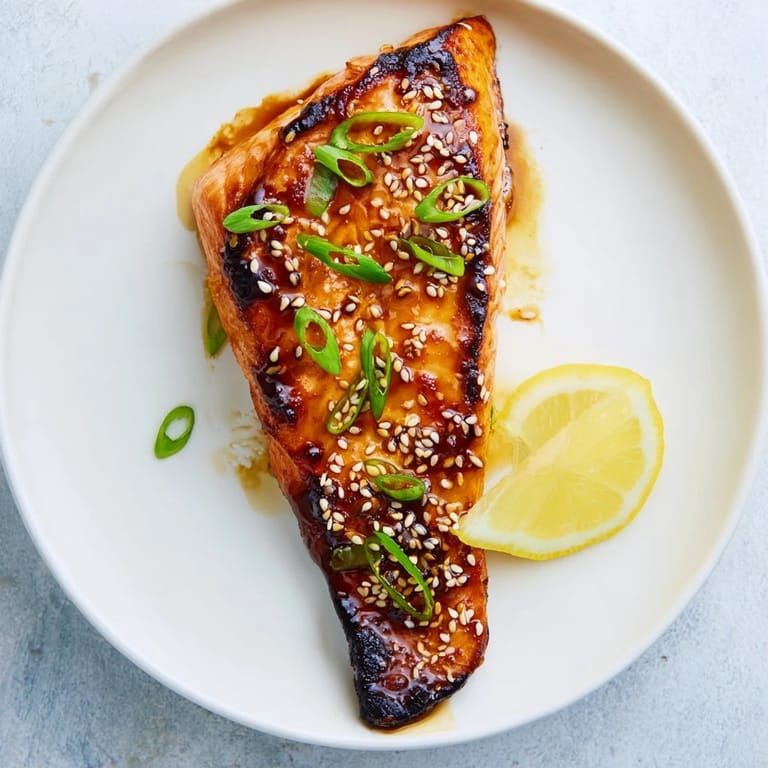
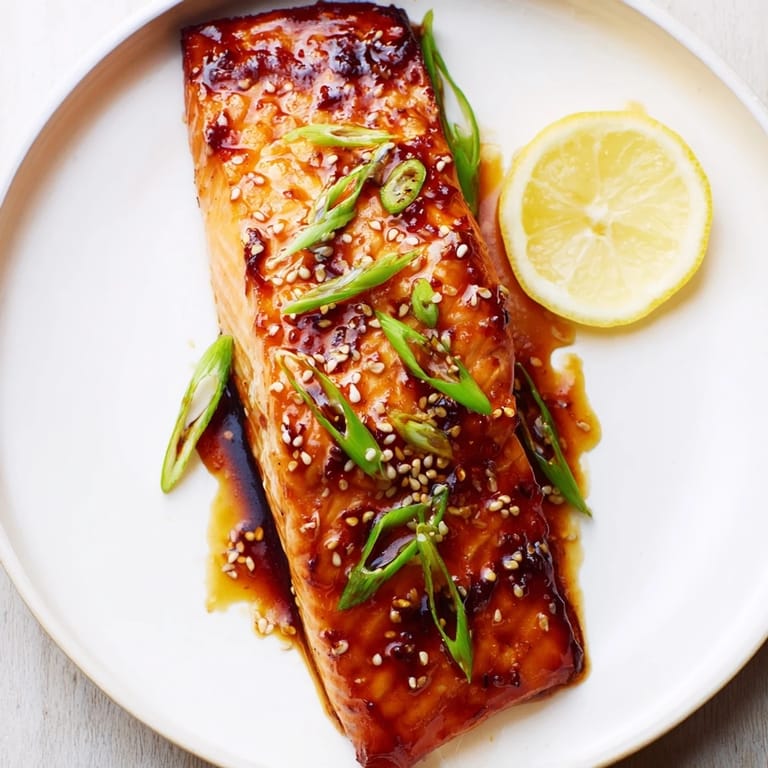
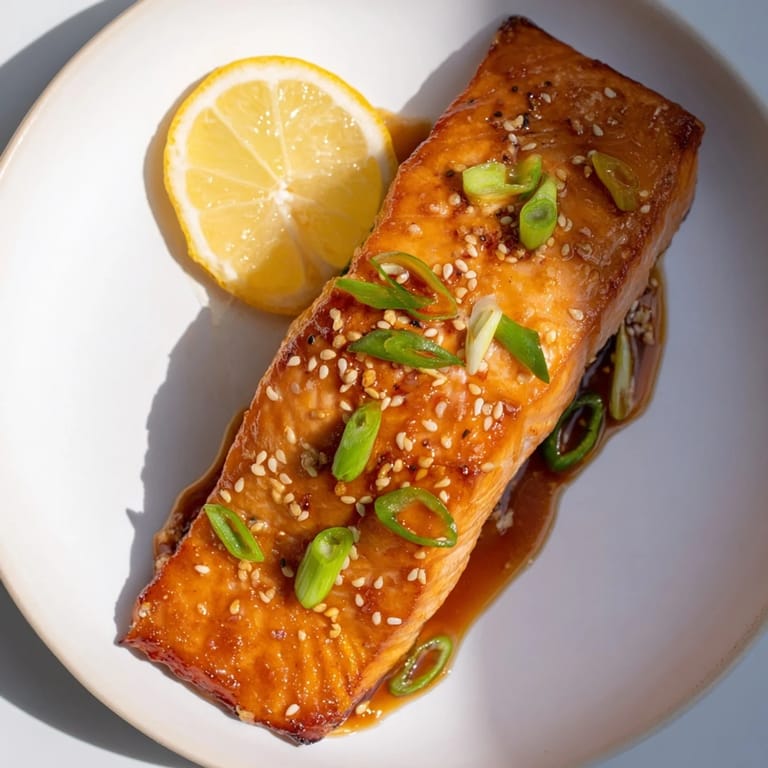
- Transfer the salmon to plates and spoon any remaining glaze from the pan over the top. Finish with sesame seeds, green onions, and a wedge of citrus if you like.
 Save to Pins
 There's something satisfying about watching that glaze bubble and darken in the pan, knowing it's going to taste even better than it smells. I've made this on rainy weeknights and for small dinner parties, and it always feels like a little win. It's the kind of dish that makes you look like you know what you're doing, even if you're still figuring it out.
Serving Suggestions
I usually serve this over a bowl of hot jasmine rice or alongside sautéed bok choy. Roasted broccoli or snap peas work beautifully too, especially if you toss them in a little of the leftover glaze. Sometimes I'll add a quick cucumber salad with rice vinegar and sesame seeds to keep things light and crunchy.
Flavor Variations
If you want some heat, whisk in half a teaspoon of red chili flakes or a drizzle of sriracha with the glaze. I've also swapped honey for maple syrup when that's what I had on hand, and it gave the glaze a deeper, almost caramelized flavor. A squeeze of fresh lime at the end brightens everything up in a way that feels surprising and right.
Storage and Reheating
Leftovers keep well in the fridge for up to two days, though the skin won't stay crispy. I like to flake the cold salmon over a grain bowl or salad the next day, where the glaze acts like a dressing. If you do reheat it, use a low oven or a gentle stovetop warm-up to avoid drying it out.
- Store in an airtight container and keep the extra glaze separate if possible.
- Reheat at 300°F (150°C) for about 8 minutes, just until warmed through.
- Cold flaked salmon is wonderful stirred into fried rice or tucked into a wrap with greens and avocado.
 Save to Pins
 This recipe has become one of those reliable favorites I turn to when I want something nourishing and a little indulgent without spending an hour in the kitchen. I hope it finds a spot in your rotation too.
Questions & Answers
- → What type of salmon is best for this dish?
Skin-on salmon fillets work best as the skin crisps nicely during pan-searing, adding texture and flavor.
- → How do I prevent the salmon skin from sticking to the pan?
Ensure the skillet is hot before adding the salmon and avoid moving it during the first 4 minutes of cooking to allow the skin to crisp and release naturally.
- → Can I make the ginger soy glaze ahead of time?
Yes, the glaze can be mixed in advance and stored in the refrigerator for up to 2 days for convenience.
- → What can I substitute for honey in the glaze?
Maple syrup or brown sugar are suitable alternatives that maintain the glaze's sweetness and consistency.
- → How can I add a spicy element to this dish?
Incorporate 1/2 tsp of red chili flakes into the glaze to introduce a gentle heat that complements the savory flavors.