 Save to Pins
 I'll never forget the first time I created the Crimson and Gold Gala—it was for a gallery opening in autumn, and I wanted the appetizer platter to mirror the bold, artistic energy of the space. Standing in my kitchen, arranging deep ruby cherries against golden roasted peppers, I realized this wasn't just about flavors coming together, but about creating a visual moment that would make guests pause before they even tasted a bite. That's when I knew I'd stumbled onto something special.
The first time someone told me they brought this platter to their own dinner party was the moment I understood its real magic. They said their guests spent the first ten minutes just looking at it, phones in hand, before diving in. That's when food becomes more than sustenance—it becomes conversation, memory, and joy on a single board.
Ingredients
- Fresh sweet cherries, 1 cup, pitted: These are your jewels—choose ones that are plump and deeply colored, as they'll anchor the crimson side with both elegance and tartness
- Wine-soaked cheese (Drunken Goat or Merlot BellaVitano), 120 g (4 oz), sliced: This is the star ingredient that ties the whole concept together; the wine flavors seep into every bite and make ordinary cheese extraordinary
- Dried cranberries, 1/2 cup: They add chew and concentrated tartness that balances the richness of aged cheese
- Red grapes, 1/2 cup, halved: Halving them makes them easier to eat and exposes juicy interiors that catch the light
- Pomegranate seeds, 1/4 cup: These are pure luxury—they burst with tart-sweet juice and catch light like tiny rubies
- Yellow bell peppers, 2 large, roasted, peeled, and sliced: Roasting them yourself transforms them from crisp to silky; it's one small step that elevates everything
- Aged cheddar or gouda, 120 g (4 oz), cubed: The golden color is essential here, and aged varieties have a nuttiness that grounds the sweetness of fruits
- Gold leaf–topped crackers, 12–16: These are your textural anchor and your chance to add that touch of shimmer; plain water crackers work too
- Golden raisins, 1/4 cup: They're sweeter than their darker cousins and provide soft pockets of honey-like flavor
- Yellow cherry tomatoes, 1/2 cup, halved: Fresh tomato adds brightness and keeps the platter from feeling too heavy or cheese-forward
- Edible gold leaf sheets, optional: I use these sparingly—a few scattered pieces suggest luxury without overwhelming
- Fresh basil or microgreens: These bring final freshness and bridge the color blocks with living green
- Olive oil, 1 tbsp: For the roasted peppers; use good quality, as it's one of the few places its flavor really shines
- Freshly ground black pepper: Just a whisper—it shouldn't compete with the fruit and wine notes
Tired of Takeout? 🥡
Get 10 meals you can make faster than delivery arrives. Seriously.
One email. No spam. Unsubscribe anytime.
Instructions
- Roast the yellow peppers:
- Preheat your oven to 220°C (425°F) and place whole peppers directly on a baking sheet. As they roast for 10–12 minutes, you'll watch their skins bubble and blacken—don't be alarmed, that's exactly what you want. They'll smell sweet and slightly smoky. Once they're deeply charred, transfer them to a covered bowl and let them steam for 5 minutes; this loosens the skin and makes peeling almost meditative. Peel away the papery blackened skin, remove seeds, and slice into strips. Drizzle with olive oil and crack fresh pepper over them, then let them cool completely so they're comfortable to handle and arrange.
- Prepare the gold leaf crackers:
- If you're using edible gold leaf, follow the package instructions carefully—gold leaf is delicate and wants to stick to anything slightly damp. Work in a calm moment; rushing it will only scatter it everywhere. A light brush of water or edible adhesive helps, but less is more. If gold leaf feels too fussy, skip it entirely or dust crackers with a pinch of turmeric for that golden warmth instead.
- Assemble the crimson block:
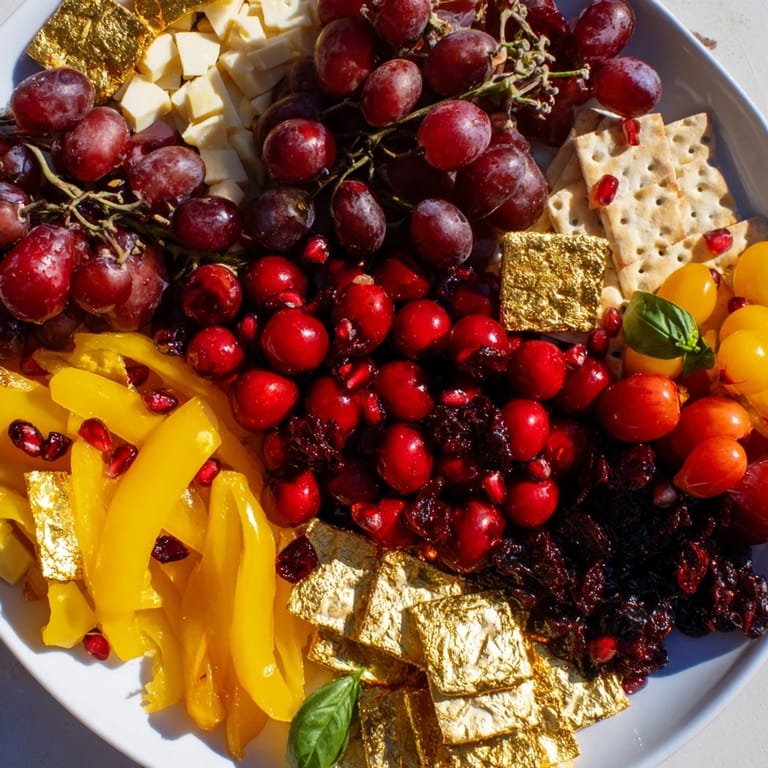
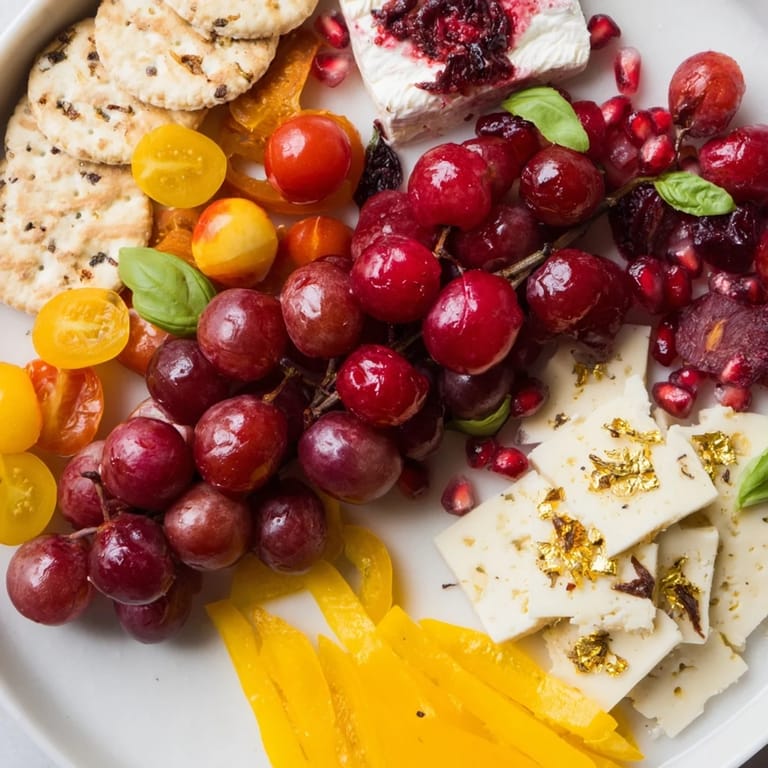
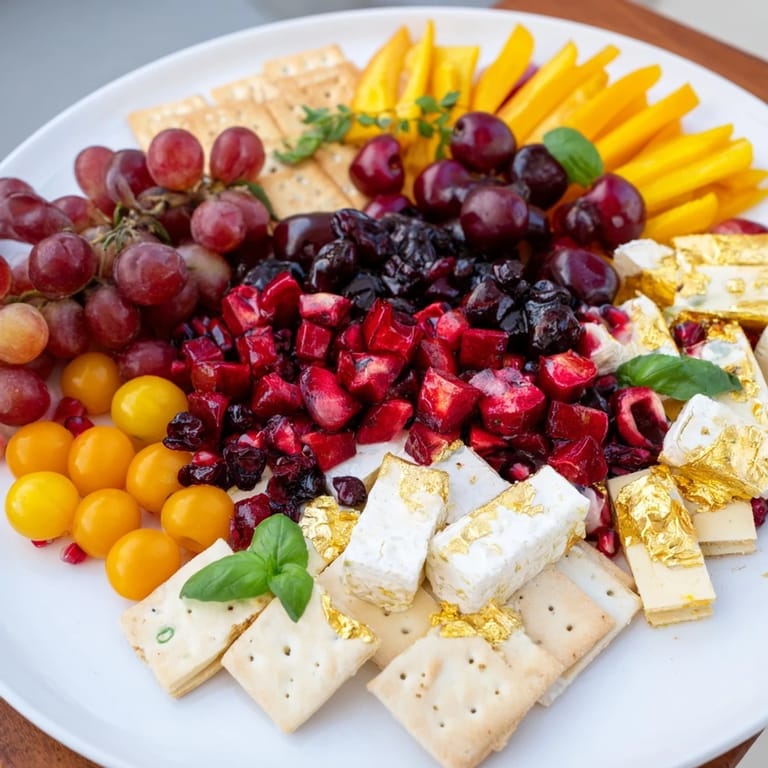
- On a large platter or board, gather all your deep reds in one defined area: pitted cherries, wine-soaked cheese slices, cranberries, halved grapes, and pomegranate seeds. Arrange them tightly, letting colors and textures overlap slightly. The goal is density and richness—these reds want to feel like they belong together, like a jewel box of autumn.
- Build the golden block:
- On the opposite side of your platter, create your contrasting light side with roasted yellow pepper strips, golden cheese cubes, gold leaf crackers (standing at slight angles for visual interest), golden raisins, and halved yellow cherry tomatoes. Space these slightly more loosely than the reds—gold feels airier, lighter, more generous.
- Add the finishing touches:
- Scatter fresh basil leaves or delicate microgreens between and over both blocks. These add a living element and suggest fresh herbs you might be serving alongside. Step back and look at it from a distance; if anything feels unbalanced, adjust. The visual contrast should be immediate and striking.
- Serve and invite:
- Set this down in front of your guests and watch them pause. That moment of visual appreciation is part of the recipe too. Encourage them to mix and match flavors—the sweetness of a cherry against the aged nuttiness of cheddar, the wine-forward cheese against tart cranberries. Every combination tells a different story.
 Save to Pins
 There was a moment at a dinner party when a guest picked up a roasted pepper strip and noticed how the oil caught the light, how the color seemed to glow. She said, 'This is art,' and for the first time I understood that when you arrange food with intention and care, it speaks a language beyond taste. That's what this platter does.
The Visual Language of Color
Color is flavor in this recipe. The deep crimsons—cherries, pomegranate, wine-soaked cheese—read as rich, indulgent, slightly decadent. They're the passionate side of the board. The golds feel generous, warm, and approachable. By separating them into distinct blocks rather than scattering them evenly, you create a visual conversation, almost a tension that makes people want to explore both sides. This isn't accidental; it's the whole point. When you plate for the eye first, the palate follows naturally.
Flexibility Without Losing Magic
One of the great gifts of this recipe is how forgiving it is. Not fond of pomegranate? Use more grapes or add thin slices of red apple. Can't find wine-soaked cheese? A good sharp aged cheddar works, though you'll miss that wine whisper. Don't have fresh basil? Microgreens, fresh dill, or even thin slices of red radish will add that final flourish of life. The architecture matters—the color blocks, the contrast, the intentional arrangement—far more than any single ingredient. This gives you freedom to cook with what you have and what you love.
When and How to Serve This Platter
This is perfect for gatherings where you want to set a tone of elegance without pretense. Serve it early, while everything is crisp and fresh and before people are too deep in conversation to notice its beauty. I like to present it slightly before bringing out other foods, giving it a moment alone on the table. If you're adding honey, do it just before serving so it glistens but doesn't soak in. This platter holds for about an hour at room temperature—after that, peppers may weep slightly and crackers soften.
- Pair it with a crisp white wine or a light rosé, which echoes the wine notes in the cheese while contrasting the fruit
- Set out small plates or napkins nearby so guests feel free to build their own combinations
- If serving alongside other dishes, position this where it catches light—it's meant to be seen
 Save to Pins
 This platter is a reminder that sometimes the most memorable food moments come not from complicated techniques, but from intention, color, and the joy of sharing something beautiful. Make this when you want your table to feel like celebration.
Questions & Answers
- → How should I roast the yellow peppers for the platter?
Roast whole yellow bell peppers at 220°C (425°F) for 10–12 minutes until skins are charred and blistered. Steam them covered for 5 minutes, then peel, seed, and slice before drizzling with olive oil and seasoning.
- → Can I substitute the wine-soaked cheese with another variety?
Yes, you can use similar textured cheeses like aged goat or cheddar, soaked briefly in wine to mimic the flavor profile and richness.
- → What are some garnish options to enhance the platter’s appearance?
Fresh basil leaves or microgreens add a lively green contrast and fresh aroma that complements the vivid colors of the platter.
- → How can I prepare the gold leaf crackers safely?
Carefully apply edible gold leaf sheets to crackers following package instructions, ensuring dry, clean surfaces to maintain the delicate finish.
- → Is there a vegan alternative for the cheese and crackers?
Plant-based cheeses and vegan crackers can be used to maintain the textural and flavor variety while keeping it suitable for vegan diets.