 Save to Pins
 There's something about the hiss of noodles hitting boiling water on a summer afternoon that makes you instantly think of my neighbor's kitchen—the one with the open window facing mine. She'd make this cold sesame noodle salad every August, and the aroma of toasted sesame oil would drift across the alley, making it impossible to resist asking for the recipe. What I loved most was how she'd let everything cool completely before tossing, never rushing, never compromising on that essential chilled bite.
I made this for a picnic once where someone forgot to bring the main dish, and suddenly this salad became the hero of the afternoon. People kept coming back for seconds, amazed that something so simple—just noodles, vegetables, and a really good dressing—could feel so complete and satisfying on a warm day.
Ingredients
- Soba or rice noodles (250g): Soba has more personality and a subtle nutty flavor, but rice noodles work beautifully too and make this naturally gluten-free—choose based on what you have and what your guests need.
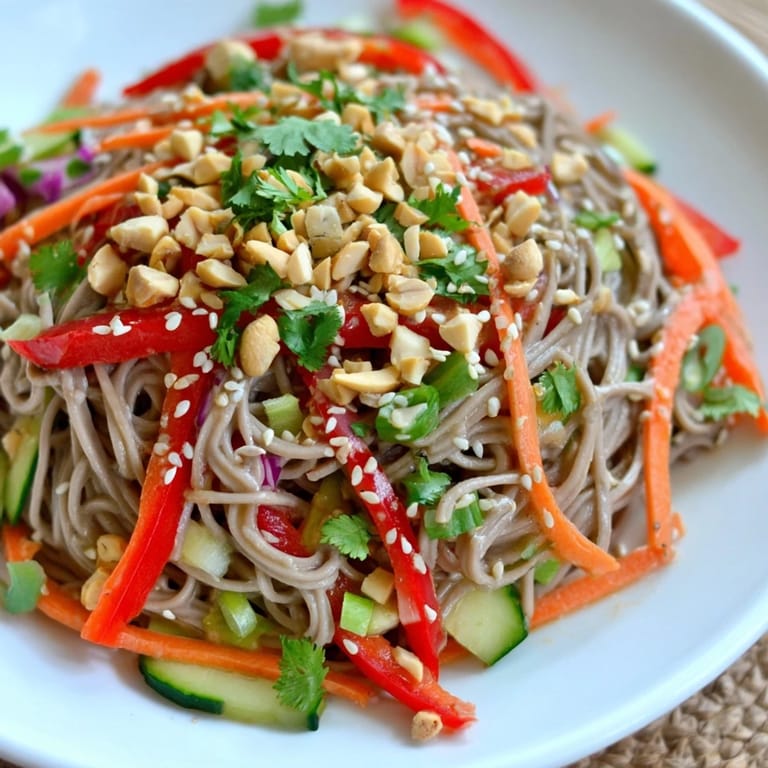
- Carrot, red bell pepper, cucumber, spring onions, red cabbage: The rainbow here isn't just pretty; each vegetable brings a different texture and crunch that keeps the salad interesting with every bite.
- Fresh cilantro (2 tbsp): Don't skip it—it's the unexpected brightness that makes people ask what they're tasting.
- Soy sauce (3 tbsp): The umami backbone of the dressing; use tamari if you're keeping this gluten-free.
- Rice vinegar (2 tbsp): Gentler than regular vinegar, it adds tang without overwhelming.
- Toasted sesame oil (2 tbsp): This is non-negotiable—the toasted version has depth that regular sesame oil lacks.
- Honey or maple syrup (1 tbsp): Just enough sweetness to balance the savory and spicy elements without making it dessert.
- Fresh ginger (1 tbsp, grated): Grate it just before mixing so it's at its most vibrant and sharp.
- Garlic clove, minced: One is enough; fresh garlic is peppery and alive in ways jarred never is.
- Sriracha or chili sauce (1 tsp, optional): For those who like heat, though the dressing sings without it too.
- Toasted sesame seeds (1 tbsp in dressing, plus more for garnish): Toast them yourself if you can—the difference between pre-toasted and freshly toasted is real.
- Roasted peanuts or cashews (2 tbsp): The crunch at the end, the thing that makes you want another bite.
Tired of Takeout? 🥡
Get 10 meals you can make faster than delivery arrives. Seriously.
One email. No spam. Unsubscribe anytime.
Instructions
- Boil and chill the noodles:
- Get your water to a rolling boil and cook the noodles exactly as the package says—no shortcuts, no guessing. Drain them well, run cold water over them until they're completely cool, and let them sit while you prep everything else; this prevents them from sticking together and keeps that tender bite.
- Prep your vegetables with intention:
- Julienne the carrot and cucumber so they're thin and delicate, slice the bell pepper, chop the spring onions, and shred the cabbage. This isn't busywork; each cut determines how the vegetables cook into the dressing and how pleasant they feel to eat.
- Whisk the dressing until it comes together:
- In a small bowl, combine the soy sauce, rice vinegar, sesame oil, honey, ginger, garlic, and sriracha if you're using it, then add the sesame seeds. Whisk until the honey dissolves and the flavors blend; taste it straight and adjust for salt, acid, or heat.
- Bring everything together gently:
- In a large bowl, combine the cooled noodles, vegetables, and cilantro, then pour the dressing over and toss everything with salad tongs or your hands until every strand is coated. Don't be shy here—coat means coat.
- Serve with the final flourishes:
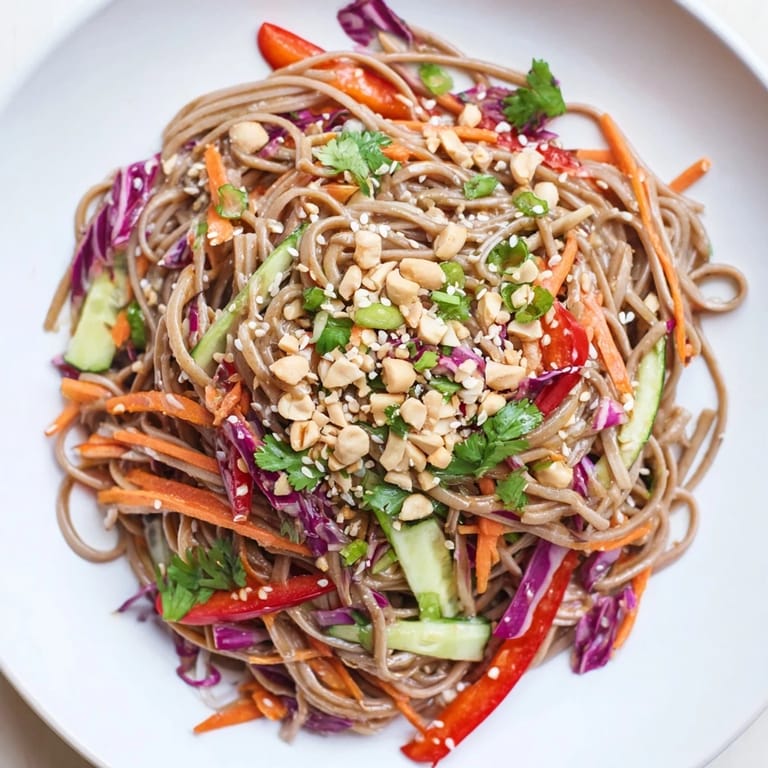
- Divide among bowls and top with chopped peanuts or cashews and extra sesame seeds. If you have time, chill for an hour before serving; the flavors deepen and the vegetables soften just slightly into the dressing.
 Save to Pins
 There's a moment right after tossing when the aroma rises up from the bowl—that perfect blend of sesame, ginger, and soy—and suddenly you're not just making lunch, you're creating something that tastes like a small vacation. That's when you know you've got it right.
Why This Works as a Light Meal
The beauty of this salad is that it's substantial without being heavy. The noodles provide carbohydrates and stick-to-your-ribs satisfaction, the vegetables add volume and fiber, and the sesame oil and nuts bring just enough fat to make everything feel complete. On hot days, when you're tired but hungry, this hits differently than a heavier dish—it's energizing rather than sluggish.
The Dressing Is Everything
I've learned that a mediocre salad with a spectacular dressing beats a perfect salad with uninspired dressing every single time. This sesame-ginger combination is the kind of dressing you'll want to make extra of, to drizzle over roasted vegetables, to pour over steamed chicken, to keep on hand for those moments when you need something quick but impressive. The ginger gives it personality, the soy sauce gives it authority, and the sesame oil gives it soul.
Customization and Seasons
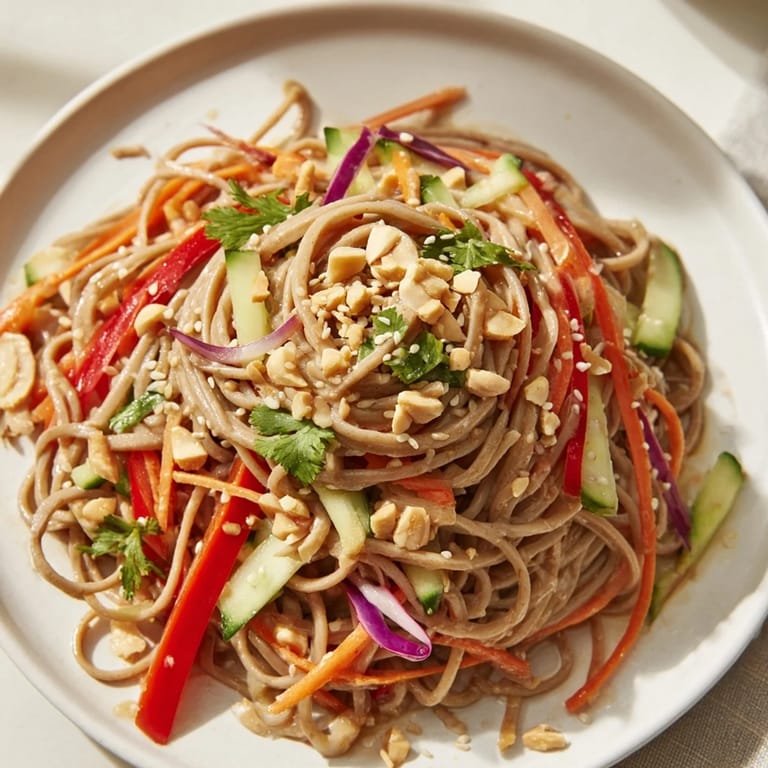
This salad is a canvas. In summer, add shrimp or grilled chicken for protein and richness. In fall, toss in shredded Brussels sprouts for earthiness and crunch. Year-round, keep it vegetarian or load it with whatever protein is calling to you—the dressing is flexible enough to handle anything. Winter or summer, this tastes like you're taking care of yourself.
- Add cooked shrimp, grilled chicken, baked tofu, or edamame for extra protein without changing the soul of the dish.
- Swap vegetables based on what's fresh: daikon radish, snap peas, shredded beets, or thinly sliced green apple all work beautifully.
- Make a double batch of dressing and keep it refrigerated for up to five days—it's your secret weapon for last-minute meals.
 Save to Pins
 This is the kind of salad that tastes better the second day, when the flavors have had time to mingle and settle. It's the kind of recipe that feeds people and asks for nothing in return except maybe a smile and a second helping.
Questions & Answers
- → What type of noodles work best for this salad?
Dried soba noodles or rice noodles both make excellent choices, offering a firm texture that holds up well when chilled.
- → Can I prepare the dressing in advance?
Yes, the sesame-ginger dressing can be whisked together ahead of time and stored refrigerated for up to two days to deepen the flavors.
- → How should I store leftovers?
Keep the salad covered in the refrigerator and consume within 1-2 days. The noodles and vegetables maintain their texture best when chilled separately and combined just before serving.
- → Are there any good protein additions for this dish?
Adding grilled chicken, cooked shrimp, or tofu can enhance the dish’s heartiness while complementing the fresh flavors.
- → How spicy can the salad be made?
The inclusion of Sriracha or chili sauce in the dressing offers a gentle heat that can be adjusted according to personal preference or omitted entirely.
- → Is this dish suitable for gluten-free diets?
Yes, by using rice noodles and tamari instead of soy sauce, the salad can easily be adapted for gluten-free needs.