 Save to Pins
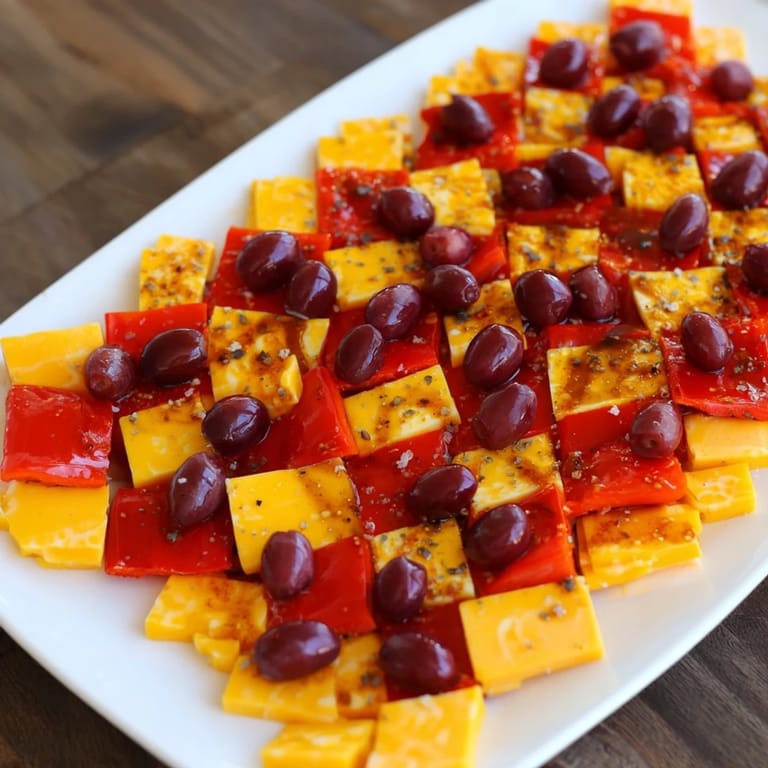
 I stumbled upon this idea while reorganizing a art book collection on a rainy afternoon—there, tucked between pages of bold geometric compositions, was a photograph of a Bauhaus exhibition table. The stark, intentional placement of primary colors against clean lines sparked something in me. What if dinner could be that deliberate? That evening, I found myself in the kitchen with red peppers, sharp cheddar, and a handful of grapes, arranging them like I was composing a still life. My guests arrived skeptical about "artistic appetizers," but one bite proved that sometimes the most memorable meals are those where beauty and taste meet without apology.
The first time I made this for a small dinner party, I was nervous about how it would land. I'd spent maybe ten minutes arranging everything, stepping back, adjusting a grape here, rotating a pepper block there. When my friend Sarah walked in and just stopped—silent for a moment—I knew I'd gotten something right. She photographed it before eating, which had never happened at my table before. Now I make it whenever I want to remind myself that food doesn't need to be complicated to be meaningful.
Ingredients
- Red bell pepper (1 large): Choose one that's firm and glossy, with thick walls that cut cleanly into perfect squares—this is what makes the visual impact work.
- Yellow cheddar or Gouda (120 g / 4 oz): A sharper cheese holds its shape better than mild varieties, and that tiny tang brightens the whole plate.
- Blue or black seedless grapes (24): Room temperature grapes taste better than cold ones, and the seedless variety means you can eat without hesitation.
- Extra-virgin olive oil (1 tbsp, optional): A whisper of oil on the peppers deepens their color and adds a silky richness.
- Sea salt and black pepper, to taste: Don't skip the finishing seasoning—it's what transforms decent ingredients into something craveable.
Tired of Takeout? 🥡
Get 10 meals you can make faster than delivery arrives. Seriously.
One email. No spam. Unsubscribe anytime.
Instructions
- Prep your foundation:
- Wash the bell pepper under cool water and pat it completely dry—any moisture will throw off your cutting precision. Slice it in half lengthwise, remove the seeds, then cut into strips about an inch wide, then cross-cut those into neat squares. The uniformity is the whole point here.
- Build your blocks:
- Unwrap your cheese and place it on the cutting board. Using a sharp knife dipped in hot water (then dried), cut the cheese into rectangular blocks roughly the size of your pepper squares—this takes maybe three minutes and feels meditative. Work quickly so the cheese doesn't get sweaty.
- Ready the grapes:
- Give them a quick rinse, then pat dry on a clean kitchen towel. Wet grapes slip around when you're trying to arrange them, so this step matters more than it sounds.
- Compose your arrangement:
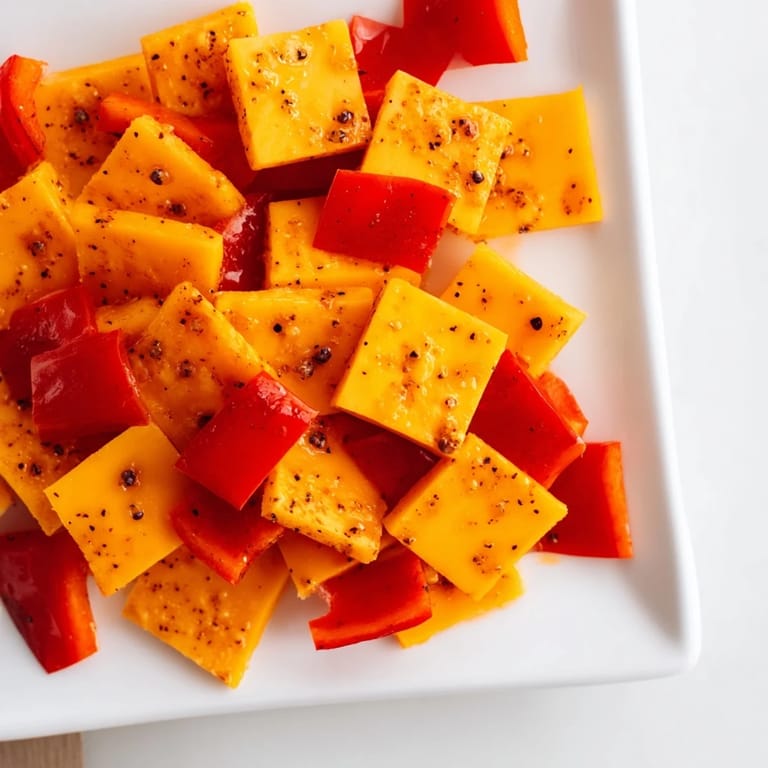
- Lay out a rectangular serving platter and start placing your elements in a grid pattern—think Mondrian, think intentional spacing. Alternate red peppers, golden cheese, and dark grapes so no two identical elements touch each other. Step back and look at it from different angles; you're not just feeding people, you're creating something they'll remember.
- Season and serve:
- If using olive oil, brush it lightly across the pepper pieces to make them gleam. Sprinkle with a whisper of sea salt and a few turns of fresh black pepper. Serve right away, or chill for up to half an hour—the flavors actually clarify when cold.
 Save to Pins
 There's a moment between when you finish arranging and when the first person reaches for a piece—a moment of pure anticipation. That's when you realize appetizers aren't really about hunger; they're about creating conversation and wonder before the meal even begins.
Why This Dish Changes Everything
This recipe taught me that restraint is powerful. By working with only four elements—three real colors, three distinct textures—the dish becomes more striking than something overloaded with complexity. There's something almost rebellious about an appetizer that refuses to apologize for its simplicity.
The Geometry of Taste
The beauty of Bauhaus design is that every element serves both form and function. The red pepper brings sweetness and slight bitterness, the cheese contributes richness and a touch of salt, and the grapes offer cool sweetness that ties everything together. When arranged intentionally, each color guides your eye and your fork, making the eating experience as considered as the looking.
Variations and Pairings That Work
Once you understand the principle—alternating colors, matching sizes, respecting negative space—you can adapt this in countless directions. I've made winter versions with pomegranate seeds, summer versions with cherry tomatoes and fresh mozzarella squares. The framework stays the same; only the palette changes.
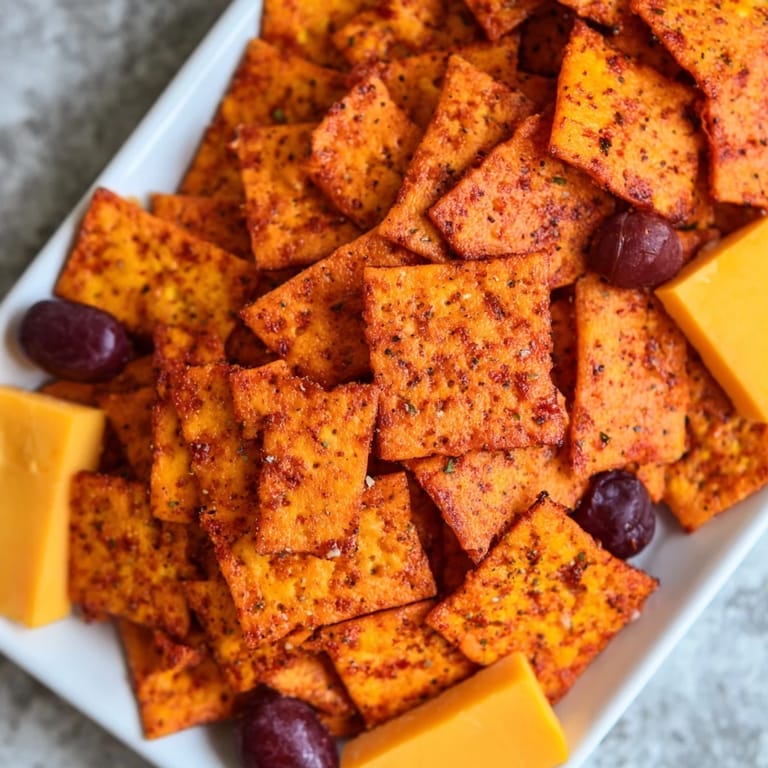
- Serve with thin crackers or toasted bread slices on the side for those who want to build something edible from your art.
- Pair with a crisp white wine like Sauvignon Blanc or Albariño, something that won't compete with the delicate flavors.
- For vegan guests, plant-based yellow cheese works surprisingly well and maintains the visual impact.
 Save to Pins
 This dish proves that sometimes the most elegant meals are the ones where you stop overthinking and start seeing your ingredients as design elements. Serve it with confidence.
Questions & Answers
- → What is the best way to cut the bell pepper for this dish?
Cut the red bell pepper into 1-inch square strips for uniform blocks that fit the geometric presentation.
- → Can I substitute the cheese for a vegan alternative?
Yes, plant-based yellow cheese can replace traditional cheddar or Gouda to keep the dish vegan-friendly.
- → How should the grapes be prepared?
Use seedless blue or black grapes, rinse them thoroughly, and dry before arranging to maintain freshness.
- → Is it necessary to brush the peppers with olive oil?
Brushing with extra-virgin olive oil is optional but adds a subtle richness and helps seasonings adhere.
- → What serving suggestions complement this appetizer?
Pair with thinly sliced bread or crackers and a dry white wine like Sauvignon Blanc for a complete experience.