 Save to Pins
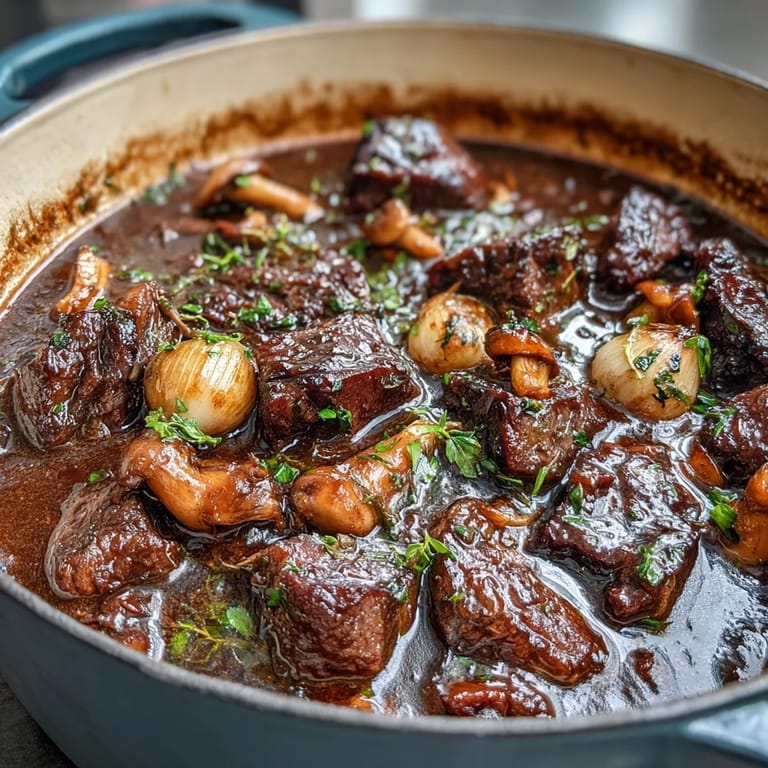
 There's something about the aroma of beef braising in red wine that stops you mid-stride through the kitchen—it's the kind of smell that makes you close your eyes and just breathe it in. My first wild mushroom beef bourguignon happened almost by accident on a gray autumn afternoon when I had good wine, beautiful mushrooms from the farmer's market, and an overwhelming urge to make something that felt both comforting and a little bit fancy. What started as a casual weekend project turned into the dish I reach for whenever I want to feel like I'm cooking something genuinely special, without the stress.
I made this for friends who were skeptical about "fancy French cooking" at home, and watching their faces when they tasted that glossy, wine-dark sauce was worth every minute of prep work. One of them actually asked if I'd made it in a professional kitchen, which made me laugh—it's just patience, good ingredients, and letting your oven do what it does best.
Ingredients
- Beef chuck (1.5 kg): The marbling in chuck means it becomes impossibly tender during braising, not stringy or dry—this is the cut that makes the whole dish work.
- Wild mushrooms (250 g): Chanterelles, porcini, or cremini bring earthy depth that regular button mushrooms can't touch; they sauté separately so they stay golden and firm.
- Pearl onions (200 g): Peel them while they're still whole and they caramelize beautifully, adding a sweet counterpoint to the rich sauce.
- Carrots and celery (2 medium and 2 stalks): The classic mirepoix foundation—they build flavor as they soften and practically melt into the sauce.
- Dry red wine (750 ml): Use something you'd actually drink; cheap wine makes cheap-tasting food, and your guests will taste the difference.
- Beef stock (500 ml): Homemade is better, but quality store-bought works when you're short on time.
- Tomato paste (2 tbsp): A small amount adds umami depth and helps darken the sauce without overpowering the wine.
- Fresh thyme and bay leaves: These are non-negotiable—they're what makes this taste authentically French, not just like beef stew.
- Olive oil and unsalted butter: The butter added at the end gives the mushrooms and onions a silky finish that transforms them.
- All-purpose flour (2 tbsp): Dust the vegetables lightly so the sauce thickens naturally without needing cornstarch or other thickeners.
- Smoked bacon or pancetta (optional, 100 g): If you use it, it adds a smoky note that deepens everything, but the dish is equally beautiful without it.
Tired of Takeout? 🥡
Get 10 meals you can make faster than delivery arrives. Seriously.
One email. No spam. Unsubscribe anytime.
Instructions
- Preheat and prep:
- Get your oven to 160°C (325°F) and pat your beef cubes completely dry—moisture is the enemy of a good sear. Seasoning them now means the flavors start melding from the very first step.
- Sear the beef in batches:
- Heat 1 tbsp olive oil in your Dutch oven over medium-high heat until it shimmers, then add beef in a single layer without crowding. Let each batch sit undisturbed for a minute or two before turning—you want a deep golden crust, not gray steamed meat. This takes patience, but it's where half the flavor comes from.
- Render the bacon (if using):
- Once beef is seared and set aside, add diced bacon and cook until the edges curl and get crispy. The rendered fat flavors everything that comes next.
- Build your flavor base:
- Add another tablespoon of oil, then sauté chopped onion, carrots, and celery for about 5 minutes until they soften and begin to caramelize. Add minced garlic in the last minute—it should smell incredible by now.
- Make a paste:
- Sprinkle flour over the vegetables, stir constantly, and cook for 2 minutes. This removes the raw flour taste and helps the sauce thicken later.
- Deglaze with wine:
- Stir in tomato paste first so it can caramelize slightly, then pour in your red wine while scraping up all those browned bits stuck to the bottom—that's liquid gold. Keep scraping until the pot is clean and the wine has reduced slightly.
- Return beef and add stock:
- Add the beef stock, then return the beef (and bacon) to the pot along with fresh thyme sprigs and bay leaves. Bring everything to a gentle simmer on the stovetop.
- Braise low and slow:
- Cover the Dutch oven and transfer to the oven for 2 hours. The gentle, even heat means the beef becomes fork-tender without any tough spots, and the sauce concentrates beautifully.
- Prepare mushrooms and onions:
- While the beef braises, heat 1 tbsp olive oil and 2 tbsp butter in a large skillet over medium-high heat. Add wild mushrooms and cook until they release their liquid and turn golden—don't stir constantly, let them brown. Once done, set them aside and add pearl onions to the same skillet, cooking about 8 minutes until they caramelize and turn a light amber color.
- Finish braising:
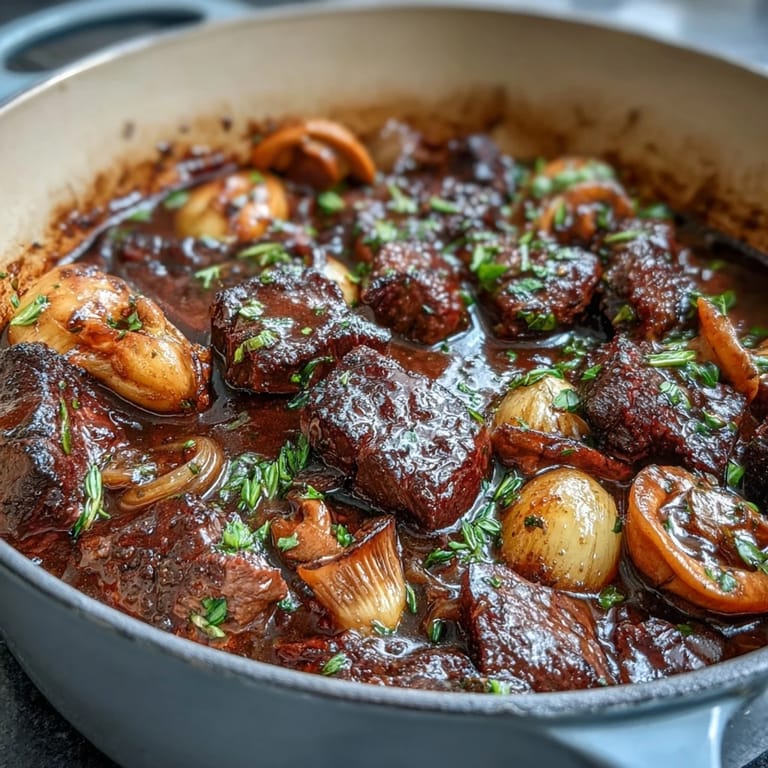
- After 2 hours, stir the golden mushrooms and pearl onions into the Dutch oven and braise uncovered for another 30 minutes. This last stretch lets the sauce reduce and thicken while the vegetables absorb all that wine-rich flavor.
- Final touches:
- Remove the bay leaves and thyme sprigs, taste, and adjust seasoning with salt and pepper. Pour into a serving dish, garnish generously with fresh parsley, and watch your kitchen fill with that smell again.
 Save to Pins
 The real magic happened when my partner tasted this and said it reminded them of a restaurant in Lyon they'd been to years ago—and I'd never left my kitchen. That's when I understood this dish isn't just about technique; it's about creating a moment that tastes like travel, comfort, and care all at once.
Serving Suggestions That Actually Matter
The sauce is too good to waste, so serve this over something that will catch every drop. Creamy mashed potatoes are the classic pairing for a reason—they're a perfect blank canvas for the wine-dark sauce. Buttered egg noodles work beautifully too, clinging to the sauce in a way that feels luxurious, or tear into crusty French bread and use it to soak up what's left on your plate.
Why This Tastes Like More Than Just Dinner
There's something about cooking something that takes time and attention that shifts the whole mood of a meal. This isn't fast food or weeknight convenient—it's a deliberate choice to slow down and invest in something good, which somehow makes it taste better. When people sit down to eat something this rich and carefully made, they notice, they linger, they talk more.
Kitchen Secrets I Learned the Hard Way
My first attempt at this dish taught me that marinating the beef in red wine overnight before cooking adds an incredible depth that changes everything—the wine penetrates the meat and starts breaking down the fibers before heat even enters the picture. I also learned that this is one of those rare dishes that tastes noticeably better the next day, as if all the flavors had overnight to settle and deepen, so feel free to make it ahead for a dinner party and refrigerate it until serving time.
- Pat your beef completely dry with paper towels before searing—any moisture will cause it to steam instead of brown, and you need that crust.
- Use a heavy Dutch oven that retains heat evenly; thin-bottomed pots create hot spots that cause uneven cooking and browning.
- If wild mushrooms aren't available, cremini or even a mix of button and cremini will work, though you'll lose some of that earthy elegance.
 Save to Pins
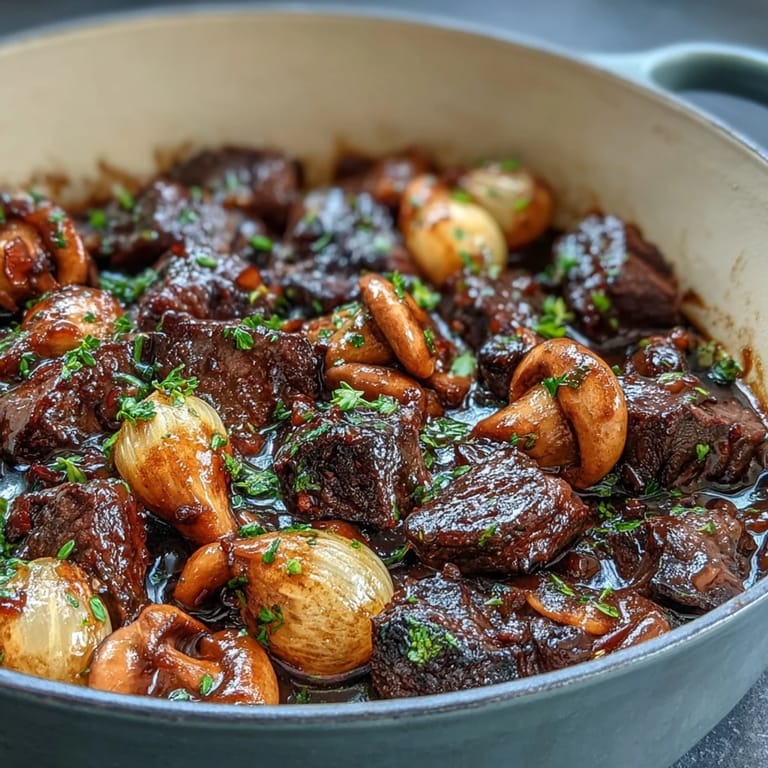
 This dish has become my answer to the question "What do you make when you really want to impress?" It's proof that restaurant-quality cooking isn't about secret ingredients or magic—it's about technique, patience, and choosing each component with care. Make it once and you'll understand why it's been a French classic for over a century.
Questions & Answers
- → What cut of beef is best for this dish?
Beef chuck cut into 2-inch cubes works well due to its marbling and ability to become tender when braised slowly.
- → Can I substitute wild mushrooms with other types?
Yes, button or cremini mushrooms make good alternatives if wild varieties aren’t available, though flavor will be milder.
- → How long should the beef braise for optimal tenderness?
Braising for about 2 to 2.5 hours at a low oven temperature ensures the beef becomes tender and flavorful.
- → Is it necessary to brown the beef before braising?
Browning the beef first develops deeper flavor and a richer sauce by creating caramelized surfaces.
- → What liquids are used to braise the beef?
Dry red wine and beef stock combine to create a rich, flavorful braising liquid that tenderizes and seasons the meat.
- → How can I thicken the sauce naturally?
Sprinkling flour over sautéed vegetables before adding liquids helps thicken the sauce as it cooks.