 Save to Pins
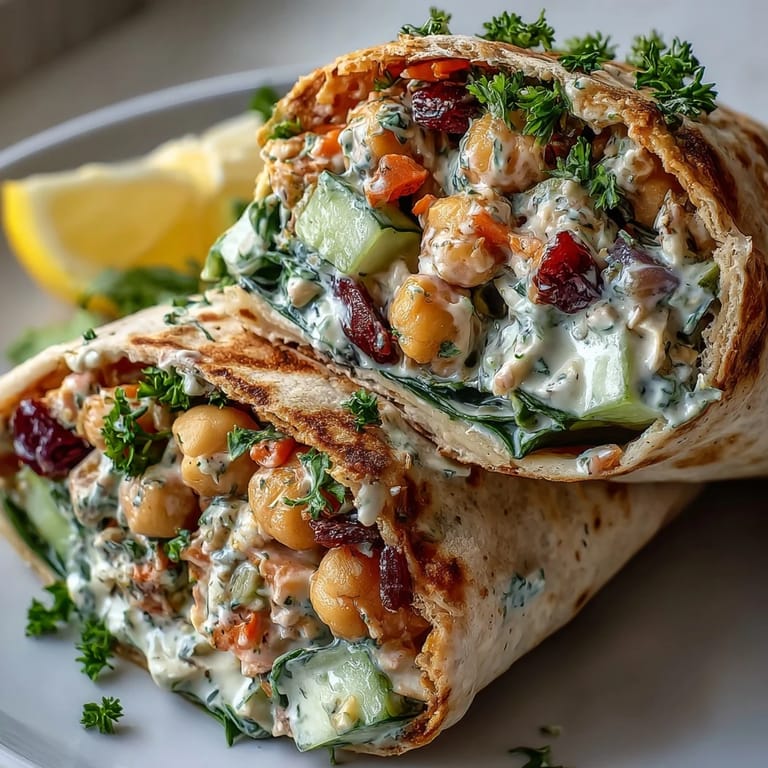
 There's something about assembling wraps that feels like a small act of defiance against complicated cooking. One Tuesday afternoon, I was standing in my kitchen feeling simultaneously hungry and uninspired when I spotted a can of chickpeas in the pantry and remembered how tahini could transform almost anything into something worth eating. Twenty minutes later, I was biting into something so bright and satisfying that I couldn't believe how simple it had been. These lemon tahini chickpea wraps became my answer to that particular kind of hunger—the one that wants flavor without fuss, nutrition without performance.
I made these for my neighbor who'd mentioned offhandedly that she was trying to eat less meat, and watching her face when she realized how filling and delicious they were made me understand the real power of this recipe. She came back three days later asking for the tahini dressing recipe alone, which somehow felt like the highest compliment. Since then, these wraps have become my go-to when I want to feed people something that satisfies both the hungry and the health-conscious without making anyone feel like they're eating separate meals.
Ingredients
- Chickpeas: The foundation here—use canned for convenience, but rinse them really well because that starchy liquid is what makes them gummy instead of fluffy.
- Fresh parsley: Don't skip this or substitute dried; the brightness matters in a way that only fresh herbs can deliver.
- Red onion: Finely diced means it disappears into the filling rather than announcing itself, which is what you want.
- Carrot and cucumber: The grated carrot adds sweetness while the diced cucumber keeps everything cool and crisp.
- Baby spinach: Chopped roughly and mixed into the filling instead of just layered underneath.
- Tahini: The soul of the dressing—make sure it's well-stirred before measuring because the oil separates.
- Lemon juice: Freshly squeezed is non-negotiable; bottled just tastes like chemicals next to fresh.
- Olive oil: A good one makes this dressing taste intentional rather than accidental.
- Whole wheat or gluten-free wraps: Choose ones that are sturdy enough to hold filling without tearing, and warm them slightly so they're flexible.
Tired of Takeout? 🥡
Get 10 meals you can make faster than delivery arrives. Seriously.
One email. No spam. Unsubscribe anytime.
Instructions
- Prepare the filling base:
- Pour your drained chickpeas into a medium bowl and mash them with the back of a fork, but don't go all the way—you want a texture that's roughly broken down with some whole chickpeas still visible. This gives the wrap substance and a satisfying bite instead of turning into paste.
- Build the texture:
- Add the parsley, finely diced red onion, grated carrot, diced cucumber, and chopped spinach directly into the chickpea bowl with a pinch of salt and pepper. Mix it all together gently, noticing how the vegetables start releasing their own moisture.
- Make the dressing sing:
- In a separate small bowl, whisk together the tahini, fresh lemon juice, olive oil, minced garlic, and maple syrup until it starts coming together. Add your water one tablespoon at a time while whisking, watching as it transforms from thick paste into something pourable and creamy.
- Marry the components:
- Pour the dressing over your chickpea mixture and toss everything until the filling is evenly coated and glossy. You should be able to smell the lemon and garlic now.
- Assemble with intention:
- Lay your wraps on a clean surface and place a handful of salad greens down the center of each one—this creates a barrier that keeps the wrap from getting soggy. Spoon your chickpea mixture evenly over the greens, then fold in the sides and roll tightly, like you're wrapping something precious.
- Finish and serve:
- Slice each wrap in half on a diagonal so you can see all the layers inside, and serve immediately with lemon wedges for anyone who wants to add brightness.
 Save to Pins
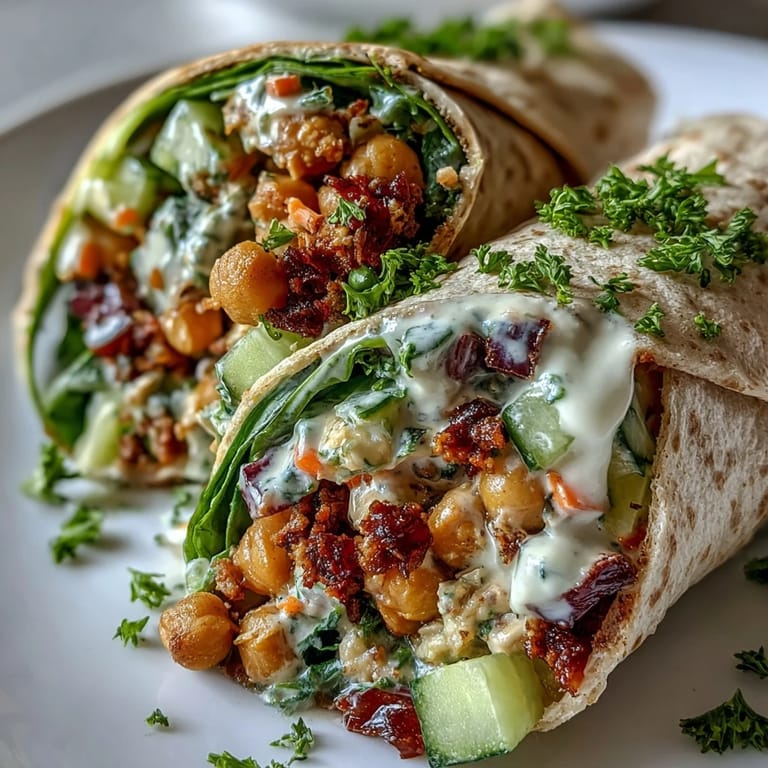
 These wraps have a way of becoming exactly what you need them to be in the moment—a quick lunch that doesn't feel rushed, a meal you can bring somewhere, or proof that vegan food doesn't have to be an afterthought. There's quiet satisfaction in biting through the wrap and getting all those flavors at once: the tahini's nuttiness, the lemon's brightness, the chickpeas' earthiness, and that crisp snap of fresh vegetables.
The Secret of the Tahini Dressing
The dressing is really the entire reason these wraps work, and it took me a few attempts to understand why. At first, I made it too thick and it just clung to things without coating them. Then I made it too thin and it was just wet. The magic happens when the tahini and lemon juice have already started to emulsify before you add the water, which is why the order matters. The sesame solids and the acid are doing something together that creates this creamy texture without requiring any cream at all.
Why These Wraps Travel Well
If you're packing these for a lunch box or bringing them somewhere, there's a trick that makes all the difference: assemble them the morning you're eating them, but wrap each one tightly in foil or parchment paper instead of plastic wrap. The paper allows them to breathe slightly while staying contained, whereas plastic traps moisture and makes everything limp. I've brought these on car trips and hiking days, and they hold up better than sandwiches, which is saying something.
How to Make This Your Own
The structure of this wrap is sturdy enough to support variations without falling apart. I've added roasted red peppers, sliced avocado, crispy tofu, and even a spoonful of hummus, and every version has been delicious. The tahini dressing is also forgiving—try adding a tiny pinch of cumin or a few shreds of fresh mint if you want it to taste different without being unrecognizable.
- Roasted red peppers or sun-dried tomatoes add sweetness and complexity if you want the wrap to feel more substantial.
- A small handful of crispy chickpeas (tossed with a pinch of smoked paprika and roasted until crunchy) gives you a textural element that elevates the whole thing.
- Keep the fillings in separate containers if you're meal-prepping, and don't assemble until you're actually ready to eat.
 Save to Pins
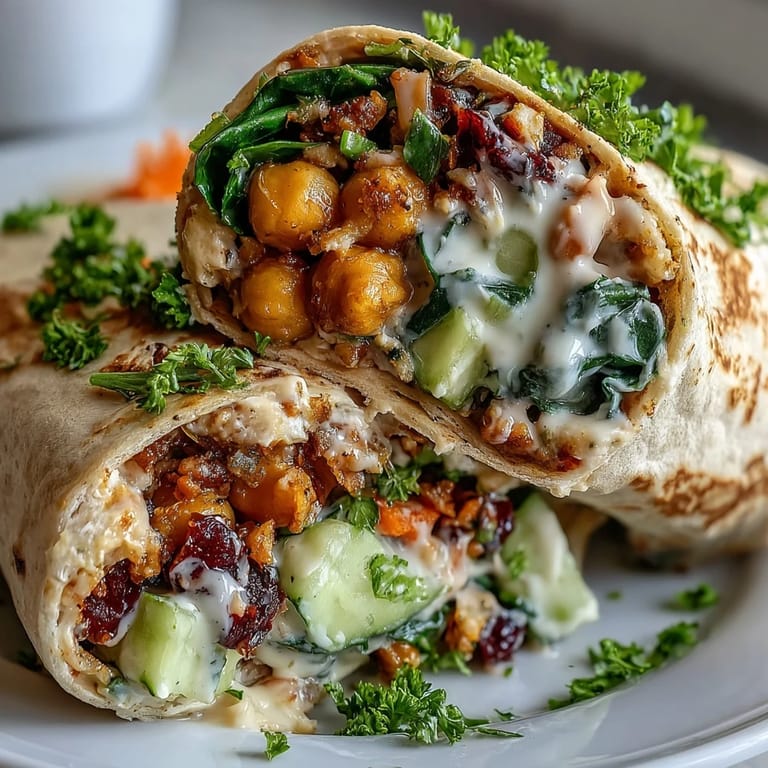
 These wraps have become one of those recipes I make almost without thinking, which somehow makes them taste even better. They're the kind of food that proves you don't need complicated techniques or obscure ingredients to create something genuinely nourishing and delicious.
Questions & Answers
- → How long do these wraps keep?
Store the chickpea filling and dressing separately in airtight containers in the refrigerator for up to 3 days. Assemble wraps just before eating to prevent them from becoming soggy.
- → Can I make these ahead for meal prep?
Yes! Prepare the chickpea filling and dressing in advance, keeping them in separate containers. When ready to eat, simply warm the wraps if desired, assemble with fresh greens, and enjoy.
- → What can I substitute for tahini?
If you need to avoid sesame, try almond butter or sunflower seed butter for a similar creamy consistency. The flavor will be slightly different but still delicious.
- → Are these wraps gluten-free?
Use certified gluten-free wraps instead of whole wheat to make these completely gluten-free. Always check labels on all ingredients, especially the tahini, to ensure no cross-contamination.
- → Can I add protein to these wraps?
The chickpeas already provide 11g of protein per serving, but you can add sliced avocado, hemp seeds, or even some baked tofu if you want extra protein and healthy fats.