 Save to Pins
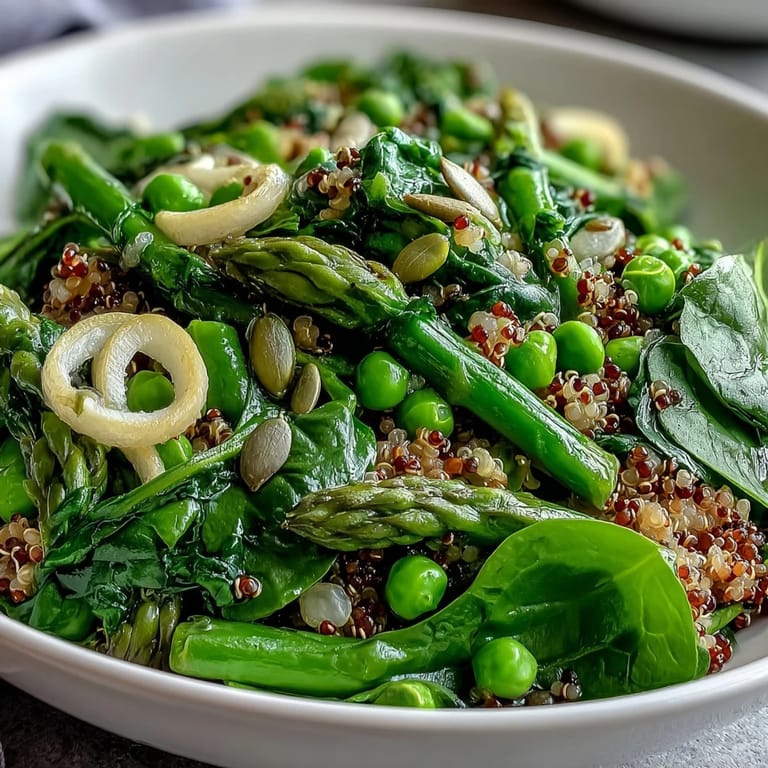
 Last spring, I was standing in my kitchen on a Tuesday afternoon when the farmers market haul suddenly felt like too much—bright green bundles of asparagus, a carton of fresh peas, and spinach that seemed to wilt just by looking at it. Rather than panic, I grabbed a grain I had on hand and started layering everything into a bowl with a quick lemon dressing I whisked together. That simple decision turned into one of those meals that tastes like the season itself, and now I make it whenever spring finally arrives.
I'll never forget bringing this bowl to a potluck where someone had misunderstood the assignment and brought six casseroles. My cheerful green bowl sat there almost untouched until halfway through the meal, when people started coming back for seconds and thirds. By the end of the night, it was completely empty, and someone actually asked for the recipe—the highest compliment a home cook can get.
Ingredients
- Quinoa, brown rice, or farro (1 cup): Choose whichever grain you have or prefer—quinoa cooks fastest and has a nutty flavor, while brown rice is earthier and farro adds a chewy texture that holds up beautifully under the dressing.
- Water (2 cups) and salt (½ tsp): The salt goes in the cooking water, not just at the end, which flavors the grains from the inside out and makes a real difference.
- Fresh or frozen green peas (1 cup): Frozen peas are honestly just as good as fresh here and sometimes even sweeter, so don't feel obligated to hunt down fresh if frozen is what you have.
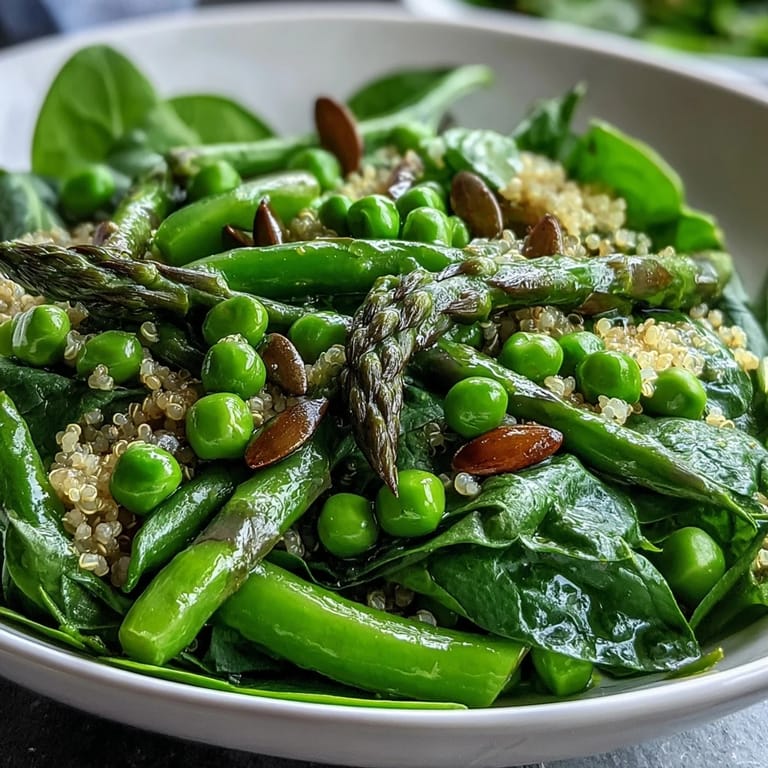
- Asparagus (1 cup, trimmed and cut into 2-inch pieces): The snap and slight earthiness of asparagus is what makes this bowl feel like spring on a plate.
- Green beans (1 cup, trimmed and cut into 2-inch pieces): They add a tender bite and keep the color palette gloriously verdant.
- Baby spinach (2 cups): A quick wilt mellows the raw edge and makes it easier to eat in a bowl without wrestling with long leaves.
- Extra-virgin olive oil (3 tbsp): This is where good quality matters—it's the backbone of your dressing and tastes like liquid gold when it's fresh.
- Freshly squeezed lemon juice (2 tbsp) and lemon zest (1 tsp): The juice brightens everything, while the zest adds a subtle floral note that boxed juice can't replicate.
- Dijon mustard (1 tsp): Just a touch acts as an emulsifier and adds a gentle tang that ties the whole dressing together.
- Maple syrup or honey (1 tsp): A tiny bit of sweetness balances the acidity and makes you wonder what the secret ingredient is.
- Minced garlic (1 small clove): Fresh is always better here—the sharpness mellows as it sits in the acidic dressing.
- Toasted pumpkin or sunflower seeds (2 tbsp): They add crunch and a nutty richness that makes the bowl feel more substantial.
- Crumbled feta cheese (¼ cup, optional): Salty and tangy, it's optional but genuinely transforms the whole experience if you eat dairy.
- Fresh herbs like mint, parsley, or dill: A handful of whatever smells good at the market brightens everything and makes it feel intentional rather than assembled.
Tired of Takeout? 🥡
Get 10 meals you can make faster than delivery arrives. Seriously.
One email. No spam. Unsubscribe anytime.
Instructions
- Cook the grains the right way:
- Rinse your grains under cold water first—this step actually matters because it removes surface starch and helps them cook more evenly. Bring your salted water to a boil, add the grains, then immediately lower the heat to a gentle simmer, cover, and let time do the work (about 15 minutes for quinoa, 35 for brown rice, or follow your package). When they're done, fluff gently with a fork instead of stirring, which keeps them light and separate.
- Blanch the vegetables one at a time:
- Bring a big pot of salted water to a rolling boil and blanch each vegetable separately for 2–3 minutes—the peas will cook faster than the asparagus and beans, so don't rush them together. The moment they turn bright green and tender, fish them out with a slotted spoon and plunge them straight into a bowl of ice water, which stops the cooking instantly and locks in that vibrant color.
- Wilt the spinach gently:
- Heat a large skillet over medium heat, then add the spinach with no oil—just the residual moisture from rinsing helps it steam down in about a minute. You want it soft and manageable, not cooked into submission, so pull it off the heat while it still has some texture.
- Whisk the dressing with intention:
- In a small bowl, combine the olive oil, lemon juice, zest, mustard, sweetener, and garlic, then whisk vigorously until it emulsifies into something silky and cohesive. Taste and adjust the salt and pepper—this is your moment to make it taste like what you actually want to eat.
- Layer thoughtfully:
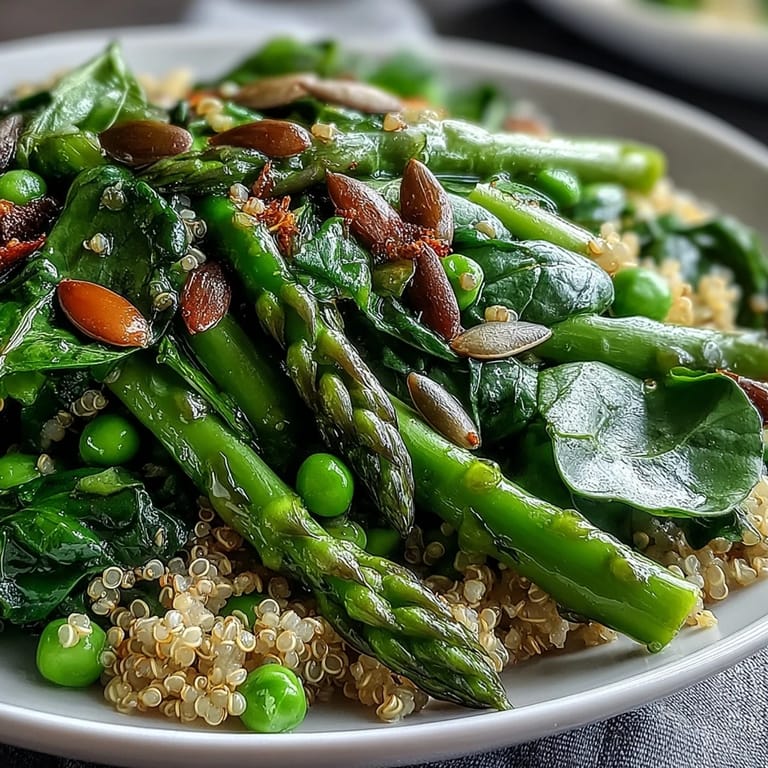
- Divide the warm grains among four bowls, then arrange the peas, asparagus, green beans, and spinach on top in whatever way makes you happy. Drizzle the dressing all over, making sure some of it reaches the bottom where it can soak into the grains.
- Finish with flair:
- Scatter the toasted seeds, any cheese you're using, and a generous handful of fresh herbs across the top. Serve right away while the grains are still warm and everything feels fresh.
 Save to Pins
 There's something about eating a bowl this green that makes you feel like you're taking care of yourself without it feeling like a chore. It's the kind of meal that makes you sit down, take a breath, and actually taste what you're eating instead of just fueling up.
Why This Bowl Works Year-Round
While this recipe shines in spring, the beauty is that it adapts to whatever season you're in. Summer calls for grilled zucchini and cherry tomatoes, fall welcomes roasted Brussels sprouts and carrots, and winter transforms into a warm bowl with kale and root vegetables. The framework stays the same—grain, vegetables, dressing—but the character changes completely depending on what's actually good at that moment in time.
The Art of Layering
How you arrange things in the bowl actually matters more than most people think. Putting the warm grains on the bottom means they'll absorb some of the dressing and become even more flavorful, while keeping the fresher vegetables on top preserves their texture and brightness. It's not pretentious—it's just smart eating that makes every bite count.
Make-Ahead and Storage Strategy
If you're planning to make this for the week, the secret is keeping everything separate until you're ready to eat. The cooked grains hold beautifully for four days in the fridge, the blanched vegetables stay crisp for three to four days in an airtight container, and the dressing will keep for about a week. Assemble fresh each time, and you'll have something that tastes like you just made it even on Thursday.
- Store the dressing in a jar with a tight lid and shake it before using in case the oil and vinegar separate slightly.
- Keep toasted seeds in an airtight container so they stay crunchy instead of turning soft from the moisture in the bowl.
- Don't mix in fresh herbs until the very last second, or they'll wilt and lose their brightness.
 Save to Pins
 This bowl is proof that simple food, made with a little care and attention, becomes something genuinely nourishing. Make it once and you'll understand why it keeps showing up on your table.
Questions & Answers
- → Can I make this bowl ahead?
Absolutely. Cook the grains and blanch vegetables up to 3 days in advance. Store dressing separately and toss everything together just before serving for best texture and flavor.
- → What grains work best?
Quinoa, brown rice, and farro all provide excellent texture and nutty flavor. Bulgur or couscous work too and cook faster if you're short on time.
- → How do I blanch vegetables properly?
Boil salted water, cook vegetables for 2–3 minutes until bright green, then immediately plunge into ice water. This stops cooking and preserves that vibrant color and crisp-tender texture.
- → Can I add protein?
Yes. Grilled chicken, baked tofu, roasted chickpeas, or even a soft-boiled egg make excellent additions. The bowl works beautifully as a base for whatever protein you prefer.
- → Is the dressing adjustable?
Completely. Add more lemon for extra brightness, more maple syrup for sweetness, or adjust garlic to your taste. The dressing keeps well in the refrigerator for up to a week.