 Save to Pins
 I discovered this salad on a sweltering afternoon when my neighbor brought over a container of something so bright orange and glistening it practically glowed on my kitchen counter. One bite and I was undone—the heat hit first, then the sesame richness bloomed, and suddenly the humble carrot felt like the star of the show. I've been making it ever since, always impressing myself with how something so simple could taste so alive.
I served this at a potluck last summer, nervous it would get lost among the heavier dishes, but instead people kept circling back to it between bites of everything else. Someone asked for the recipe three times that night—written on the back of a napkin, saved in their phone, texted to a friend. That's when I realized this wasn't just a side dish, it was the kind of food that makes people remember why they came.
Ingredients
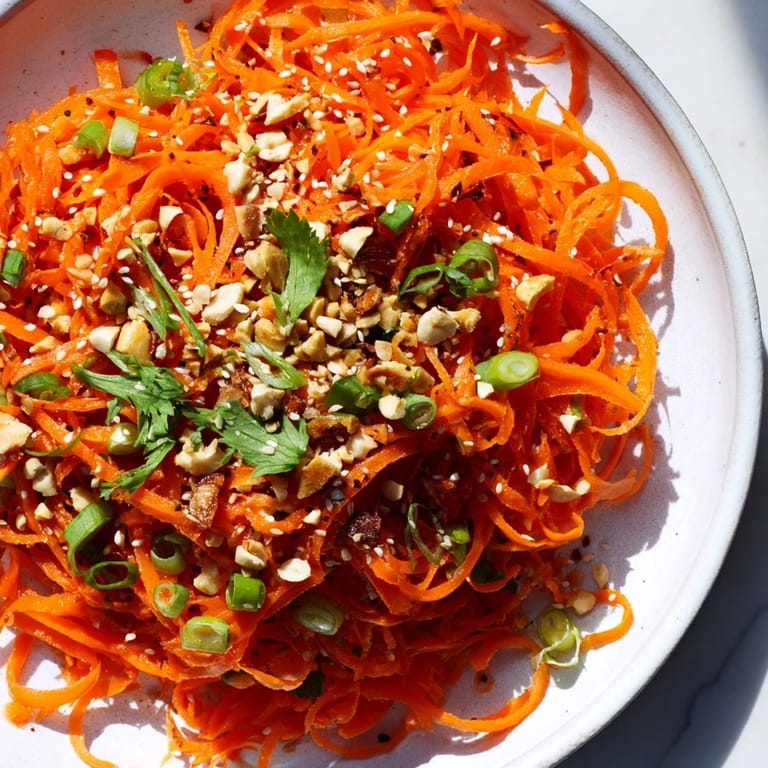
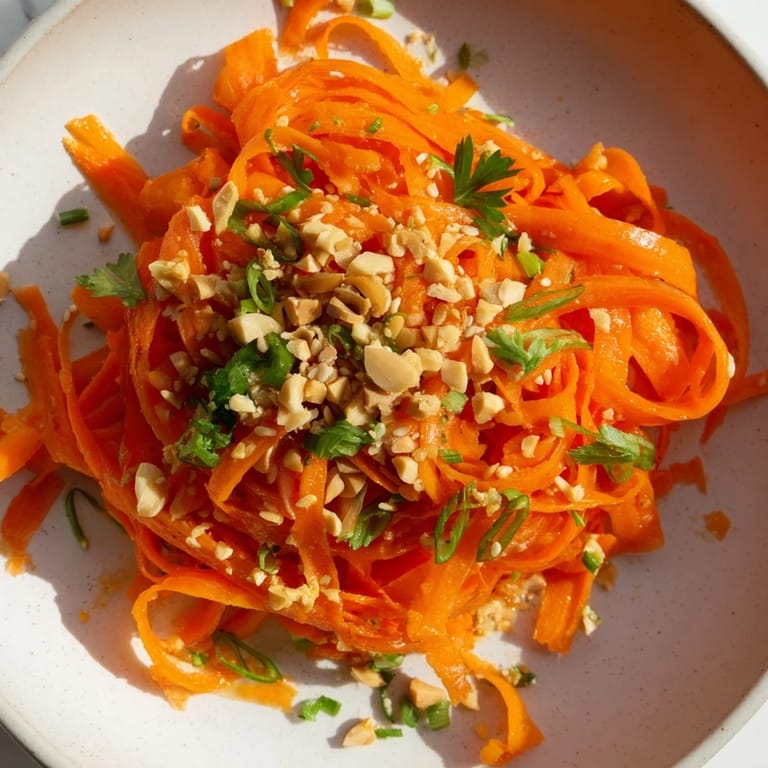
- Carrots: Shred them yourself just before mixing if you can—pre-shredded loses some of that crisp snap. Four large ones give you enough body without overwhelming the other flavors.
- Soy sauce: The backbone of the whole thing, so don't skip it for something lighter. Tamari works beautifully if gluten matters to you.
- Toasted sesame oil: This is non-negotiable—regular sesame oil tastes faintly bitter, but the toasted version brings warmth and depth that makes the whole salad sing.
- Rice vinegar: It's gentle where other vinegars would bully the carrots. The subtle tang keeps everything from feeling too sweet.
- Chili garlic sauce or sriracha: Start with one teaspoon and taste as you go—heat levels vary wildly between brands, and you want spice you enjoy, not spice that dominates.
- Fresh ginger and garlic: Minced small, these two wake up your palate and add complexity that makes people ask what your secret ingredient is.
- Sesame seeds: They add nuttiness and a gentle crunch that keeps every forkful interesting.
- Spring onions and cilantro: Optional but worth it—they add freshness and a bright green note that makes the whole dish feel less heavy.
Tired of Takeout? 🥡
Get 10 meals you can make faster than delivery arrives. Seriously.
One email. No spam. Unsubscribe anytime.
Instructions
- Shred and slice your vegetables:
- Get your carrots thin and even—this isn't just about looks, it's about how quickly the dressing can get into every strand. Slice your spring onions on a slight angle so they look deliberate.
- Build your dressing:
- Whisk everything together in a small bowl until the honey dissolves and you have something that smells assertively ginger-forward and a little spicy. Taste it straight from the whisk—it should make you lean back slightly.
- Bring it together:
- Pour the dressing over your carrot pile and toss with the kind of energy you'd bring to a dance move. You want every strand coated, not drowning—there's a difference.
- Taste and adjust:
- This is where you get to own the dish. Too mild? Add more sriracha. Too salty? A squeeze of lime helps. Trust your mouth.
- Finish and serve:
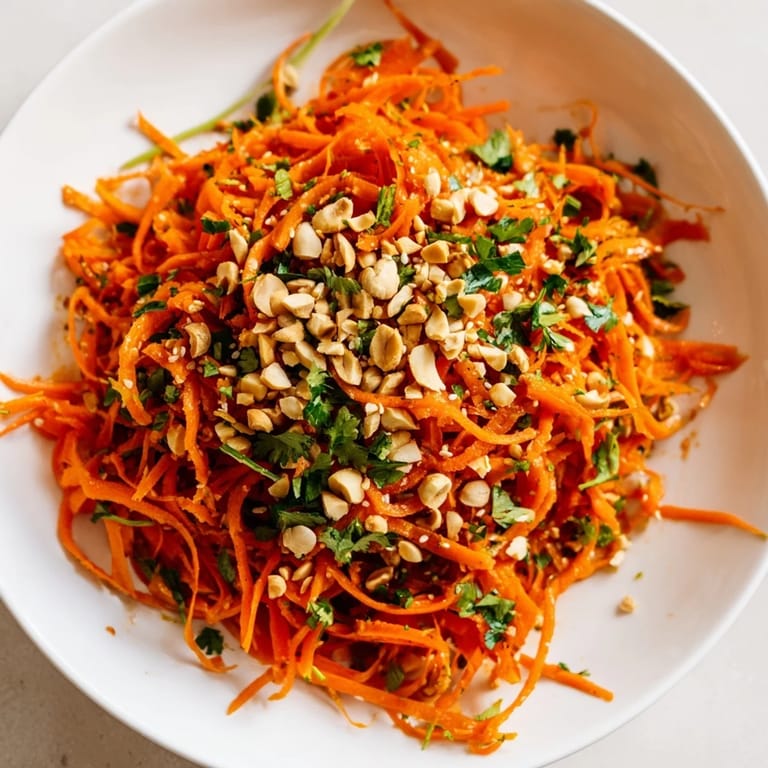
- Scatter your nuts and extra sesame seeds on top just before serving so they stay crispy. If you have time, let it sit for 10 minutes so the carrots can soften slightly and the flavors can get to know each other.
 Save to Pins
 I made this for my uncle who swears he hates salad, and he ate half the bowl standing at the counter before I could even get it to the table. He called it the next day asking if I'd made a mistake in the recipe because he couldn't replicate it. I hadn't—he just wasn't expecting a salad to matter so much.
Why This Dressing Works
Most Asian-inspired dressings rely on one strong flavor to carry the whole thing, but this one is a conversation between five different notes. The soy gives you umami depth, the sesame oil brings nuttiness, the vinegar cuts through with brightness, the ginger and garlic add aromatic heat, and the chili brings the final punch. None of them overpower—they just keep passing the baton back and forth, which is why you can eat an entire bowl and still want another bite.
Additions That Actually Work
I've experimented with this salad in every season. In summer, I add thinly sliced bell peppers for more crunch and a touch of sweetness. In winter, when carrots feel heavier, I'll add crisp cucumber or even apple slices for brightness. Some days I toss in a handful of toasted peanuts or cashews right into the salad instead of just on top—it changes everything, giving you texture in every bite.
Serving and Storage
This is one of those salads that gets better as it sits, which makes it perfect for meal prep or bringing to gatherings. The carrots soften slightly, the dressing soaks in, and the whole thing becomes more cohesive and flavorful. Keep it in an airtight container in the fridge, and it'll stay fresh for up to 24 hours—though it's rarely around that long.
- Serve it chilled as a side to grilled proteins, or pile it on greens for a more substantial meal.
- It pairs especially well with any Asian-inspired main, but also works beautifully alongside simple grilled chicken or fish.
- Bring it to potlucks and watch people go back for seconds.
 Save to Pins
 This salad taught me that sometimes the best dishes are the ones that feel effortless to make but taste like you've done something special. Keep making it, adjust it to your taste, and before long it'll be the recipe people ask you for by name.
Questions & Answers
- → How can I make the salad gluten-free?
Substitute soy sauce with tamari to ensure the dressing is gluten-free without compromising flavor.
- → What nuts work best as a garnish?
Roasted peanuts or cashews add a nice crunch and complement the spicy and tangy elements well.
- → Can I prepare the salad ahead of time?
Yes, it can be chilled for 10–15 minutes before serving to enhance the flavors but is best enjoyed fresh within 24 hours.
- → What vegetables can I add for extra crunch?
Thinly sliced bell peppers or cucumber can be included for added texture and freshness.
- → Is the salad suitable for vegan and dairy-free diets?
Yes, all ingredients are plant-based and free from dairy, making it suitable for vegan and dairy-free preferences.