 Save to Pins
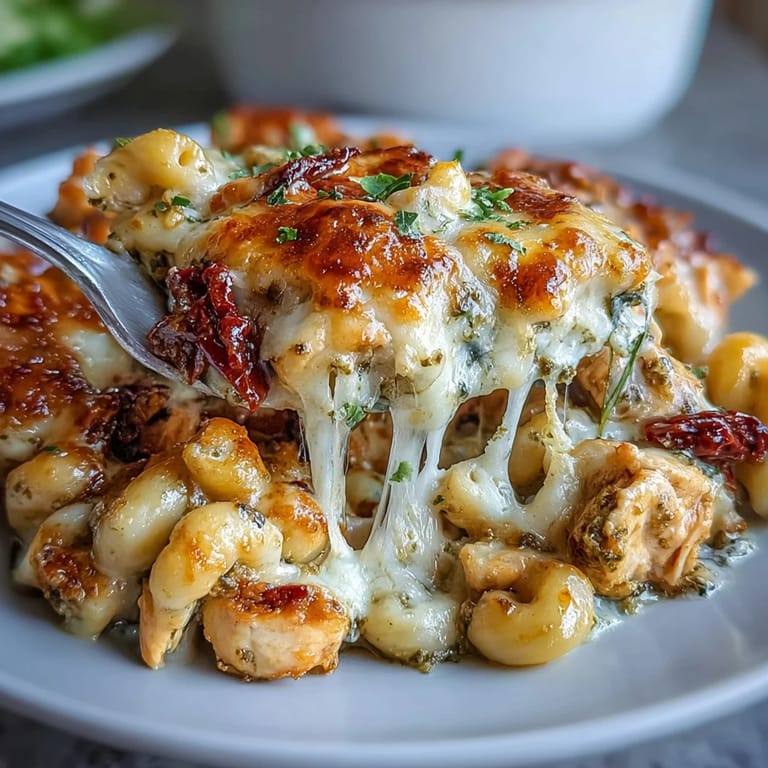
 Last summer, my neighbor brought over a jar of homemade basil pesto right when I was staring into my pantry wondering what to make for dinner. I had chicken thawing and pasta waiting, and something clicked—why not marry the warmth of chili mac with the bright, herbaceous magic of pesto? That first bowl changed how I thought about comfort food. It felt like two cuisines shaking hands, and somehow it worked perfectly.
I made this for a small gathering on a cool October evening, and watching people's faces when they tasted that first forkful—the surprise, the recognition, the pure satisfaction—made me realize this wasn't just dinner. It was the kind of dish that makes people linger at the table longer than they planned, asking for seconds before they've finished their first bite.
Ingredients
- Elbow macaroni or small pasta shells (340 g/12 oz): The curves and ridges hold sauce beautifully, so don't skip the texture—it matters more than you'd think.
- Boneless, skinless chicken breast (450 g/1 lb), diced: Cut into roughly half-inch pieces so they cook through quickly without turning rubbery.
- Yellow onion (1 medium), diced: The foundation of everything; don't rush the sautéing, let it become translucent and sweet.
- Garlic cloves (3), minced: Add it after the softer vegetables so it perfumes the oil without burning.
- Red bell pepper (1), diced: Choose one that feels heavy for its size—it'll have more flesh and less seed.
- Oil-packed sun-dried tomatoes (120 g/½ cup), drained and chopped: These concentrate the tomato flavor into bursts of umami; reserve a bit of their oil if your dish feels dry.
- Canned diced tomatoes (400 g/14 oz), undrained: Keep the juice—it becomes part of your sauce and adds natural acidity.
- Shredded mozzarella cheese (180 g/1½ cups): Tear or cut it from a block if you can; it melts smoother than pre-shredded versions.
- Grated Parmesan cheese (60 g/¼ cup): This is your salt and savory note; don't underestimate its power.
- Prepared basil pesto (120 g/½ cup): Stir it in at the very end so the heat doesn't fade its fresh brightness.
- Low-sodium chicken broth (720 ml/3 cups): This is your liquid base; low-sodium lets you control the salt and taste as you go.
- Olive oil (2 tbsp): Good quality here means better flavor in every bite.
- Italian seasoning (1½ tsp): If you have fresh basil, oregano, or thyme on hand, use those instead—dried works, but fresh transforms this.
- Crushed red pepper flakes (½ tsp, optional): A tiny whisper of heat that wakes up all the other flavors without overpowering them.
- Salt and freshly ground black pepper: Taste constantly; seasoning is where the magic happens.
Tired of Takeout? 🥡
Get 10 meals you can make faster than delivery arrives. Seriously.
One email. No spam. Unsubscribe anytime.
Instructions
- Get your pasta started first:
- Bring a large pot of salted water to a rolling boil—it should taste like the sea. Add pasta and cook just until al dente, where it still has a tiny bit of resistance when you bite it. Drain and set aside; it'll finish cooking in the sauce.
- Brown the chicken until it's golden:
- Heat olive oil in a large Dutch oven or deep skillet over medium-high heat until it shimmers. Add diced chicken, season with salt and pepper, and let it sit undisturbed for two minutes before stirring—this helps it develop color. Cook for another 3-4 minutes until just cooked through, then transfer to a plate.
- Build your flavor base:
- In the same pot, add the diced onion and red bell pepper. The fond on the bottom will stick to your spoon—that's where all the flavor lives. Stir and cook for about 4 minutes until the vegetables start to soften and the onion turns translucent. Add minced garlic and cook for just 1 minute, breathing in that sharp, sweet aroma.
- Layer in the intensity:
- Stir in the sun-dried tomatoes, Italian seasoning, and red pepper flakes if you're using them. Cook for 1 minute—just long enough for the heat to wake up those dried tomatoes. You'll notice the pot starting to smell incredibly rich.
- Create your sauce:
- Pour in the canned tomatoes with all their juice and the chicken broth. Bring to a simmer, scraping up any browned bits stuck to the bottom. This is where the chili mac foundation comes alive.
- Bring everything together:
- Return the cooked chicken to the pot along with the drained pasta. Stir in the pesto slowly, folding it in so the green threads distribute evenly through the orange-red sauce. Simmer for 3-4 minutes, just until the flavors marry and the pasta absorbs some of the liquid. Taste and adjust salt and pepper—trust your instincts.
- Add the cheese and finish:
- Pull the pot off the heat. Stir in the mozzarella and Parmesan, mixing gently until they melt into a creamy, cohesive sauce. The residual heat will do the work.
 Save to Pins
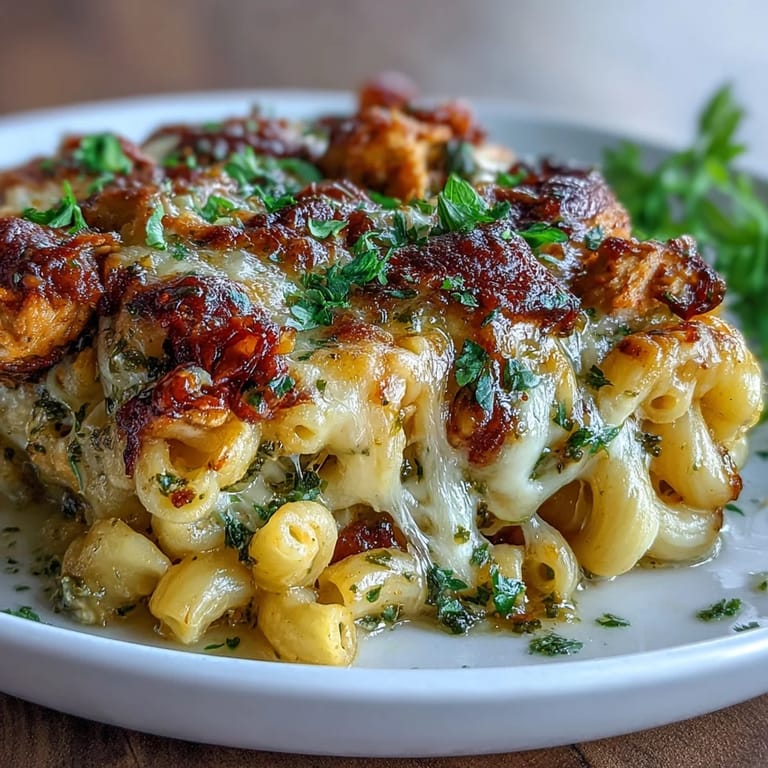
 My mother-in-law asked for the recipe while we were still eating, which in our family is basically the highest compliment. Later that evening, I overheard my partner telling someone it was the kind of dish that made him feel taken care of, and that's when I knew it had become something worth making again and again.
Why the Pesto Matters Here
Pesto in a chili mac sounds unusual until you actually taste it, and then it's obvious—the basil and garlic cut through the richness of the cheese and cream, giving your palate a moment to reset between bites. It's the reason this doesn't feel heavy even though it's baked pasta. The sun-dried tomatoes add another layer of depth that canned tomatoes alone can't quite reach, creating little pockets of concentrated flavor that surprise your taste buds.
Cheese Selection Makes a Real Difference
I learned this the hard way—pre-shredded mozzarella (the kind with cellulose coating) never fully melts into that glossy, creamy sauce. If you can find fresh mozzarella or shred it yourself from a block, the texture becomes silky instead of stringy. The Parmesan adds a salty sharpness that grounds the whole dish and keeps it from tasting one-note.
Making It Your Own
This recipe is flexible enough that you can pivot depending on what's in your fridge or what mood you're in. I've stirred in handfuls of spinach in the last two minutes of cooking, which adds color and nutrition without changing the fundamental character of the dish. Some versions benefit from a splash of white wine added with the broth, or a pinch of nutmeg whispered into the sauce.
- If you want it faster, use rotisserie chicken—shred it and add it directly to the broth.
- A handful of fresh basil torn and scattered on top at serving time brings the pesto flavor even more forward.
- Leftovers reheat beautifully, though you may need to add a splash of broth to loosen the sauce again.
 Save to Pins
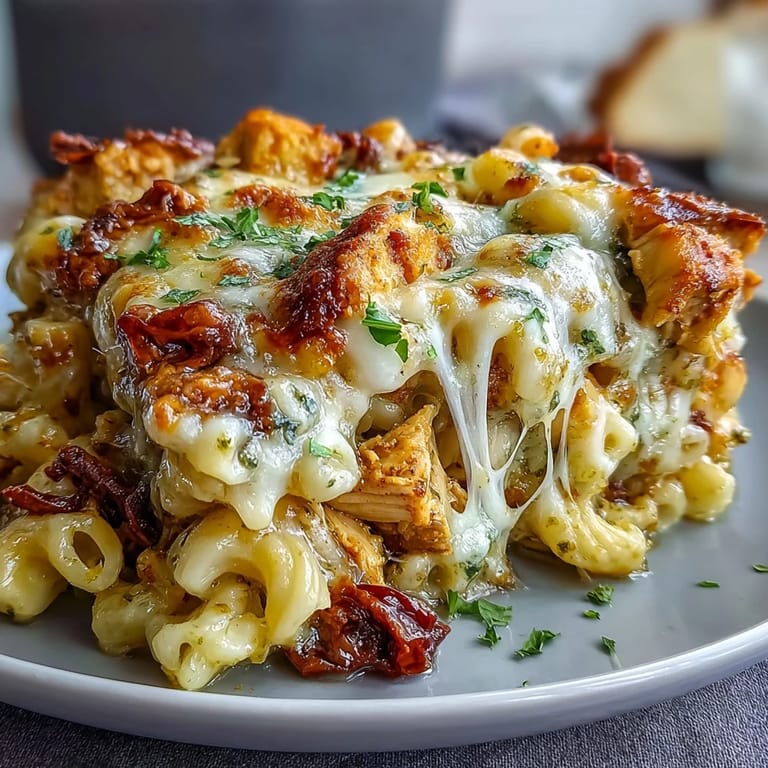
 This is the kind of meal that reminds you why cooking for people you care about matters. Make it, serve it hot, and watch what happens.
Questions & Answers
- → Can I make this ahead of time?
Yes, prepare everything up to step 6 and refrigerate. Reheat gently, add cheese just before serving, and stir until melted and creamy.
- → What pasta works best?
Elbow macaroni or small shells hold the sauce beautifully. Penne or rigatoni also work well for catching all the cheesy pesto flavors.
- → Can I use rotisserie chicken?
Absolutely. Use about 3 cups of shredded rotisserie chicken, adding it during step 6 to heat through without overcooking.
- → How do I store leftovers?
Store in an airtight container for up to 4 days. Reheat with a splash of broth to restore creaminess. The pasta may absorb more liquid over time.
- → Can I make it vegetarian?
Substitute chickpeas or white beans for chicken, use vegetable broth instead of chicken broth, and ensure your pesto and cheeses are vegetarian-friendly.
- → How can I reduce the spice level?
Simply omit the crushed red pepper flakes. The dish will still have plenty of flavor from the Italian seasoning, garlic, and sun-dried tomatoes.