 Save to Pins
 There's something about the steam rising off a bowl of miso soup that stops me mid-morning and makes everything feel intentional. Years ago, I was rushing through a winter day feeling absolutely depleted when a friend quietly handed me a warm cup of ginger-laden broth, and something shifted. Now, whenever the cold settles in, I make this exact version for myself, letting the aromatic ginger and garlic do their quiet work while I sit still for twenty minutes. It became my personal ritual for saying yes to slowness.
I made this soup for my sister on a gray afternoon when she needed grounding, and she sat at my kitchen counter asking questions about every ingredient while the pot simmered. That's when I realized this soup has this gentle way of inviting conversation—there's no rush, no pressure to finish quickly. It became something we made together on difficult weeks, and now she texts me photos of her version from her own kitchen.
Ingredients
- Vegetable broth (6 cups): Low-sodium matters here because the miso paste carries its own minerality, and you want to taste the layers, not just saltiness.
- Fresh ginger (2-inch piece): Peel it, slice it thin, and don't skip this step—ginger is doing half the heavy lifting, warming you from the inside out.
- Garlic (2 cloves): Slice it thin so it releases its flavor into the broth during those first ten minutes of simmering.
- White or yellow miso paste (2 tablespoons): This is the probiotic heart of the soup, so treat it gently—never let it boil or you'll lose what makes it special.
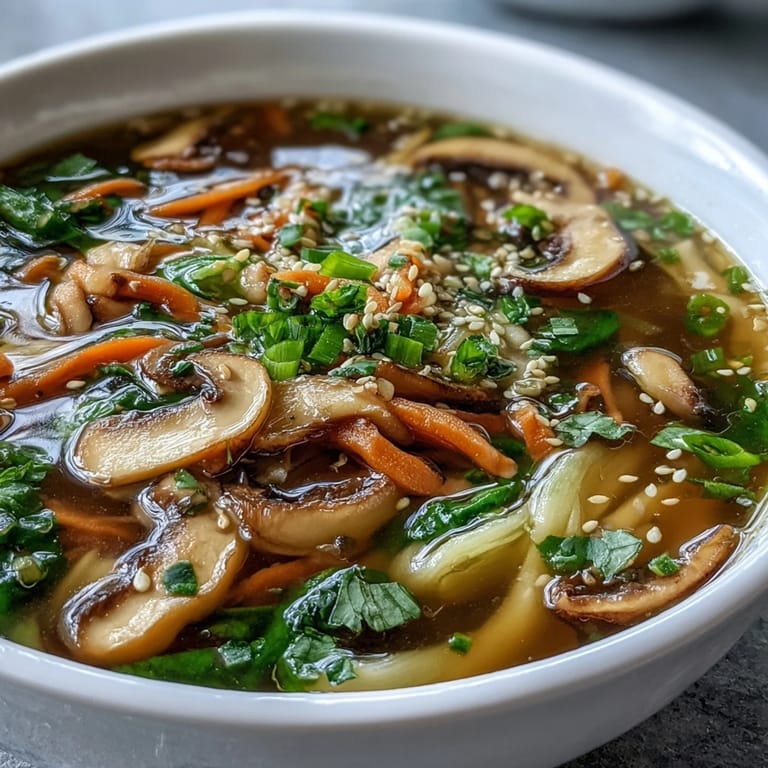
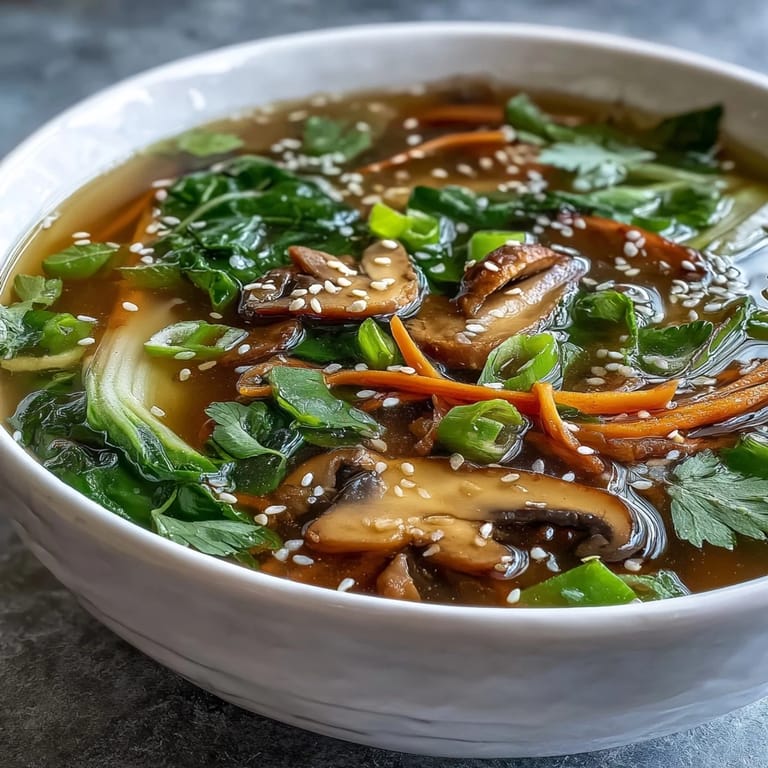
- Shiitake mushrooms (1 cup): Their earthy umami deepens everything, and slicing them thin means they soften perfectly in minutes.
- Baby spinach or bok choy (1 cup): Either works beautifully; just chop it roughly so it wilts into the broth rather than disappearing.
- Carrot (1 medium): Julienne it or slice it thin—the thinner it is, the faster it cooks and the more it mingles with the broth.
- Green onions (2): These add a bright sharpness at the end that keeps the whole bowl from feeling too heavy.
- Toasted sesame seeds: They catch the light and add a subtle nuttiness that makes people pause and ask what you did differently.
- Fresh cilantro (optional): A small handful scattered on top creates something between fresh and warming—herbaceous but not aggressive.
- Chili oil or red pepper flakes (optional): A drizzle transforms this from comforting to alive, giving your mouth something to wake up to.
Tired of Takeout? 🥡
Get 10 meals you can make faster than delivery arrives. Seriously.
One email. No spam. Unsubscribe anytime.
Instructions
- Bring the broth to a gentle simmer:
- Fill your saucepan with vegetable broth and set it over medium heat—you want it steaming and quietly bubbling, not aggressively rolling. Listen for that soft, contented sound that tells you it's ready.
- Infuse with ginger and garlic:
- Slide in your thin ginger slices and garlic, then walk away for ten minutes and let them steep. This is when your kitchen starts smelling like something worth waiting for, and you'll understand why this matters.
- Add the sturdy vegetables:
- Drop in the mushrooms and carrot slices, letting them float into the hot liquid for about five minutes until they're tender but still have a whisper of texture. This is the point where the broth becomes complex instead of simple.
- Prepare the miso properly:
- This step is crucial—ladle out one cup of the hot broth into a small bowl, then whisk the miso paste into it until completely smooth. You're dissolving it gently so it spreads evenly throughout the soup instead of clumping.
- Combine without boiling:
- Lower your heat to low, then pour this miso-infused broth back into the pot, stirring gently to incorporate. Keep the temperature low because the live cultures in miso shy away from boiling water, and you want those probiotics still alive and working.
- Finish with the delicate greens:
- Add your spinach or bok choy and sliced green onions, stirring just until they wilt, which takes about one minute. The greens should still have color and a hint of freshness when you taste them.
- Taste and adjust:
- This is your moment to be honest—does it need more depth, more salt, more warmth? A splash of soy sauce or another half teaspoon of miso paste can shift everything.
- Serve with intention:
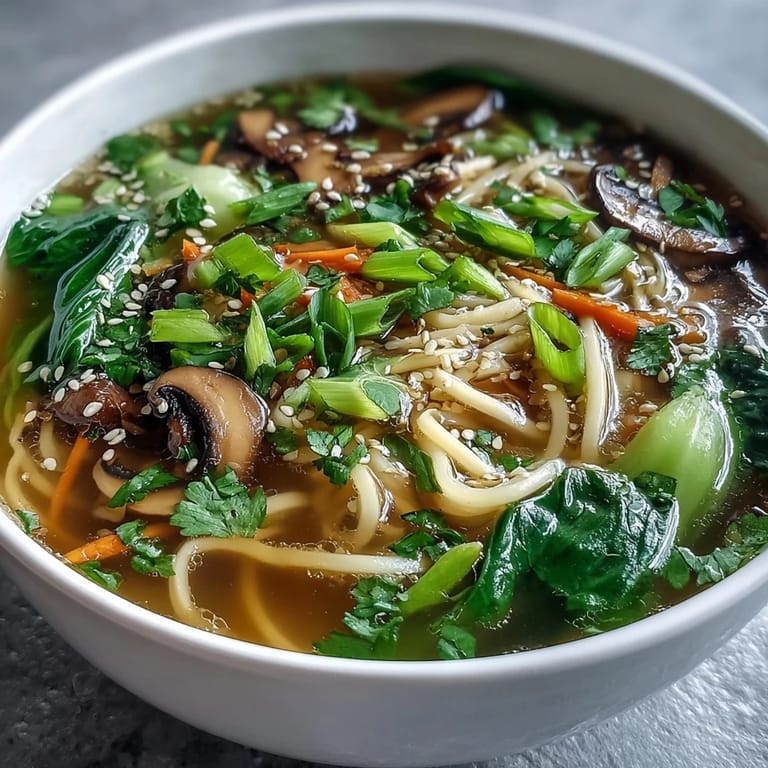
- Ladle into bowls while it's steaming, then scatter your sesame seeds, cilantro, and maybe a thin drizzle of chili oil on top. The visual moment matters—it sets the mood for how you'll eat it.
 Save to Pins
 My mother once said that real cooking is just paying attention, and this soup taught me exactly what she meant. You're not fighting anything here, just creating the right conditions and then trusting the process to unfold as it should.
When to Add Extra Protein
If you want this soup to be more substantial, silken tofu is your answer—it adds protein without changing the delicate flavor balance, and it absorbs the ginger-miso warmth beautifully. Cube it gently and add it during the last minute of cooking so it stays soft and almost melts into the broth. Some people add cooked soba or udon noodles instead, which transforms this from a restorative sipper into an actual meal that can anchor your evening.
The Miso Paste Question
White miso is more delicate and subtle, letting the ginger shine through with grace. Red miso, on the other hand, deepens the entire flavor profile and adds an earthy richness that's harder to describe but impossible to mistake. I've experimented with both, and honestly, I reach for white miso in spring and red miso when winter feels heavy—let your mood guide you, and don't overthink it.
Making It Your Own
This is the kind of recipe that actually wants you to adapt it, because the framework is strong enough to hold whatever you're working with. The beauty is that the miso-ginger foundation is so flavorful it forgives substitutions and speaks graciously to whatever vegetables you add. If kale is what's in your fridge instead of spinach, use it—it'll just take a minute longer to wilt and will taste perfectly right.
- Swap the spinach for any leafy green you have on hand, keeping the cooking time roughly the same.
- Add dried shiitake mushrooms if fresh ones aren't available, and give them a few extra minutes to soften.
- Experiment with different miso varieties to discover which flavor story resonates most with you.
 Save to Pins
 This soup asks you to slow down, and in return, it gives you something that feels genuinely restorative instead of just filling. That exchange is worth every minute.
Questions & Answers
- → Why shouldn't I boil miso?
Boiling miso paste destroys the beneficial probiotics and enzymes that make it nutritious. Always whisk miso into warm broth off the heat to preserve its health benefits and delicate flavor.
- → Can I make this soup ahead?
Prepare the vegetable broth base up to 3 days in advance. Store separately from the miso mixture and add fresh miso when reheating. Greens should be added just before serving for best texture.
- → What vegetables work best?
Shiitake mushrooms, carrots, spinach, and bok choy are traditional choices. You can also add snow peas, shredded cabbage, or daikon radish for variety and crunch.
- → How do I store leftovers?
Keep refrigerated in airtight containers for 3-4 days. Reheat gently over low heat, avoiding boiling to maintain the miso's probiotic properties. The flavors often deepen overnight.
- → Can I add protein?
Cubed silken tofu, edamame, or cooked chickpeas make excellent protein additions. Add tofu during the last 2 minutes of cooking to warm through without breaking apart.
- → What's the difference between miso types?
White miso offers a mild, sweet flavor ideal for delicate soups. Yellow miso provides a balanced earthy taste, while red miso delivers deeper, intense umami notes for bolder bowls.