 Save to Pins
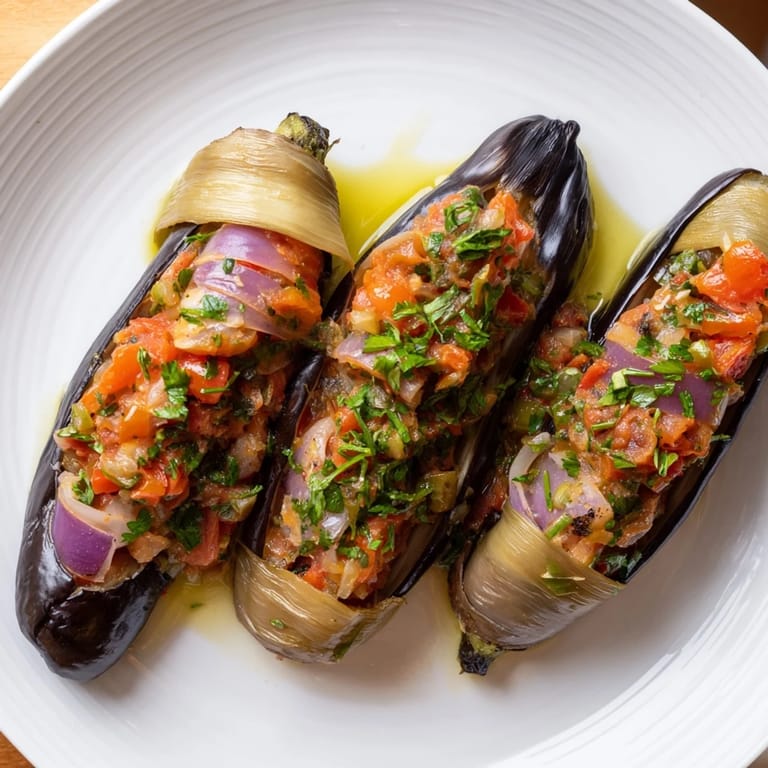
 I stumbled onto imam bayildi during a humid August afternoon when my neighbor handed me four glossy eggplants from her garden. She scribbled the name on a scrap of paper and told me it meant the imam fainted. I laughed, assuming she was joking, but later learned the story: a Turkish holy man supposedly swooned over how delicious it was. That evening, I sliced into those eggplants and filled them with tomatoes and onions, and the kitchen smelled like a marketplace I'd never visited but somehow recognized.
The first time I made this for a dinner party, I panicked because the eggplants looked wrinkled and sad coming out of the oven. But when my friends tore into them with forks, the flesh gave way like butter, and the filling spilled out in a tangle of sweet onions and garlic. One friend asked if I'd trained in Istanbul. I hadn't, but I didn't correct her right away.
Ingredients
- Eggplants: Choose firm, medium-sized ones with tight, shiny skin; if they're too large, they can taste bitter and take forever to cook through.
- Onions: Slice them thin so they melt into the filling and turn jammy, not chunky, which makes every bite smooth and cohesive.
- Tomatoes: Peel them if you can; the skins curl up and get in the way, and peeled tomatoes break down into a silky sauce that clings to everything.
- Garlic: Mince it finely so it disperses evenly and doesn't give you a sharp, raw bite in the middle of an otherwise mellow dish.
- Green bell peppers: They add a slight bitterness that cuts through the richness of the olive oil and keeps the filling from tasting one-note.
- Flat-leaf parsley: Stir it in at the end so it stays bright green and fresh, not dull and overcooked.
- Extra virgin olive oil: Don't skimp; this dish is about olive oil, and a good one makes the eggplants taste like they've been poached in liquid gold.
- Lemon juice: A squeeze at the end wakes everything up and keeps the dish from feeling too heavy or flat.
- Sugar: Just a teaspoon balances the acidity of the tomatoes and rounds out the filling without making it taste sweet.
- Sea salt: Salting the eggplants before cooking draws out moisture and bitterness, so don't skip that step even if you're in a hurry.
- Black pepper and paprika: They add warmth without heat, and the paprika gives the filling a faint smokiness that feels right at home with the eggplant.
Tired of Takeout? 🥡
Get 10 meals you can make faster than delivery arrives. Seriously.
One email. No spam. Unsubscribe anytime.
Instructions
- Prep the eggplants:
- Peel stripes down the sides so they look like little zebras, then slit them lengthwise without cutting all the way through. Sprinkle salt inside and out, let them sit for twenty minutes to weep out their bitterness, then rinse and squeeze them gently dry.
- Cook the filling:
- Heat half the olive oil in a skillet and cook the onions low and slow until they're soft and translucent, not browned. Add garlic and peppers, let them sizzle for a few minutes, then stir in tomatoes, sugar, salt, pepper, and paprika; simmer until thick and jammy, then fold in parsley off the heat.
- Fry the eggplants:
- Pour the remaining olive oil into a clean skillet and brown the eggplants on all sides until their skin blisters and the flesh softens. They'll drink up most of the oil, which is exactly what you want.
- Stuff and bake:
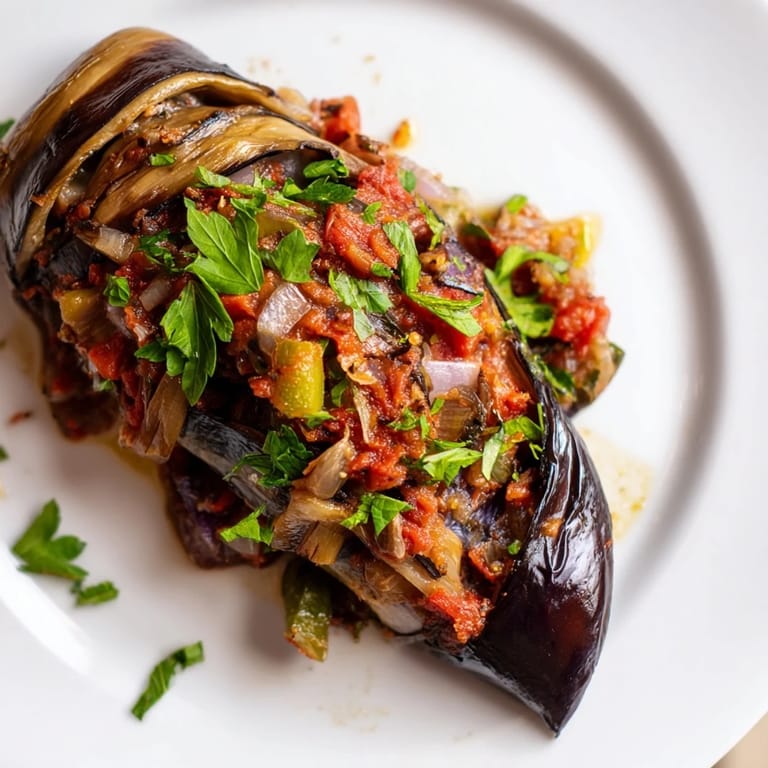
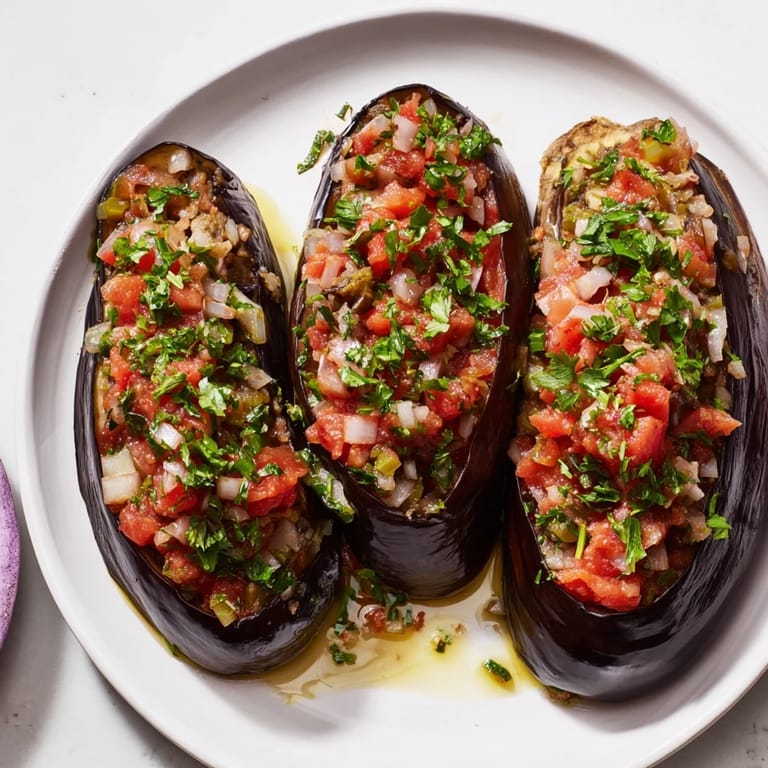
- Nestle the fried eggplants into a baking dish, pry open their slits with a spoon, and pack in the filling until it spills over the edges. Drizzle lemon juice on top, pour water around the base, cover with foil, and bake at 180°C for thirty-five minutes; uncover and bake another ten to fifteen minutes until the tops are golden and the kitchen smells like a dream.
- Cool and serve:
- Let the dish cool to room temperature so the flavors settle and the olive oil thickens into a silky glaze. Serve with bread to mop up every last drop.
 Save to Pins
 One winter evening, I reheated a leftover eggplant in a skillet with a splash of water, and it steamed back to life, the filling bubbling at the edges. I ate it standing at the stove with a hunk of bread, and it tasted like proof that some dishes don't just survive the fridge, they improve in it. My partner wandered in, took one look, and asked why I hadn't saved one for him.
How to Choose the Best Eggplants
Look for eggplants that feel heavy for their size, with smooth, taut skin that bounces back when you press it lightly. Avoid any with soft spots, wrinkles, or brown patches, which mean they're past their prime and will taste bitter no matter how much you salt them. The stem should be green and fresh, not dried out or brown, and the eggplant should have a slight shine, like it's been polished.
Make-Ahead and Storage Tips
This dish is a workhorse for meal prep because it actually tastes better the next day when the filling has had time to soak into the eggplant and the flavors have married. You can assemble the whole thing, cover it tightly, and refrigerate it for up to a day before baking, which makes it perfect for hosting when you don't want to be stuck in the kitchen. Leftovers keep for three to four days in the fridge; reheat gently in a low oven or eat them cold straight from the container.
Serving Suggestions and Pairings
Imam bayildi shines as part of a mezze spread with hummus, olives, and warm pita, but it's hearty enough to serve as a main with a side of rice or bulgur. A dollop of thick yogurt on top adds tang and creaminess that cuts through the richness of the olive oil, and a sprinkle of fresh dill or mint gives it a bright, herbal lift. If you want to make it a full meal, serve it with a simple green salad dressed in lemon and olive oil.
- Try sprinkling crumbled feta over the top just before serving for a salty, creamy contrast.
- A glass of chilled white wine or a light red pairs beautifully with the dish's rich, earthy flavors.
- Leftovers make an excellent sandwich filling tucked into pita with greens and a smear of tahini.
 Save to Pins
 Every time I make this, I think about that August afternoon and the neighbor who trusted me with her eggplants. It's become the dish I make when I want to impress someone without trying too hard, because it looks elegant but tastes like home.
Questions & Answers
- → What is Imam Bayildi?
Imam Bayildi is a traditional Turkish dish consisting of eggplants stuffed with a flavorful mixture of tomatoes, onions, garlic, and herbs, gently baked in olive oil until tender.
- → How do you prepare the eggplants for this dish?
Eggplants are peeled in alternating stripes, slit lengthwise without cutting through the ends, sprinkled with salt to remove bitterness, then fried gently in olive oil before baking.
- → Can this dish be served warm or cold?
Imam Bayildi can be enjoyed warm or at room temperature, allowing the flavors to develop fully.
- → What variations can be added to the filling?
Cinnamon or allspice can be added to the filling for extra warmth, or a chopped green chili for some heat.
- → What dishes pair well with Imam Bayildi?
It pairs well with crusty bread, rice, or a side of yogurt to complement its rich, savory profile.