 Save to Pins
 There's something about the first warm day of spring that makes you want to throw open the kitchen windows and cook something green. I was standing at the farmers market, holding a bunch of just-picked courgettes still cool from the morning mist, when the vendor mentioned she'd made a soup that very morning with her garden vegetables. That casual suggestion became an obsession—I wanted to capture that exact feeling of spring in a bowl, the kind that tastes like sunshine and fresh herbs.
My sister called one April afternoon asking what to bring to a garden gathering, and I blurted out this recipe without thinking. She showed up with four thermoses of it, still warm, and watched people's faces light up as they tasted that first spoonful—the moment when they realized soup could be this gentle and alive at the same time.
Ingredients
- Courgettes: Two medium ones, diced into rough chunks—they'll soften quickly and add body without heaviness, though I've learned not to peel them unless the skin feels tough.
- Onion: One medium onion chopped fine, the foundation that turns sweet as it cooks and creates depth without any sharpness.
- Garlic cloves: Two minced cloves add warmth, nothing more, because this soup lets other flavors breathe.
- Peas: Two hundred grams of frozen or fresh peas, the secret to that natural sweetness that makes people wonder if you added sugar.
- Potato: One medium potato peeled and diced, it thickens the soup naturally and makes it feel more substantial without cream.
- Vegetable stock: One liter of good quality stock—taste it before you buy because this is the canvas everything else paints on.
- Olive oil: Two tablespoons of decent oil, enough to coat and cook without overwhelming the delicate flavors.
- Salt and black pepper: Half a teaspoon salt and a quarter teaspoon pepper to start, though you'll taste and adjust like you always do.
- Basil pesto: Four tablespoons total, divided between cooking and finishing—it's the flourish that makes this soup sing.
- Fresh basil leaves: A handful for garnish if you have them, though honestly the pesto does most of the talking.
- Crusty bread: Optional but recommended, because some soups deserve a vehicle for soaking up every last drop.
Tired of Takeout? 🥡
Get 10 meals you can make faster than delivery arrives. Seriously.
One email. No spam. Unsubscribe anytime.
Instructions
- Start with softness:
- Heat your olive oil in a large saucepan over medium heat, then add the chopped onion and minced garlic. You'll smell them wake up within seconds—let them cook for 3 to 4 minutes until they're soft and translucent but haven't turned golden.
- Build the foundation:
- Add your diced potato and courgette, give everything a good stir, and let it cook for another 3 minutes. This gives the vegetables time to start releasing their flavors into the oil before the liquid arrives.
- Add the stock and simmer:
- Pour in your vegetable stock and bring it to a gentle boil, then lower the heat and let it simmer for 15 minutes. The potato will become tender, the courgette will soften, and the whole pot will smell like spring.
- Finish with freshness:
- Add the peas and simmer for 5 more minutes until they're heated through. They don't need long because they're already cooked—they just need to warm up and release their sweetness into the broth.
- Blend until smooth:
- Remove from heat and use an immersion blender to blend everything until the soup is smooth and silky. If you're using a countertop blender, work in batches and be careful with the heat—let it cool slightly first.
- Stir in the pesto:
- Add 3 tablespoons of your pesto and stir it through completely, tasting as you go. Season with salt and pepper until it tastes like your version of perfect.
- The final flourish:
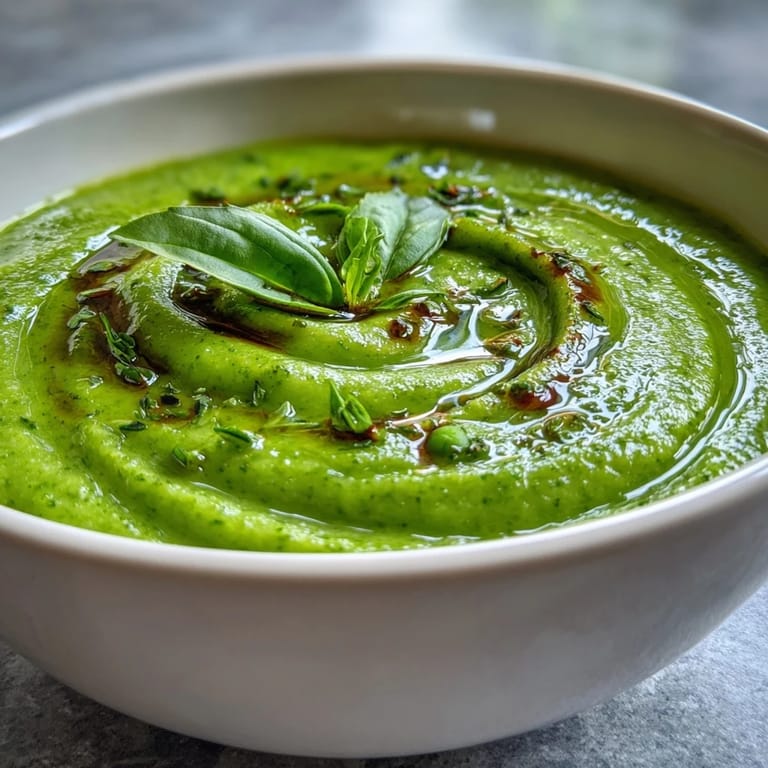
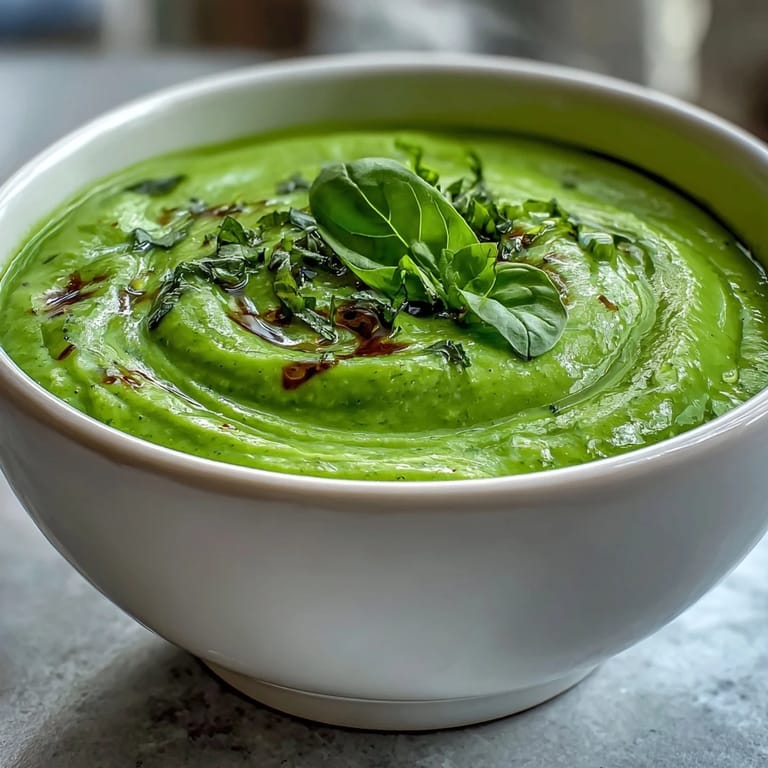
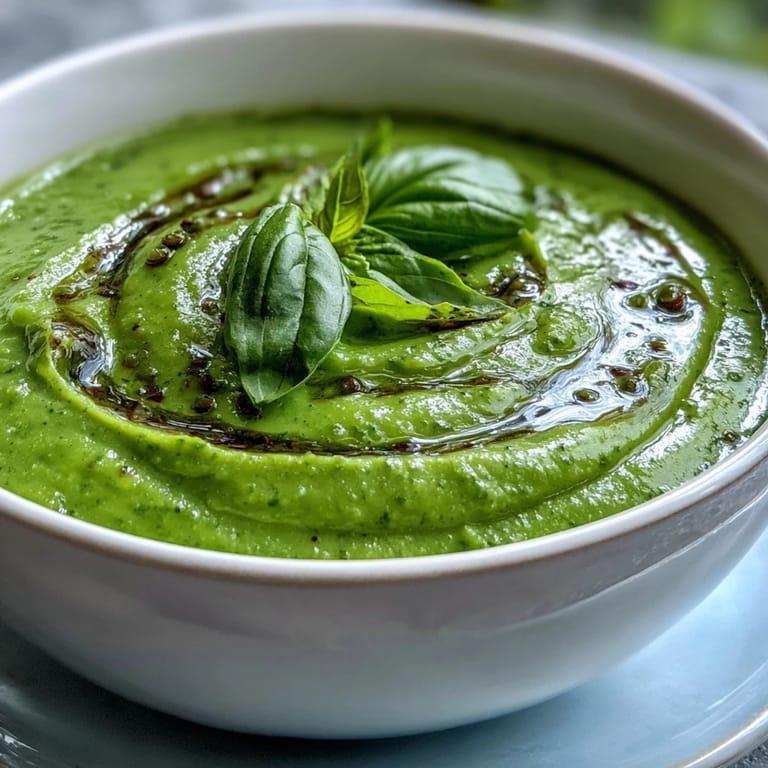
- Ladle the soup into bowls and swirl the remaining tablespoon of pesto on top, add a basil leaf or two if you have them, and serve with crusty bread if you want the full experience.
 Save to Pins
 There was an evening last May when my neighbor came over with her daughter, who'd been picky about vegetables her whole life. She had three bowls of this soup, and I watched her fork the courgette pieces with actual intention instead of suspicion. That's when I understood this recipe wasn't just about flavor—it was about making people see vegetables differently.
Why This Soup Works in Any Season
Spring brings fresh peas and young courgettes, but I've made this same recipe in July with slightly larger courgettes and it's just as good, maybe even better because the vegetables have more developed flavor. Summer versions taste incredible chilled—I strain out some of the courgette pieces before blending if I'm serving it cold, which gives it a lighter texture that feels refreshing. Even in autumn, when I'm reaching for the pesto jar from my frozen stash, this soup tastes like you're holding onto warmth and brightness from brighter months.
The Pesto Question
Store-bought pesto is absolutely fine here, but I've started making my own because the basil I grow just tastes different than anything at the market. The thing about pesto in this soup is that you're not trying to hide it or layer it—it's meant to be prominent, so even a small amount changes the entire character of what you're eating. Some people swirl it in, some people mix it through, and honestly both ways are correct if you're enjoying it.
Small Tricks That Change Everything
The immersion blender changed my life because you don't have to transfer hot soup in batches and burn yourself or splash your stovetop. If you do use a regular blender, let the soup cool for a few minutes and fill it only halfway—I learned this when I once filled it to the brim and spent an hour cleaning the ceiling. One other thing I've discovered: if you want it creamier without dairy, a splash of coconut milk swirled in at the end gives you richness that feels luxurious without changing what the soup fundamentally is.
- For extra spring flavor, add a squeeze of fresh lemon juice at the very end, right before serving.
- If your peas were frozen, run them under warm water first so they blend smoothly into the soup.
- This soup keeps beautifully in the fridge for 3 days and freezes well for up to a month if you freeze it before adding the pesto.
 Save to Pins
 This soup reminds me that the best recipes are the ones that make people slow down and taste what's actually in front of them. It's the kind of thing you can make on a Tuesday night and somehow feel like you've done something good.
Questions & Answers
- → Can I make this soup vegan?
Yes, simply use vegan pesto instead of traditional pesto which contains cheese. Many store-bought options are available, or make your own with nutritional yeast.
- → How long does this soup keep in the fridge?
Store cooled soup in an airtight container for up to 3 days. Reheat gently on the stove, adding a splash of water if needed to adjust consistency.
- → Can I freeze this soup?
Yes, freeze for up to 3 months. Cool completely before transferring to freezer-safe containers. Thaw overnight in the fridge and reheat gently.
- → Can I use fresh pesto instead of store-bought?
Absolutely. Fresh homemade pesto works beautifully and allows you to control ingredients. Use basil, pine nuts, garlic, olive oil and parmesan or nutritional yeast.
- → What can I serve with this soup?
Crusty bread is the classic accompaniment. Grilled cheese sandwiches, garlic bread or a simple green salad also pair well. For a lighter option, serve with olive oil drizzle.
- → Can I make this soup creamy?
Yes, add a splash of cream, coconut milk or crème fraîche before blending. This creates a richer, more luxurious texture without overpowering the fresh flavors.