 Save to Pins
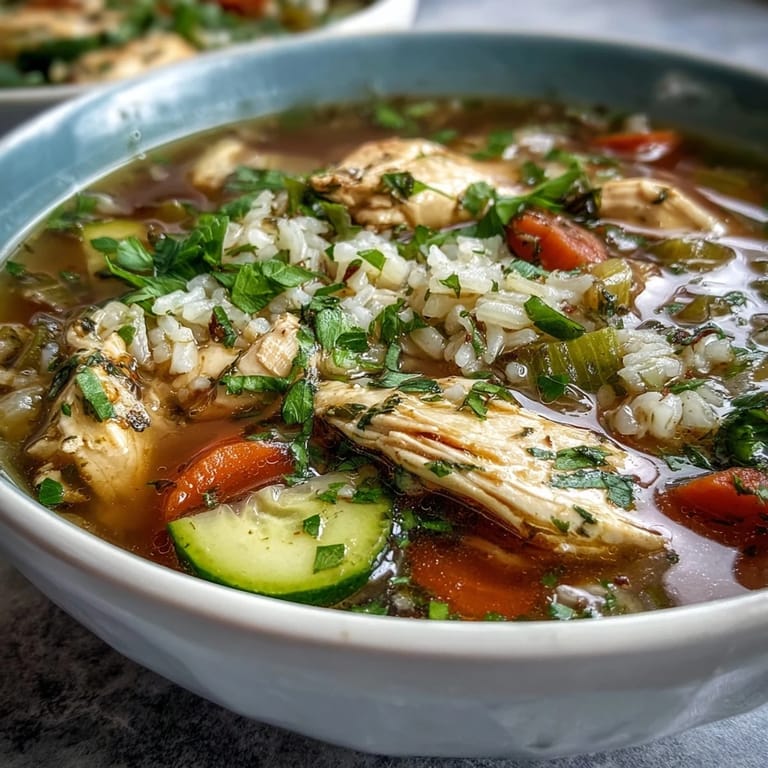
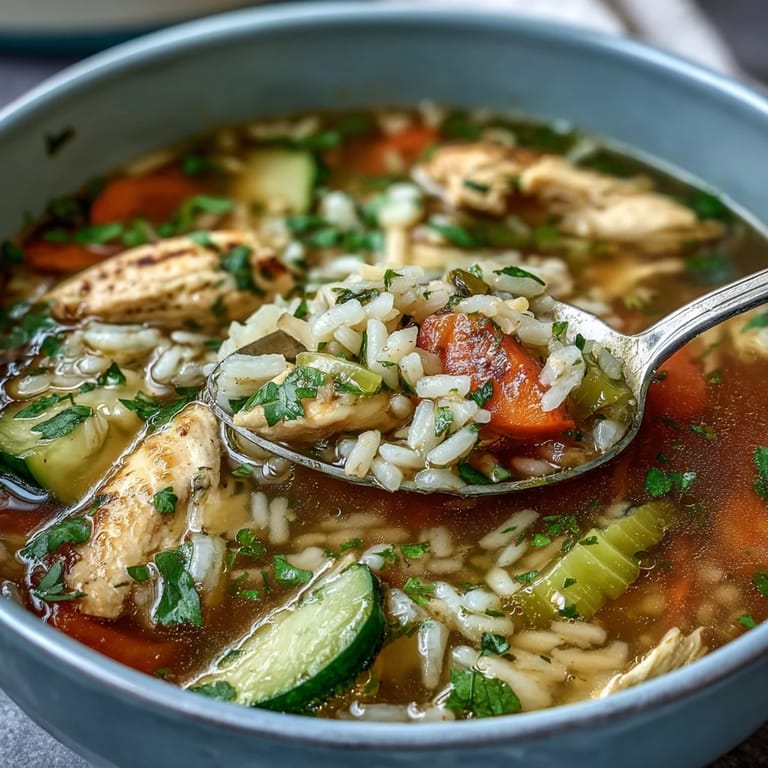
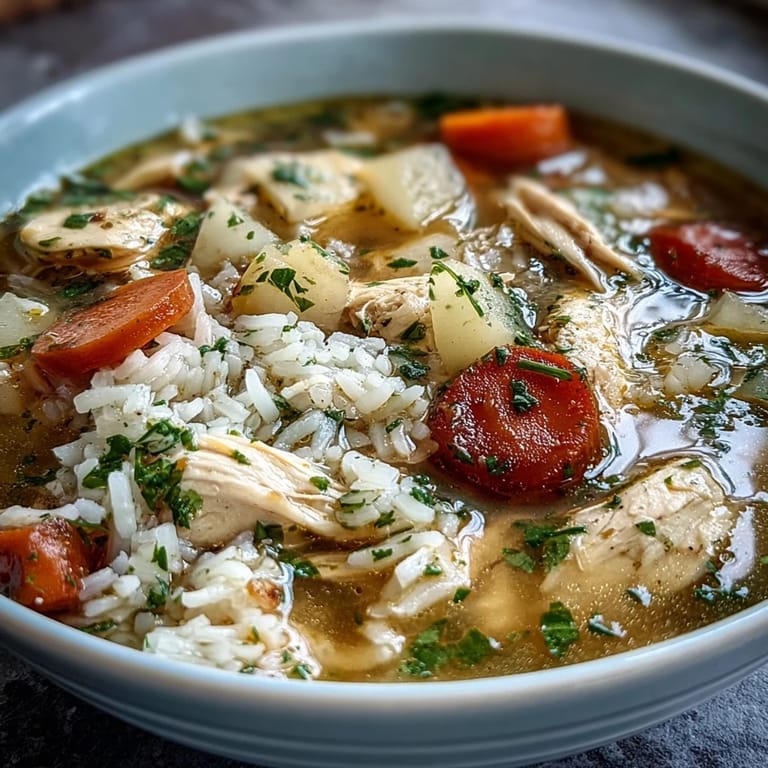
 There's something about a one-pot soup that makes a weeknight feel less chaotic. I discovered this chicken and rice combination on an afternoon when I had just enough ingredients scattered in my kitchen to avoid a grocery run, and what started as a practical solution became the soup I keep coming back to. The magic happens when everything simmers together—the broth takes on the sweetness of the carrots, the chicken becomes impossibly tender, and somehow it all feels like more than the sum of its parts. It's the kind of meal that tastes like someone actually cared, even when you threw it together in twenty minutes.
I remember making this for my friend Sarah after she'd had surgery, and she texted me later saying it was the first meal that actually tasted like care instead of obligation. The steam rose from the bowl while she sat wrapped in a blanket, and watching her eat something warm and real felt like the smallest but most important thing I could offer. That's when I realized this soup isn't just about feeding people—it's about showing up for them.
Ingredients
- Boneless, skinless chicken breasts: Cut them into bite-sized pieces so they cook evenly and disappear into the broth with zero toughness, which is honestly the whole point of this exercise.
- Onion, carrots, and celery: This trio is the backbone of soup-making everywhere, and they'll sweeten and deepen your broth as they soften, which no amount of store-bought seasoning can replicate.
- Garlic: Just three minced cloves, but they transform the entire mood of the pot in about sixty seconds—add them after the vegetables have softened so they don't burn.
- Long-grain white rice: Rinsing it first prevents the soup from becoming gluey, and it absorbs the broth without disappearing entirely.
- Low-sodium chicken broth: Use good broth here because it's doing the heavy lifting; the sodium control matters because you're seasoning as you go.
- Olive oil or unsalted butter: Either works beautifully, though butter will give you a richer mouthfeel if you're not worried about dairy.
- Dried thyme and bay leaf: These herbs whisper in the background rather than shout, keeping the soup elegant and naturally flavorful without being complicated.
- Salt and black pepper: Taste as you go near the end because the broth concentrates and the flavors develop differently than you'd expect.
- Fresh parsley: Added at the very end, this brings brightness and makes the whole thing feel intentional and fresh.
Tired of Takeout? 🥡
Get 10 meals you can make faster than delivery arrives. Seriously.
One email. No spam. Unsubscribe anytime.
Instructions
- Build your flavor base:
- Heat your oil or butter in a large pot over medium heat, then add the onion, carrots, and celery for a five-minute sauté, stirring occasionally. You're not looking for them to be fully tender yet—just softened enough that they're releasing their sweetness into the fat.
- Wake up the aromatics:
- Add your minced garlic and cook for exactly one minute until it's fragrant and golden but not browned at all. This brief window is crucial because burnt garlic tastes bitter and will haunt your entire pot.
- Sear the chicken slightly:
- Stir in your bite-sized chicken pieces and let them cook for two to three minutes, moving them around until they're lightly browned on the outside. They won't be cooked through, and that's fine—they'll finish in the broth.
- Bring it all together:
- Add your rinsed rice, chicken broth, thyme, bay leaf, salt, and pepper all at once, stirring gently to combine everything. You want the rice loosened in the liquid so it cooks evenly.
- Simmer patiently:
- Bring the pot to a boil, then lower the heat to a gentle simmer, cover it, and let it do its thing for twenty to twenty-five minutes. Stir occasionally and listen—you'll hear the gentle bubbling that tells you things are progressing beautifully.
- Finish with intention:
- Remove the bay leaf, taste, and adjust your seasoning one more time because this is your last chance to dial it in. Stir in the fresh parsley right before serving so it stays bright and herbaceous.
 Save to Pins
 There's a moment toward the end of cooking when the kitchen smells so good that everyone suddenly appears in the doorway asking if dinner's ready, and that's when you know you've made something right. This soup has a way of bringing people together without any fuss or pretense.
Why This Works as a Complete Meal
The beautiful thing about this soup is that it's actually balanced—you've got protein from the chicken, carbohydrates from the rice, and nutrients from the vegetables, all existing in one cozy bowl. You don't need sides or complicated plating; it stands completely on its own. The broth carries everything forward in a way that feels nourishing without being heavy, which is why people keep coming back for seconds even when they think they're full.
Customizing to Your Mood
The skeleton of this recipe is forgiving, which means it adapts to whatever you're in the mood for or whatever's hiding in your vegetable drawer. I've thrown in handfuls of spinach in the last five minutes and watched it wilt into something gorgeous, and I've also made it strictly traditional when I needed comfort in its purest form. The instructions stay the same, but your creativity takes it in directions that feel personal to your kitchen.
Storage and Reheating Wisdom
Leftovers actually improve this soup because the flavors have more time to get acquainted with each other, and the rice continues to soften and absorb that golden broth. Store it in the fridge for up to four days, and when you reheat it, gentle warmth on the stove is better than a microwave because you can add broth gradually and restore it to the exact consistency you want. It freezes beautifully too, though I'd freeze the broth separate from the rice if you're planning to keep it longer than a month.
- Add an extra cup of broth when reheating since the rice will have absorbed most of the liquid during storage.
- If you're freezing it, let it cool completely first, then portion into containers you can thaw overnight in the fridge.
- Fresh parsley should always be added after reheating so it tastes bright instead of cooked to nothing.
 Save to Pins
 This soup is a reminder that the best meals don't require complicated techniques or obscure ingredients—they just need attention and care. Make it once, and it becomes the recipe you reach for whenever you need something that tastes like home.
Questions & Answers
- → Can I use brown rice instead of white rice?
Yes, substituting brown rice is possible but requires extending the simmering time by about 15-20 minutes to ensure tenderness.
- → What herbs enhance the flavor of this soup?
Dried thyme and bay leaf provide subtle, earthy notes that complement the chicken and vegetables well.
- → How can I add more greens to the soup?
Stir in fresh spinach or kale during the last five minutes of cooking to preserve texture and nutrients.
- → Is it better to brown the chicken before simmering?
Lightly browning the chicken pieces adds extra flavor and texture but isn't mandatory for a tasty result.
- → How should leftovers be reheated without thickening too much?
Add additional broth or water when reheating to maintain the desired soup consistency as rice absorbs liquid over time.