 Save to Pins
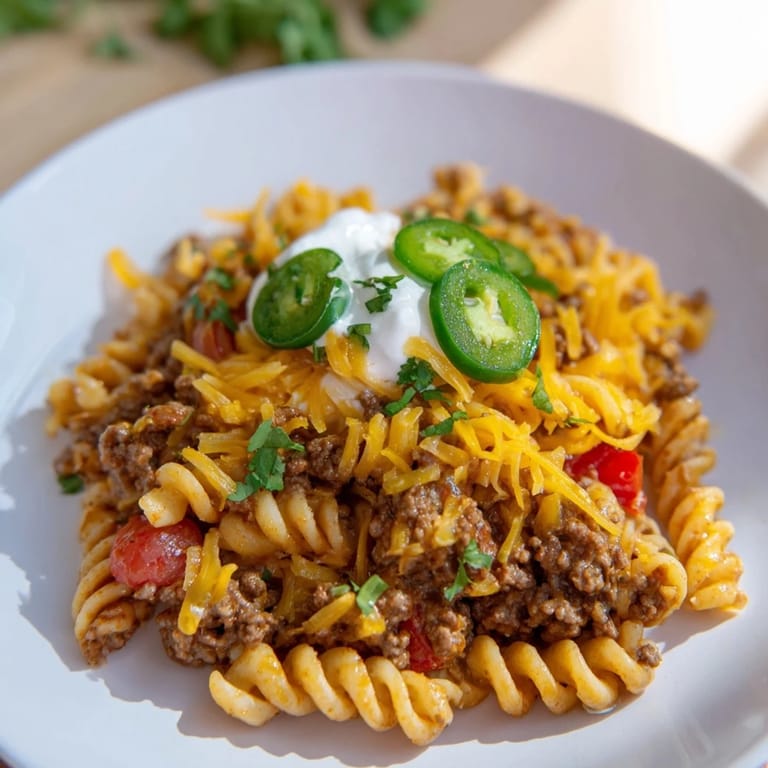
 There's something about a skillet meal that makes weeknight cooking feel less like an obligation and more like showing up for the people at your table. I discovered this beef taco pasta combination on one of those evenings when the fridge felt sparse but the freezer had ground beef, and I needed something that wouldn't require three pans and twice as many opinions from the kids. What started as improvisation became the thing people actually ask me to make now—no Instagram necessary, just honest food that tastes like it was made with intention.
I made this for my sister on a random Tuesday when she was overwhelmed with new parenthood, and watching her face when I brought a warm, steaming bowl to her was worth every minute. She mentioned later that it was one of the few meals she'd actually finished that week, and somehow that felt like the highest compliment.
Ingredients
- Ground beef (1 lb, 85% lean): The leaner version means less grease to skim off later, and it still browns beautifully without drying out during the simmer.
- Yellow onion (1 small, finely chopped): Finely chopped means it practically melts into everything else and releases its sweetness faster.
- Garlic (2 cloves, minced): Don't skip the mincing—whole cloves stay firm and toothy, minced garlic dissolves into that first blast of flavor.
- Taco seasoning (1 packet or 2½ tbsp homemade): Store packets are convenient, but homemade means you control the salt and heat level without any mystery ingredients.
- Salt and black pepper: Taste as you go because the seasoning packet already carries salt, and you'll need less than you think.
- Short pasta (8 oz—rotini, penne, or shells): Smaller shapes trap more of the brothy sauce, so avoid long pasta here.
- Low-sodium beef broth (2 cups): Low-sodium gives you room to season without oversalting the whole dish.
- Diced tomatoes (1 can, undrained): The juice is where the flavor lives, so pour everything in.
- Shredded cheddar cheese (1½ cups): Pre-shredded saves time, though freshly shredded melts slightly smoother if you have the patience.
- Sour cream (½ cup, optional): A dollop at the end cools things down and adds a tangy brightness that feels restaurant-quality.
- Cilantro, jalapeño, avocado (all optional): These transform a weeknight dinner into something that feels a little more intentional and alive.
Tired of Takeout? 🥡
Get 10 meals you can make faster than delivery arrives. Seriously.
One email. No spam. Unsubscribe anytime.
Instructions
- Brown the beef:
- Set your skillet over medium-high heat and let it get genuinely hot before the meat touches it—you want that sizzle. Break the beef into small, irregular pieces as it cooks, and listen for the sound to change from wet to almost dry, which means it's done.
- Soften the aromatics:
- Once the beef is cooked through, add the onion and give it a full 2 to 3 minutes—you're looking for the pieces to turn translucent and start catching the slightest golden edge. Garlic goes in last for just 60 seconds so it perfumes everything without burning bitter.
- Season and coat:
- Sprinkle the taco seasoning, salt, and pepper directly over the beef and vegetables, then stir constantly for about 30 seconds until every piece is evenly coated and the kitchen smells undeniably like tacos.
- Build the braising liquid:
- Add the uncooked pasta, beef broth, and tomatoes with all their juice, stirring until the pasta is submerged and the liquid comes to a rolling boil. This looks chaotic at first, but it's exactly right.
- Simmer and absorb:
- Lower the heat to medium-low, cover the skillet, and let it bubble gently for 12 to 15 minutes, stirring every few minutes to keep the pasta from sticking. You'll know it's done when the pasta is tender and the liquid has mostly disappeared—there should be just a little sauce clinging to everything, not a soupy mess.
- Melt the cheese and rest:
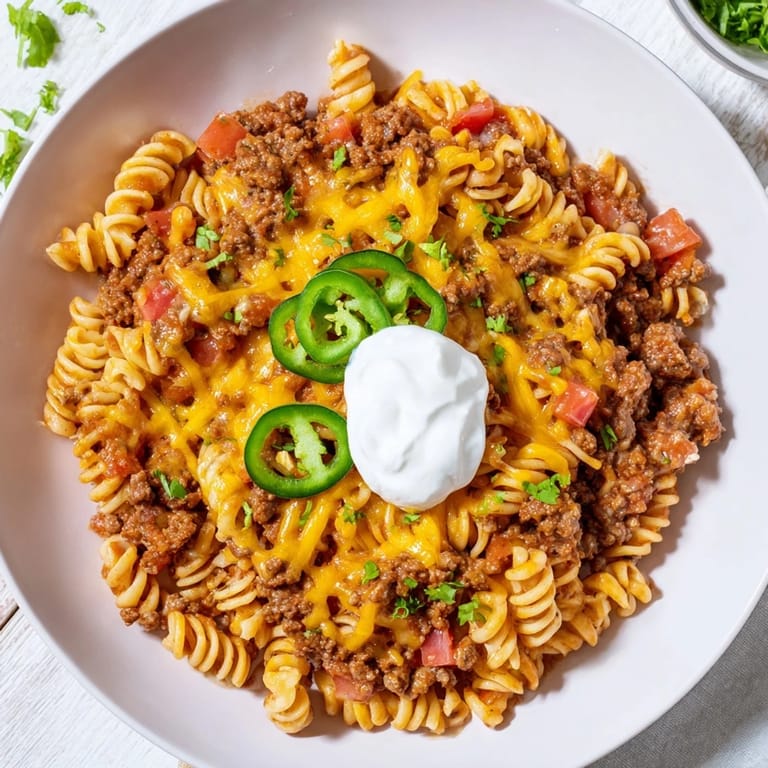
- Pull the skillet from heat and scatter the cheddar evenly across the top. Put the lid back on for 2 to 3 minutes and let the residual heat melt it into a blanket of golden, bubbly cheese.
- Serve and garnish:
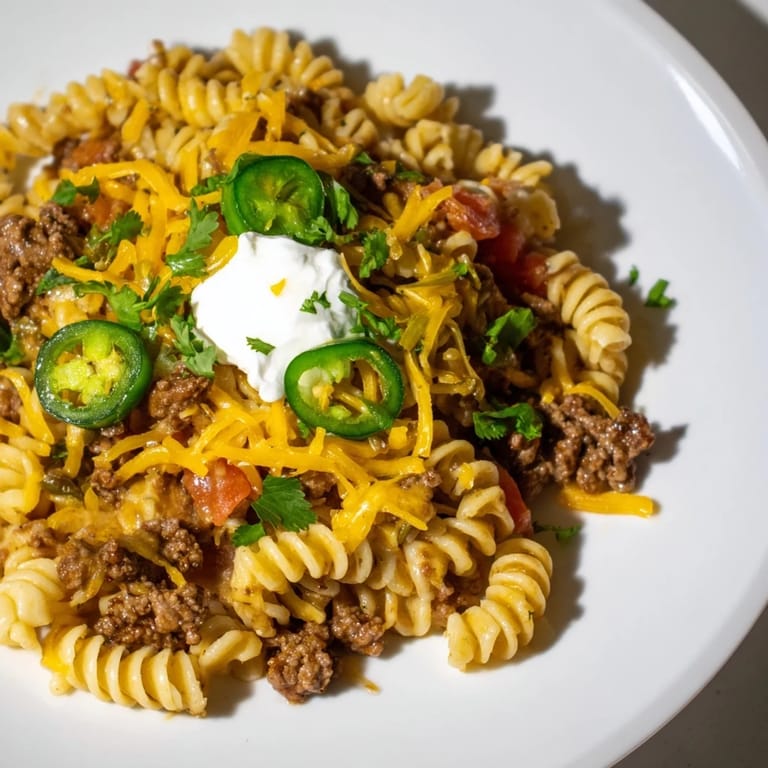
- Bring the whole skillet to the table if you can—there's something about that presentation that makes people hungry before they even taste it. Top individual bowls with cilantro, jalapeño, avocado, and a dollop of sour cream if you're using it.
 Save to Pins
 The thing I love most about this meal is that it somehow tastes like you spent longer making it than you actually did. My eight-year-old has started requesting it for dinner, which in kid language means this is officially in the rotation for life.
Why This Becomes a Regular
There's a specific moment in this recipe where you realize you're not watching three separate dishes come together—you're witnessing one skillet do all the work. The pasta doesn't overcook because it's cooking in broth, not plain water, which means every bite carries seasoning from the beginning. Once you understand that shift, you start looking for other one-pan meals the same way, and suddenly your weeknight cooking changes.
Variations Worth Trying
Ground turkey works beautifully if beef feels too heavy, and the lighter flavor actually lets the taco seasoning shine. Swap cheddar for Monterey Jack or a Mexican cheese blend if you want something less sharp. If you're cooking for people who like actual heat, add cayenne pepper or fresh chopped chili when you add the onion—don't hold back here because the broth will mellow the intensity.
The Garnish Question
Raw toppings are optional, but they're where this dish graduates from dinner to something you actually look forward to eating. The coolness and crunch of avocado or jalapeño against the warm, cheesy pasta creates a textural conversation that matters. Cilantro might seem extra, but it brightens everything in a way that's hard to replicate.
- Sour cream acts as a heat buffer and adds tanginess that balances the richness of the cheese.
- If you can't find fresh cilantro, a squeeze of lime juice does similar work and feels equally genuine.
- Leftovers reheat beautifully in a skillet with a splash of broth, and they taste even better the next day once the flavors have settled.
 Save to Pins
 This is the kind of meal that reminds you why you cook in the first place—not because it's complicated, but because something made with your hands tastes different than something ordered. It feeds people, and it brings them back to your table.
Questions & Answers
- → Can I substitute the ground beef with other meats?
Yes, ground turkey or chicken can be used as lighter alternatives, adjusting cooking times accordingly.
- → What types of pasta work best for this dish?
Short pasta shapes like rotini, penne, or shells are ideal as they hold sauce and cook evenly in the skillet.
- → How can I add more heat to the dish?
Incorporate a pinch of cayenne pepper or fresh chopped chili along with the onions for an extra spicy kick.
- → Is there a recommended cheese alternative?
Monterey Jack or a Mexican cheese blend are great options if you prefer a different flavor or meltability.
- → How should leftovers be stored?
Leftovers can be refrigerated in an airtight container for up to three days. Reheat gently on stove or microwave.
- → Can I omit the sour cream and still keep the flavor?
Yes, sour cream is optional and adds creaminess, but the dish remains flavorful and hearty without it.