 Save to Pins
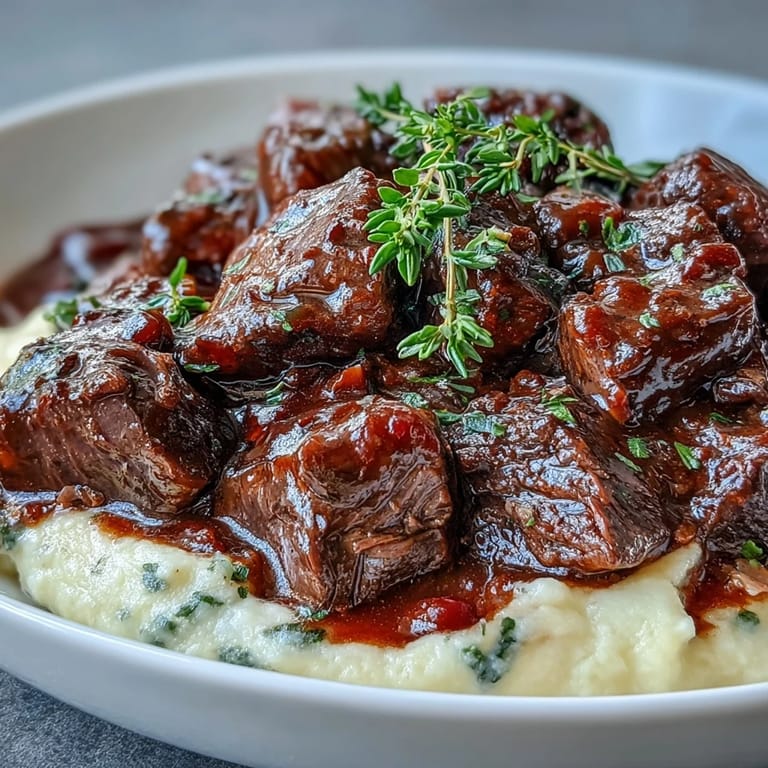
 The kitchen smelled like woodsmoke and berries the night I first tried venison stew with sloe gin. My neighbor had brought over a bottle she'd made the previous autumn, and I had venison from a local farm that needed using. I threw them together on instinct, not quite sure what would happen. The stew turned glossy and deep, with a faint sweetness threading through the gamey richness. It tasted like winter itself had been cooked down into something you could eat with a spoon.
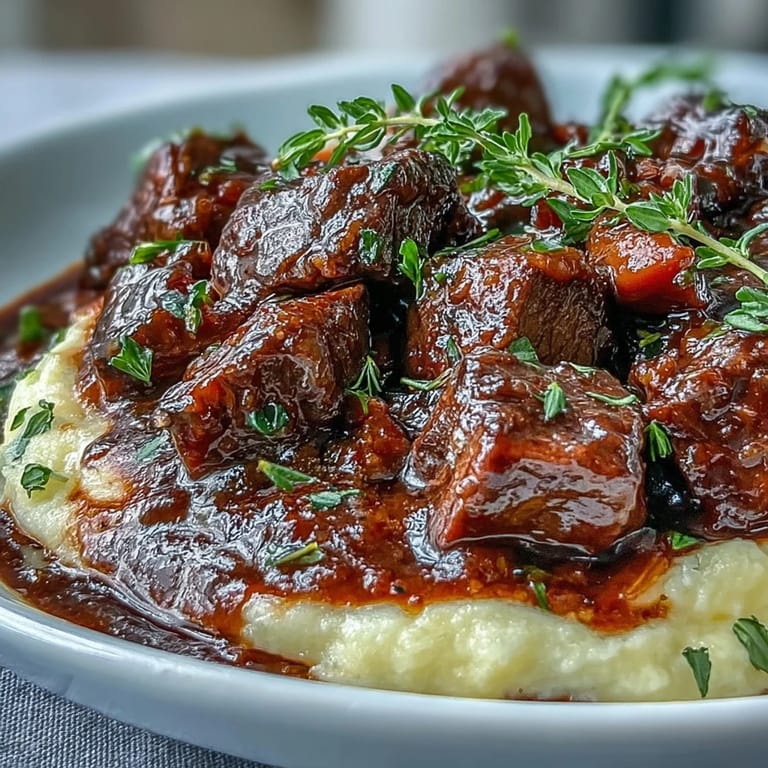
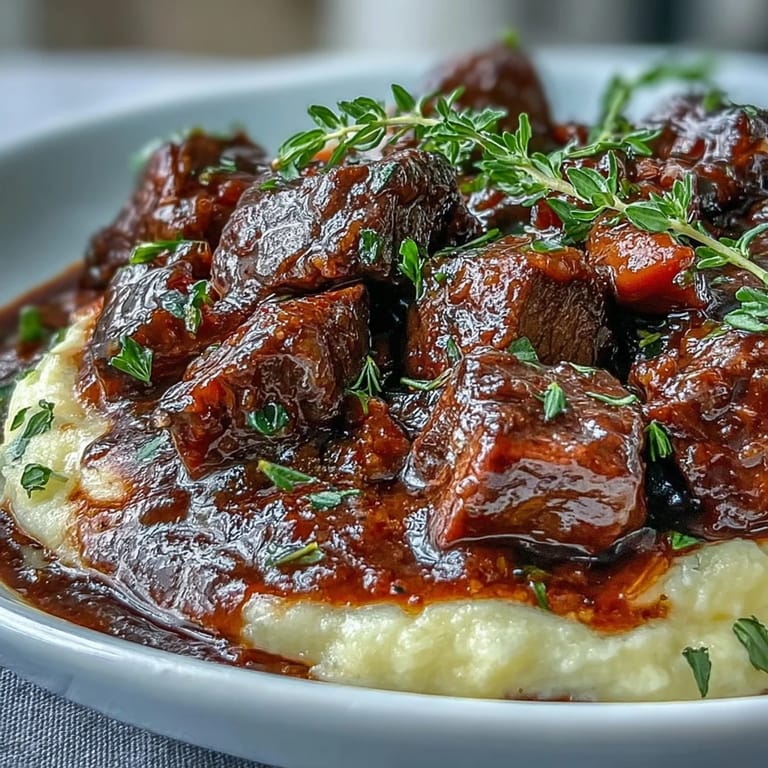
I made this for a small dinner party once, and everyone went quiet when they tasted it. One friend, who usually talked nonstop, just nodded slowly and reached for seconds without saying a word. The venison had gone so tender it nearly melted, and the polenta was creamy enough to need no knife. That silence felt like the best compliment I'd ever received. We finished two bottles of wine and stayed at the table until the candles burned out.
Ingredients
- Venison shoulder or stewing venison (800 g, cut into 3 cm cubes): Look for well-marbled pieces that will break down slowly into tenderness, and don't rush the browning step or you'll miss out on deep flavor.
- Olive oil (2 tbsp): Use this to get a good sear on the meat without it sticking to the pan.
- Onion (1 large, finely chopped): The base of the stew's sweetness, it should cook until soft and just starting to color.
- Carrots (2, sliced): They add earthiness and a touch of natural sugar that rounds out the gamey notes.
- Celery (2 stalks, diced): Often overlooked, but it brings a vegetal backbone that keeps the stew from feeling too heavy.
- Garlic (2 cloves, minced): Don't let it burn when you add it or it will turn bitter and ruin the base.
- Tomato paste (2 tbsp): This deepens the color and adds umami, especially once it caramelizes a bit in the pan.
- Sloe gin (150 ml): The star ingredient, bringing berry-forward sweetness and complexity that you can't get from regular gin or wine.
- Beef or game stock (400 ml, gluten-free if needed): Use the best stock you can find or make, as it forms the soul of the sauce.
- Redcurrant jelly (1 tbsp): A classic British trick for game, it adds gloss and a gentle tartness.
- Bay leaves (2): They lend a quiet herbal note that supports without shouting.
- Fresh thyme (2 sprigs): Woody and aromatic, thyme loves slow-cooked meat.
- Juniper berries (1 tsp, lightly crushed): These bring a piney, slightly floral edge that plays beautifully with venison.
- Salt and freshly ground black pepper: Season boldly, the venison can take it.
- Whole milk (750 ml): Makes the polenta creamy and rich instead of grainy.
- Water (250 ml): Thins the milk just enough so the polenta cooks evenly.
- Polenta (150 g, quick-cooking or regular): Quick-cooking is easier for weeknights, but traditional polenta has a deeper corn flavor if you have the time.
- Unsalted butter (40 g): Stir this in at the end for silkiness.
- Grated Parmesan cheese (50 g): Adds sharpness and a hint of nuttiness that makes the polenta irresistible.
Tired of Takeout? 🥡
Get 10 meals you can make faster than delivery arrives. Seriously.
One email. No spam. Unsubscribe anytime.
Instructions
- Brown the venison:
- Heat the olive oil in a large, heavy-based casserole over medium-high heat until shimmering. Working in batches so you don't crowd the pan, sear the venison cubes on all sides until deeply browned, then set them aside on a plate.
- Cook the vegetables:
- In the same pan, add the onion, carrots, and celery, scraping up any tasty browned bits from the bottom. Let them soften for 5 to 7 minutes, then stir in the garlic and tomato paste, cooking for another minute until fragrant.
- Deglaze with sloe gin:
- Return the venison and any resting juices to the pan. Pour in the sloe gin and let it bubble energetically for about 2 minutes, reducing slightly and filling your kitchen with a heady, fruity aroma.
- Build the stew:
- Add the stock, redcurrant jelly, bay leaves, thyme, and crushed juniper berries. Season generously with salt and pepper, then give everything a good stir.
- Simmer low and slow:
- Bring the stew to a gentle simmer, cover with a lid, and reduce the heat to low. Let it cook for 2 hours, stirring occasionally, until the venison is fork-tender and the sauce has thickened into something glossy and rich.
- Start the polenta:
- While the stew is in its final hour, heat the milk and water in a saucepan until just simmering. Gradually whisk in the polenta in a steady stream to avoid lumps.
- Cook the polenta:
- Keep stirring over low heat for 5 to 10 minutes, or according to the packet instructions, until the polenta thickens and pulls away from the sides of the pan. It should be creamy, not stiff.
- Finish the polenta:
- Stir in the butter and Parmesan, then season to taste with salt. Keep it warm, covered, until the stew is ready.
- Serve:
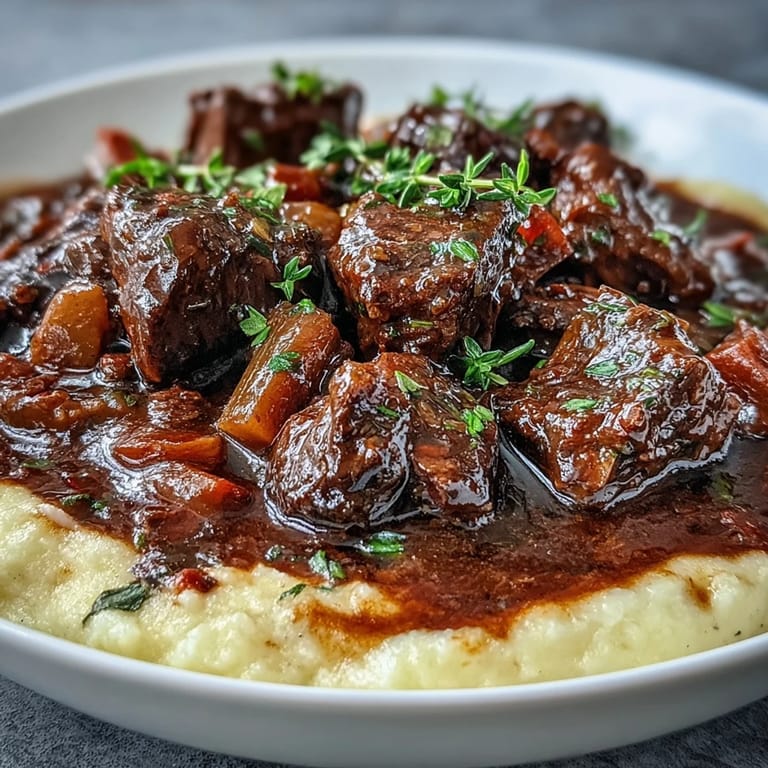
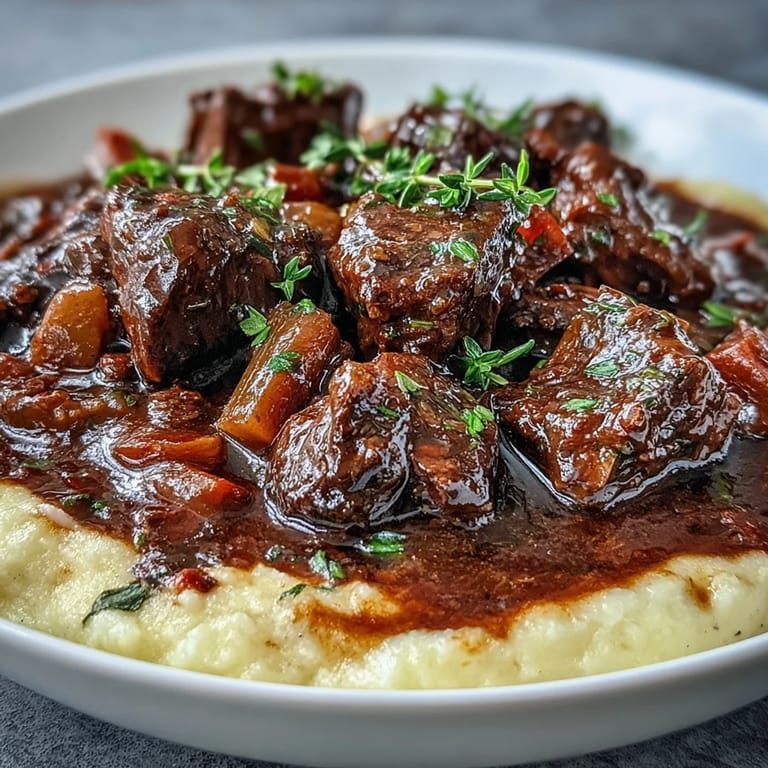
- Remove the bay leaves and thyme sprigs from the stew. Spoon the creamy polenta into wide bowls and ladle the venison stew generously over the top.
 Save to Pins
  Save to Pins
 This became my go-to dish for cold January nights when the world felt too much. There's something about the way the polenta catches the sauce, the way the venison falls apart under a fork, that makes everything feel manageable again. I've served it to people who swore they didn't like game meat, and watched them scrape their bowls clean. It's proof that patience and a little bottle of homemade sloe gin can turn tough cuts into something tender and memorable.
Choosing Your Venison
Shoulder or stewing cuts work best because they have enough connective tissue to break down into tenderness over long cooking. Avoid lean loin or fillet, they'll dry out and turn tough in a stew. If you can, buy from a butcher who sources wild or ethically farmed venison, the flavor is cleaner and more complex. I once used farmed venison that tasted more like beef, and while it was fine, it didn't have that distinctive, slightly sweet gaminess I love.
About Sloe Gin
Sloe gin is made by steeping sloe berries in gin and sugar, and it has a tart, fruity flavor that's nothing like regular gin. If you can't find it, a good-quality port or berry liqueur like cassis will work, though the flavor will shift slightly. I tried this once with a cheap sloe gin from the supermarket and it tasted thin and overly sweet, so it's worth spending a little more or making your own if you're feeling ambitious. The berries should shine through, not just the alcohol.
Storing and Reheating
This stew keeps beautifully in the fridge for up to three days and freezes well for up to three months. The flavors deepen as it sits, so leftovers are a gift. Reheat gently on the stovetop with a splash of stock or water to loosen the sauce, and make fresh polenta to serve alongside.
- Let the stew cool completely before transferring to airtight containers.
- Freeze in portion-sized containers so you can defrost just what you need.
- Polenta doesn't freeze well, so always make it fresh when you're ready to eat.
 Save to Pins
  Save to Pins
 This is the kind of meal that makes you want to linger at the table, maybe light a candle, maybe pour another glass of wine. It's worth every minute of waiting.
Questions & Answers
- → Can I substitute the venison with another meat?
Yes, beef chuck or lamb shoulder work well as alternatives. Adjust cooking time as needed until the meat is tender.
- → What can I use instead of sloe gin?
Port, red wine, or berry liqueur make excellent substitutes. Use the same quantity and follow the same reduction process.
- → Can I make this ahead of time?
Absolutely. The stew actually improves in flavor when made a day ahead. Reheat gently and prepare fresh polenta just before serving.
- → How do I prevent the polenta from becoming lumpy?
Whisk constantly while adding the polenta to simmering liquid in a steady stream. Continue stirring throughout cooking for smooth, creamy results.
- → Is this dish suitable for freezing?
The stew freezes beautifully for up to 3 months. Prepare polenta fresh when ready to serve as it doesn't freeze well.
- → What wine pairs best with this dish?
A robust red wine like Shiraz, Cabernet Sauvignon, or Malbec complements the rich venison and sloe gin flavors perfectly.