 Save to Pins
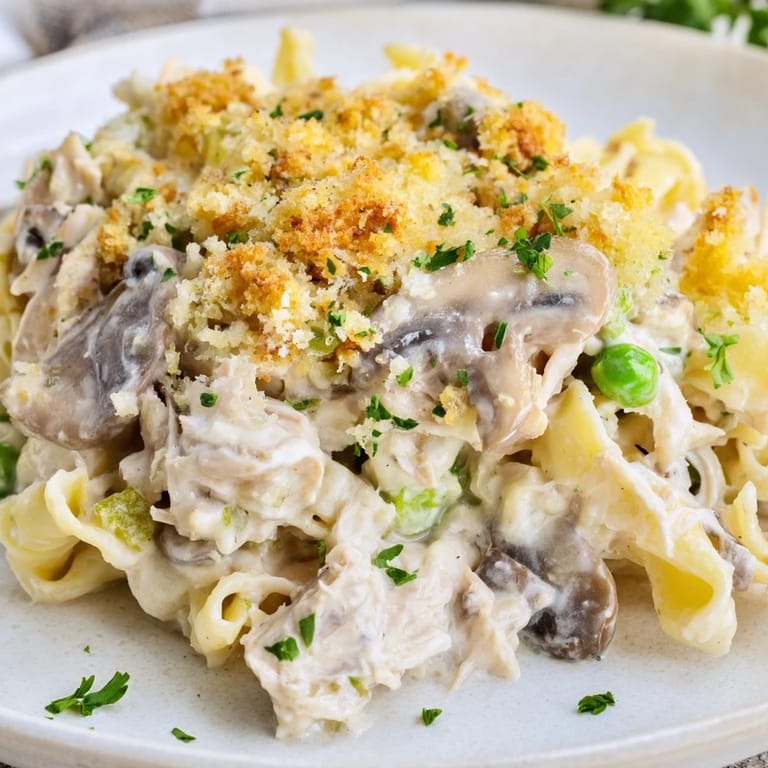
 There's something about tuna noodle casserole that transports me straight back to my mom's kitchen on a rainy Tuesday, when she'd pull this together in under an hour for a weeknight dinner that somehow felt like a celebration. I spent years thinking it was just a retro relic until I made a version with fresh mushrooms and real cream instead of that canned soup, and suddenly it clicked—this dish deserved a second act. Now I make it regularly, and every time someone takes that first bite and pauses, I know they're tasting what I discovered: comfort food that's actually good.
I made this for my neighbor one winter after she'd had surgery, and watching her family gather around the table with these satisfied sighs reminded me why this casserole matters—it's unpretentious, nourishing, and it says I'm thinking of you without making a big fuss about it.
Ingredients
- Egg noodles: The wider surface area catches more sauce than spaghetti, and cooking them just to al dente means they won't turn mushy in the oven.
- Solid white tuna in water: It's milder and flakes more delicately than chunk tuna, and draining it well prevents the casserole from becoming watery.
- Cremini mushrooms: They add an earthy depth that cheap canned ingredients can't touch, and they soften beautifully during cooking.
- Frozen peas: They keep their brightness and don't need pre-cooking—just thaw them so they don't cool down the final mixture.
- Butter, flour, and broth: This is a simple béchamel, the backbone of the sauce; whisking constantly prevents lumps.
- Sour cream: It adds tang and richness without the heaviness of all-cream sauces—this is the secret that makes it taste grown-up.
- Dijon mustard: A half-teaspoon is invisible but it sharpens all the flavors, especially the tuna.
- Panko and parmesan topping: Panko stays crispier than regular breadcrumbs, and tossing it with melted butter ensures even browning.
Tired of Takeout? 🥡
Get 10 meals you can make faster than delivery arrives. Seriously.
One email. No spam. Unsubscribe anytime.
Instructions
- Get your oven ready and prep your dish:
- Preheat to 400°F and lightly grease a 9x13-inch baking dish so the casserole releases easily after baking.
- Cook the noodles until just al dente:
- Salt the water generously and taste at the lower end of the cooking time—they'll continue to soften in the oven. Drain and set aside.
- Sauté the aromatics and mushrooms:
- Melt the butter in your skillet over medium heat, then add onion and celery for 3 minutes until they soften. Add the mushrooms and let them release their moisture and golden up, about 4 minutes more, then stir in the minced garlic for just 1 minute so it blooms without burning.
- Make the sauce base:
- Dust the vegetables with flour, stir it through so everything's coated, then slowly pour in the broth while stirring so you don't get lumps. Add the milk and let it come to a gentle simmer, stirring often, until it thickens enough to coat the back of a spoon—about 3 to 4 minutes.
- Season and finish the sauce:
- Pull the skillet off the heat and stir in the sour cream, Dijon mustard, salt, and pepper. The warmth of the pan will incorporate the sour cream without curdling it.
- Combine everything gently:
- Fold in the drained tuna, thawed peas, and cooked noodles until everything's evenly coated with sauce. Don't overmix or you'll break up the tuna too much.
- Transfer to the baking dish:
- Pour the entire mixture into your prepared dish and spread it level.
- Make and add the topping:
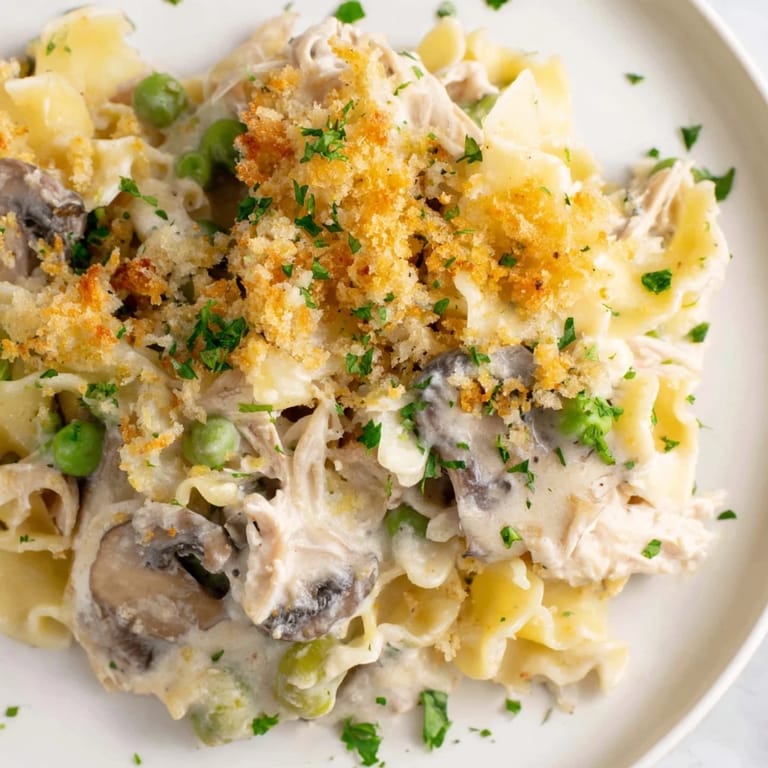
- Mix the panko, parmesan, and melted butter in a small bowl until it looks like wet sand, then scatter it evenly over the casserole so every bite gets some crunch.
- Bake until golden and bubbling:
- Bake for 20 to 25 minutes until the topping turns deep golden brown and you see the sauce bubbling at the edges. The casserole will continue to set as it cools.
- Rest and serve:
- Let it stand for 5 minutes so the sauce sets slightly and it's easier to portion. A sprinkle of fresh parsley adds a bright, final note.
 Save to Pins
 The moment that stuck with me was watching my eight-year-old happily eat something that wasn't chicken nuggets, and her asking for seconds without being asked—that's when I realized this casserole was going into our regular rotation forever.
Why Fresh Vegetables Matter Here
The cremini mushrooms and fresh celery are what separate this from the boxed version you might remember from childhood. They bring a savory, almost grounding quality that makes the dish feel less like nostalgia and more like something you chose to cook today. When mushrooms soften in that butter, they release their umami, which deepens the whole sauce without any added salt or MSG.
The Sauce is Everything
A good tuna noodle casserole lives or dies by its sauce. The sour cream is the trick that home cooks don't always know about—it adds brightness and prevents the casserole from tasting flat or one-dimensional. The Dijon mustard works the same way, pushing all the other flavors forward so the tuna doesn't dominate. When you've got a sauce that tastes genuinely good by itself, you're already most of the way there.
Make it Your Own
This recipe is forgiving enough to take to, and flexible enough to adapt to what you have on hand. Some cooks swear by adding a handful of shredded cheddar or gruyère to the sauce for extra savory depth, while others use Greek yogurt instead of sour cream to lighten it up. The topping can shift too—crispy panko holds the texture longest, but crushed crackers or even crushed potato chips work if that's what's in your pantry.
- If you add cheese to the sauce, reduce the salt slightly since cheese brings its own.
- You can assemble this the morning of and bake it cold, though add 5 to 10 minutes to the baking time.
- Leftovers reheat beautifully in a 325°F oven covered with foil, and the sauce won't dry out.
 Save to Pins
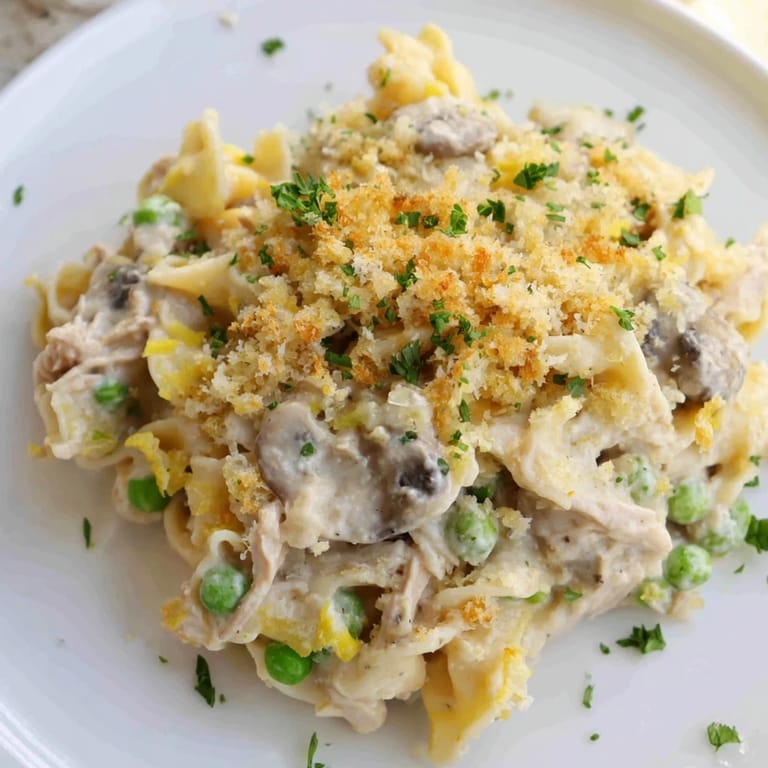
 This casserole is the kind of dish that asks nothing of you but gives back comfort, satisfaction, and usually a happy table. Make it when you need something warm, feed it to people you love, and don't apologize for how simple it is.
Questions & Answers
- → Can I substitute the egg noodles?
Yes, you can use other pasta types like rotini or penne, but cook times may vary slightly to maintain the right texture.
- → What can I use instead of sour cream?
Greek yogurt works well as a lighter alternative, providing similar creaminess with a subtle tang.
- → How do I make the topping extra crispy?
Make sure to evenly coat the panko breadcrumb mixture with melted butter and bake uncovered until golden for maximum crunch.
- → Can I add cheese to the sauce?
Adding shredded cheddar or gruyère can enrich the sauce with extra flavor and creaminess.
- → What type of broth is best to use?
Low-sodium chicken or vegetable broth is ideal to balance the flavors without overpowering the dish.