 Save to Pins
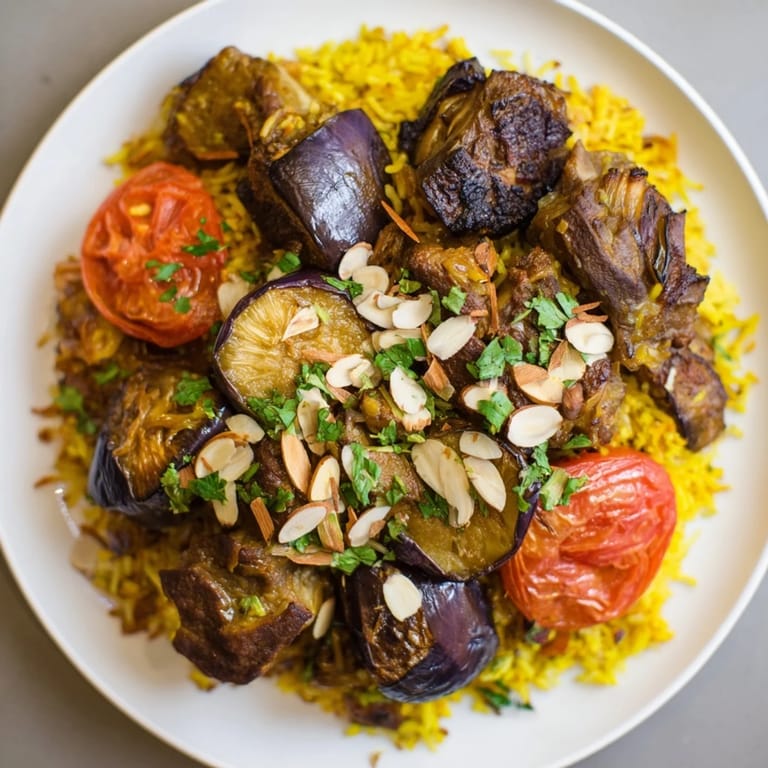
 The first time I made Maqluba, I didn't know what I was doing. My grandmother had mentioned it in passing—something about a dramatic flip, fragrant spices, and meat nested beneath rice—but she'd never written it down. So I improvised, layering what seemed right into a heavy pot, my heart pounding as I inverted the whole thing onto a platter. When that golden dome of rice tumbled out intact, I understood why she'd smiled when she talked about it. It wasn't just food; it was a small miracle you could make happen in your own kitchen.
I made this for my neighbors on a cold evening, and something shifted when I lifted that lid. The steam rose with such a warm, comforting smell of cinnamon and cumin that my son came running from upstairs asking what we were celebrating. We weren't celebrating anything special—just dinner—but watching their faces light up when that golden-brown Maqluba emerged from the pot made it feel like we were.
Ingredients
- Lamb shanks or chicken pieces (900 g): Bone-in cuts release rich flavor into the broth, and the meat becomes so tender it practically melts into the rice—don't skip the bones.
- Ground spices (black pepper, allspice, cinnamon): These warm aromatics are what make Maqluba smell like home; toast them gently if you have whole spices and grind fresh for deeper flavor.
- Basmati rice (2 cups): The long grains stay separate and fluffy, which matters when you're flipping—mushy rice won't hold the structure.
- Eggplants and potatoes: Roasting them first prevents sogginess and gives them golden edges that contrast beautifully with the soft rice.
- Tomatoes, onion, and broth: The tomatoes create a protective layer at the bottom and flavor the rice as it steams, while broth keeps everything moist without making it wet.
- Almonds or pine nuts: Toast these yourself if you can; store-bought toasted nuts are fine, but they're never quite as fragrant as ones you warm in a dry pan yourself.
Tired of Takeout? 🥡
Get 10 meals you can make faster than delivery arrives. Seriously.
One email. No spam. Unsubscribe anytime.
Instructions
- Rinse and soak the rice:
- Cold water, repeated several times until it runs clear, removes the starch that would make everything gluey. The 30-minute soak lets each grain absorb water evenly so it cooks perfectly.
- Season and sear the meat:
- Pat the meat dry before it hits the hot oil—this browns it properly instead of steaming it. Let it sit undisturbed for a moment on each side so a deep golden crust forms.
- Simmer the meat in broth:
- The gentle bubbling for 30 to 40 minutes makes the meat tender but not falling apart. Reserve every drop of that broth; it's now infused with flavor and will become your cooking liquid for the rice.
- Roast the vegetables:
- While the meat simmers, get the eggplants and potatoes into the oven with a light brush of oil. They should turn golden at the edges and be tender enough to cut with a fork—this takes about 20 to 25 minutes at 200°C.
- Build the layers:
- Start with tomato slices covering the pot bottom completely, then potatoes, eggplant, meat and onions, and finally rice pressed gently on top. This order ensures the tomatoes protect the rice from sticking and caramelize slightly.
- Pour in the broth:
- Mix the reserved broth with turmeric, cumin, and salt, then pour it over the rice until just covered—about 3 to 4 cups depending on your pot. Too little and the rice won't cook; too much and you'll end up with a soggy bottom layer.
- Create a seal:
- Place a heatproof plate or smaller lid directly on the rice, then cover the whole pot with its lid. This traps steam and keeps the layers from shifting as they cook.
- Cook low and patient:
- Once you hear the first gentle simmer, turn the heat down low and leave it completely alone for 35 to 40 minutes. Lifting the lid releases steam and ruins the texture, so resist the urge to check.
- Rest before flipping:
- Turn off the heat and let it sit covered for 15 minutes—the residual heat finishes cooking gently while the layers set firm enough to hold together when inverted.
- The dramatic flip:
- Place your serving platter upside down over the pot, take a breath, and flip the whole thing in one confident motion. If it seems stuck, run a thin knife around the edge first to loosen it.
- Garnish and serve:
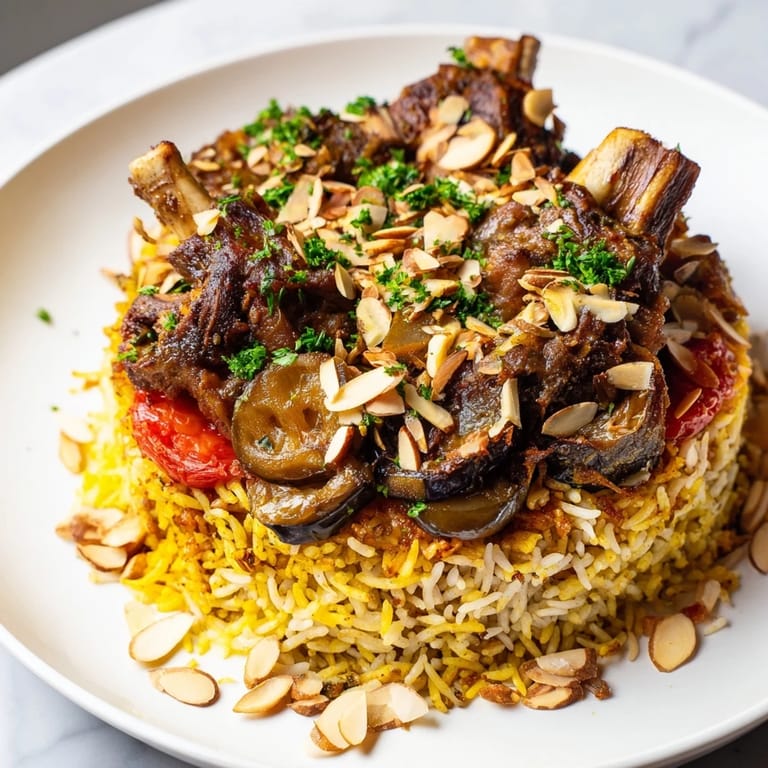
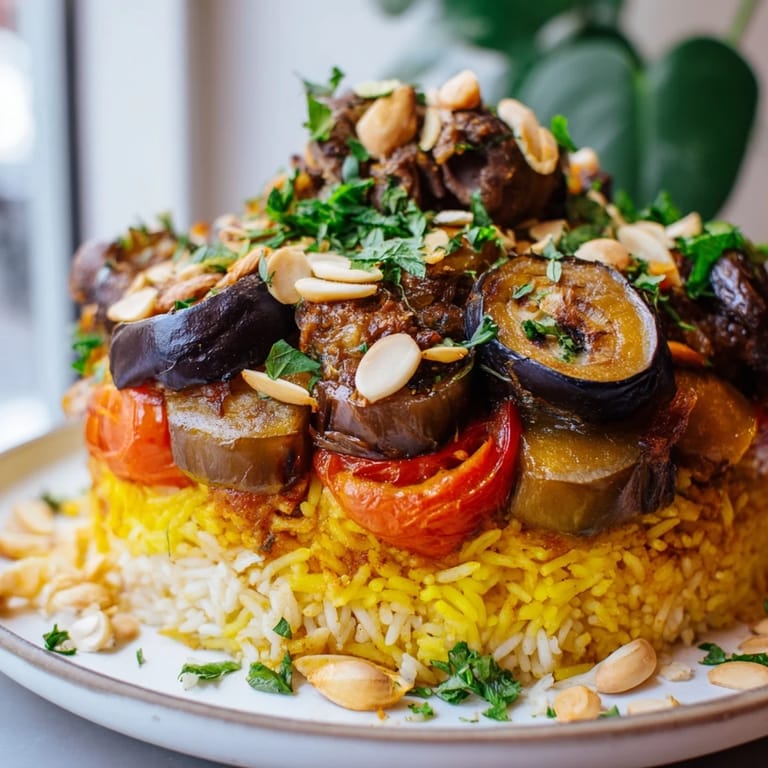
- Scatter warm toasted nuts and fresh parsley over the top, which adds both texture and brightness that cuts through the richness beautifully.
 Save to Pins
 My mother-in-law called while I was eating this and asked how my week was going. I told her I'd made Maqluba, and she went quiet for a moment—the kind of quiet that means memory. Then she said her mother used to make it for celebrations, and somehow, making this dish in my kitchen connected me to all those invisible hands that came before mine. Food has a way of doing that.
Choosing Your Meat
Lamb shanks are traditional and create a rich, deep broth as they cook, but boneless chicken thighs work beautifully too and cut your simmering time nearly in half. I've also used a mix of the two when I wasn't sure what people in the house preferred. Dark meat holds up better to the long cooking and won't dry out like white meat can.
Making It Your Own
You don't have to follow the vegetable layers exactly. Cauliflower florets roasted until nutty can replace the eggplant, carrots can go in with the potatoes, and some cooks add chickpeas for extra heartiness. Once you understand the method—sear, simmer, layer, seal, flip—you can adapt it to what's in your kitchen or what people at your table actually eat.
The Day-After Story
Maqluba is somehow even better the next day because the flavors settle and deepen. I've reheated slices in a dry pan until the rice gets crispy again, and I've crumbled leftover pieces into a bowl with yogurt and fresh herbs for a quick lunch. The rice also holds up surprisingly well in the fridge for three days, though I've never managed to keep it that long before someone eats it cold while standing at the counter.
- If you want to serve this with something, cucumber-yogurt salad cuts through the richness and cools your mouth between bites.
- A simple tomato salad with olive oil and lemon works too, or just set out plain yogurt and let people add what they want.
- This feeds six generously with rice as the main event, but if you're serving it with sides, you might stretch it to eight.
 Save to Pins
 Making Maqluba taught me that some of the best food comes from techniques that feel dramatic—the flip, the seal, the wait—but turn out to be simple once you understand why each step matters. Every time you make it, it gets easier and tastes a little better.
Questions & Answers
- → How do I prevent the rice from sticking during cooking?
Rinse the basmati rice in cold water until the water runs clear to remove excess starch. Soaking the rice for 30 minutes before cooking helps achieve fluffy grains that don’t stick together.
- → Can I use chicken instead of lamb for this dish?
Yes, boneless chicken thighs or pieces with bone-in can be used. Adjust simmering time to ensure the chicken is fully cooked and tender before layering.
- → What is the best way to roast the vegetables?
Slice eggplant and potatoes into uniform rounds, brush with vegetable oil, then roast at 200°C (400°F) for 20-25 minutes until golden and tender for optimal texture and caramelization.
- → How do I assemble the layers properly?
Start with tomato slices at the bottom of the pot, then layer roasted potatoes, eggplant, meat with onions, and finally the drained rice. Press gently to compact the layers before adding broth and cooking.
- → What are good garnishes to complement this dish?
Toasted slivered almonds or pine nuts and freshly chopped parsley add crunch and freshness. Serving it with yogurt or a cucumber salad balances the hearty flavors.