 Save to Pins
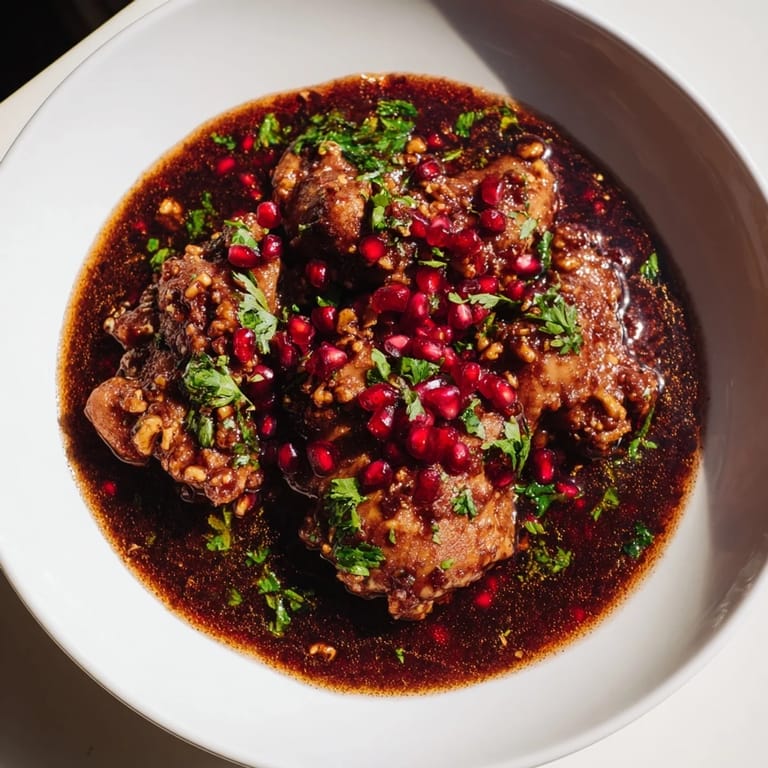
 My grandmother's kitchen in Tehran always smelled like toasted walnuts and pomegranate the moment she started fesenjan. I watched her stand at the stove, stirring that deep burgundy sauce with complete focus, letting the meat become impossibly tender in a way that seemed to require patience I didn't understand as a child. Years later, I realized she wasn't just cooking—she was building flavor layers that needed time to find each other. Now when I make this, that same ritual brings back everything: the weight of the wooden spoon, the way the oil rises to the surface like something finally settling into place.
I made this for friends who'd never had Persian food before, and the moment someone broke through that tangy pomegranate layer to the tender meat underneath, the whole table went quiet. Not awkward quiet—the kind where everyone's too busy tasting to talk. That's when I knew this dish does something most recipes can't: it surprises people who think they already know what food should taste like.
Ingredients
- Boneless chicken thighs or duck (700g / 1.5 lbs), cut into large pieces: Thighs stay juicy under long cooking where breast meat would dry out; if you can find duck, it's traditional and lends a richer depth.
- Salt and black pepper (1/2 tsp each): Just enough to wake up the meat before it meets the sauce.
- Vegetable oil (2 tbsp): Neutral and high-heat friendly for browning without competing flavors.
- Large onion, finely chopped (1): The foundation that turns golden and sweet, creating the base layer of flavor.
- Ground walnuts (250g / 2 cups): These are the soul of the sauce; grind them yourself if possible for better texture and freshness.
- Pomegranate molasses (500ml / 2 cups): The signature ingredient that makes this dish sing with tangy complexity—check the label to avoid added sugar.
- Water (500ml / 2 cups): Balances the intensity and helps everything meld into a cohesive sauce.
- Sugar (2 tbsp, adjust to taste): A gentle sweetness that lets the pomegranate be the star, not the sugar.
- Ground cinnamon (1/2 tsp): Warmth without heat, connecting sweet and savory in a way that feels inevitable.
- Ground turmeric (1/4 tsp): A whisper of earthiness that deepens the color and flavor.
- Ground cardamom, optional (1/4 tsp): For those who love a subtle floral note threading through the whole dish.
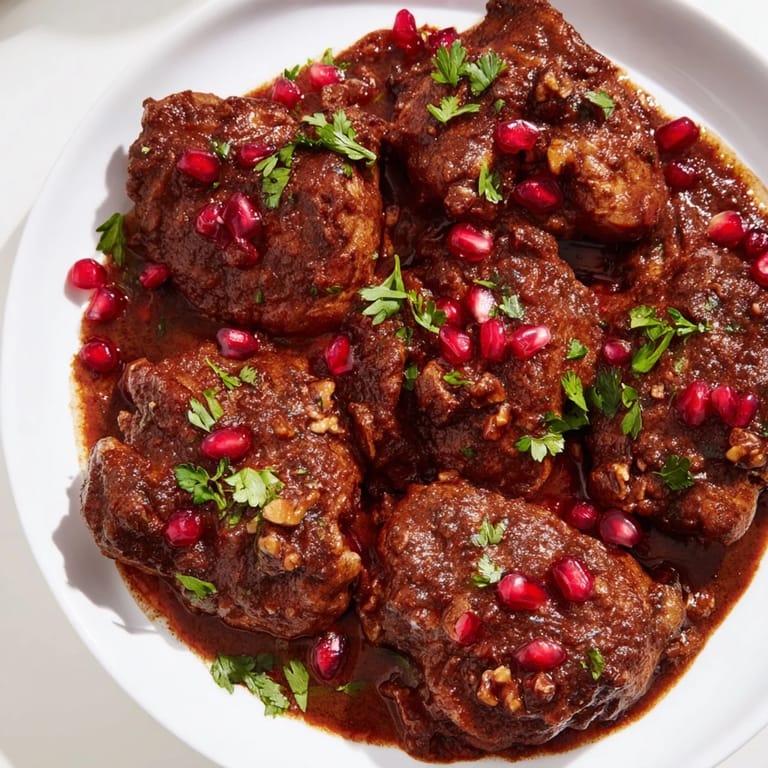
- Pomegranate seeds and fresh parsley (optional garnish): The final touch that makes it look like you knew what you were doing all along.
Tired of Takeout? 🥡
Get 10 meals you can make faster than delivery arrives. Seriously.
One email. No spam. Unsubscribe anytime.
Instructions
- Season and prepare:
- Pat your meat dry and season generously with salt and pepper—this matters more than you'd think, giving the browning process something to grab onto.
- Build the foundation:
- Heat oil in your heavy pot over medium heat until it shimmers. Add onions and let them turn golden, about 8–10 minutes, stirring occasionally—you're not rushing this step, you're coaxing out their sweetness.
- Brown the meat:
- Increase heat slightly and add meat pieces in a single layer, resisting the urge to stir for the first few minutes. This creates a golden crust that seals in juices and adds depth to the finished sauce.
- Toast the walnuts:
- Stir in ground walnuts and cook for 2–3 minutes, stirring constantly to prevent burning—the moment they smell nutty and darker, you're done.
- Build the sauce:
- Pour in pomegranate molasses, water, sugar, and all spices, stirring well to combine. The mixture should bubble gently around the meat without being violent.
- Simmer low and slow:
- Bring to a gentle boil, then lower heat and cover. Let it simmer for 1 hour, stirring occasionally, while the flavors marry and the meat softens completely.
- Reduce and finish:
- Uncover and simmer another 30 minutes, stirring more frequently now, until the sauce thickens and you see walnut oil rising to the surface like a golden layer settling on top. Taste and adjust sweetness or tang to your preference.
- Serve with intention:
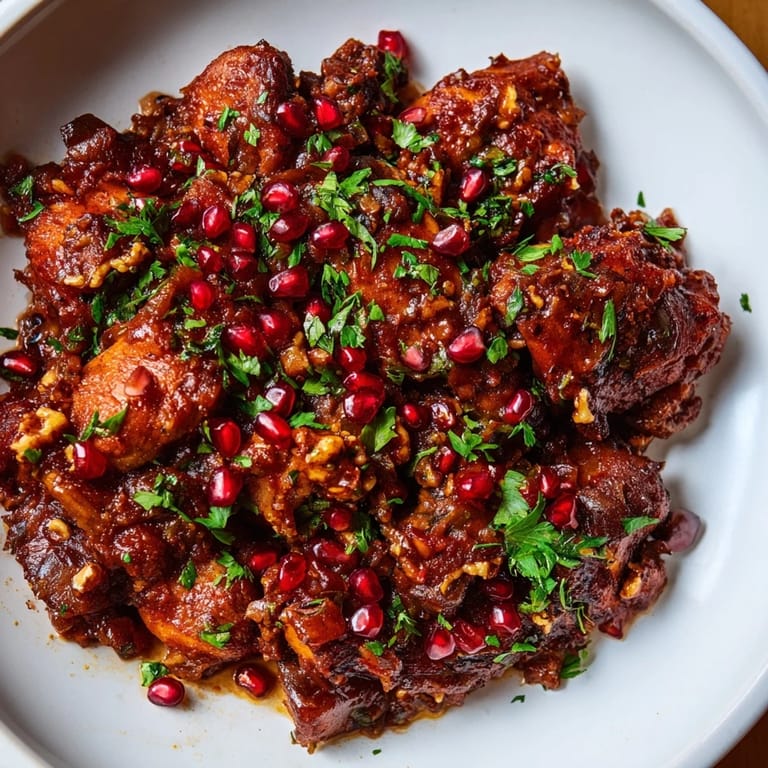
- Spoon over steamed basmati rice, scatter pomegranate seeds and parsley on top if you have them, and watch people experience something they didn't expect.
 Save to Pins
 There's a moment when this dish stops being a recipe and becomes something alive on the stove—when the oil starts separating and the sauce turns glossy, and you can smell every spice distinct but working together. That's when you know you've made it right, and somehow that moment never feels routine, even the tenth time you make it.
Why This Dish Matters
Fesenjan exists in that rare space where it's both festive enough for celebrations and comfortable enough for a quiet dinner at home. Persian cooking has this philosophy baked in—nothing is too humble or too grand, and this stew embodies that perfectly. Every flavor sings but never shouts, and that balance is harder to achieve than it looks.
Chicken Versus Duck, and Other Choices
Chicken thighs are forgiving and accessible; they stay moist through the long cooking and absorb the sauce beautifully. Duck is traditional and adds a richer, almost gamey note that some find transcendent. Either works, and honestly, the choice comes down to what you can find and what mood you're in. I've also made vegetarian versions with roasted mushrooms or eggplant, and while different, they're equally valid—the sauce carries everything.
Making It Your Own
The beauty of fesenjan is how it bends to your preferences without losing its identity. Some cooks add pomegranate juice instead of molasses for brightness; others use more spice or less. One of my cousins swears by a touch of rose water stirred in at the very end. The framework stays, but the details are yours to explore.
- Make this a day ahead if you can—the flavors deepen and mellow overnight, which makes reheating and serving effortless.
- If your sauce seems too thin, uncover and simmer longer; if it's too thick, thin with water a tablespoon at a time.
- Serve alongside Persian rice, plain yogurt, or even with fresh herbs and bread if you want something lighter and more informal.
 Save to Pins
 This is the kind of dish that whispers rather than shouts, and that's exactly why it stays with you. Make it when you have time to let it breathe, and share it with people who are ready to slow down and taste.
Questions & Answers
- → What type of meat is best for Fesenjan?
Duck is traditional, but chicken thighs offer a tender, convenient alternative with great flavor absorption.
- → Can I substitute the walnuts with another nut?
Walnuts provide a unique earthy richness essential to the sauce, making substitutions less authentic but possible with pecans or almonds in a pinch.
- → How is the pomegranate molasses flavor balanced?
The sweetness is adjusted with sugar and balanced by the natural tartness of the molasses, creating a well-rounded tangy profile.
- → What spices enhance the stew’s flavor?
Ground cinnamon, turmeric, and optional cardamom add depth and warmth, complementing the nuts and pomegranate beautifully.
- → How long should the stew simmer for optimal flavor?
Simmering for about 1 hour 30 minutes allows the meat to become tender and the sauce to thicken, enriching all flavors.
- → Are there vegetarian alternatives for this dish?
Mushrooms or eggplants can replace meat, absorbing the rich sauce and offering a satisfying texture.