 Save to Pins
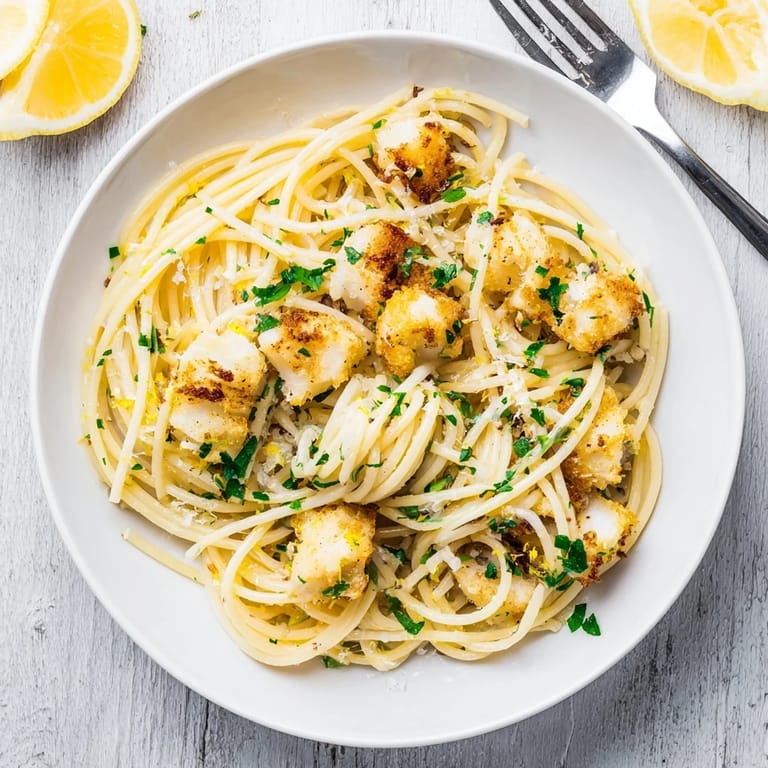
 The sun was already low when I walked through the door with a paper-wrapped parcel of fish from the market, my shoes still wet from an unexpected rain shower. The radio was playing something faint and familiar, and all I wanted was something bright and quick that would make the damp evening feel cozy. This pasta became the answer, with golden flakes of fish catching the light and that hit of fresh lemon making everything feel possible again.
I first made this on a Tuesday when my sister dropped by unexpectedly with a bottle of white wine and stories about her new job. We stood around the stove, taking turns flaking the fish and taste-testing the pasta for salt, and ended up eating straight from the pan while laughing about something neither of us can remember now. That is the kind of dinner this recipe creates, where the food is almost secondary to the moment it supports.
Ingredients
- 500 g (1.1 lb) firm white fish fillets: Cod, haddock, or sea bass work beautifully here because they hold their shape when pan-fried and flake into satisfying chunks without turning to mush
- 2 tbsp all-purpose flour: This creates the lightest crisp coating on the fish, but you can use gluten-free flour if needed without much difference
- 1/2 tsp sea salt: Use good salt because it seasons both the fish and becomes part of the overall seasoning for the whole dish
- 1/4 tsp black pepper: Freshly ground makes a noticeable difference in the final flavor depth
- 2 tbsp olive oil: This is for the initial fish frying, so choose something with a decent smoke point
- 350 g (12 oz) spaghetti or linguine: Long strands catch the flaky fish pieces better than short pasta shapes
- 1 tbsp salt (for pasta water): The water should taste like the sea, which helps season the pasta from the inside out
- 2 tbsp unsalted butter: This mingles with the olive oil for the sauce base and creates that velvety mouthfeel
- 3 cloves garlic, finely chopped: Mince it small so it melts into the sauce rather than leaving chunks in every bite
- Zest of 1 lemon: The oils in the zest carry the brightest lemon flavor without the acidity
- Juice of 1 lemon: This provides the acid that cuts through the richness and wakes up the whole dish
- 3 tbsp fresh parsley, chopped: Flat-leaf parsley brings a fresh, grassy brightness that balances the fish
- 2 tbsp fresh chives, chopped: These add a mild onion flavor that is sweeter and more delicate than regular onions
- 1/2 tsp chili flakes (optional): Just enough to create a gentle hum of warmth in the background
- 2 tbsp extra virgin olive oil: Save your best oil for this finishing touch because it is not cooked and its flavor shines through
- Freshly ground black pepper, to taste: A final grinding at the end makes everything pop
- Lemon wedges, for serving: Letting people add more acid at the table means everyone gets it exactly how they like it
Tired of Takeout? 🥡
Get 10 meals you can make faster than delivery arrives. Seriously.
One email. No spam. Unsubscribe anytime.
Instructions
- Boil the pasta water:
- Drop the pasta into a large pot of heavily salted boiling water and cook until it still has a slight bite to it, then scoop out 1/2 cup of the starchy cooking water before draining
- Season and coat the fish:
- Pat the fish completely dry with paper towels, season generously with salt and pepper, then lightly dust both sides with flour, shaking off any excess so the coating stays paper-thin
- Fry until golden:
- Heat olive oil in a large non-stick skillet until it shimmers, add the fish fillets, and let them cook undisturbed for 3 to 4 minutes per side until they develop a deep golden crust and feel firm when gently pressed
- Rest and flake:
- Transfer the cooked fish to a plate and let it sit for 2 minutes, which allows the juices to redistribute, then use two forks to break it into large, satisfying flakes
- Build the aromatics:
- In the same skillet, reduce the heat to medium and melt the butter, then add the garlic and cook until it becomes fragrant and pale gold, stirring in the lemon zest and chili flakes if you are using them
- Bring it all together:
- Add the drained pasta directly into the skillet and toss it vigorously, then pour in the lemon juice and splash in some of the reserved pasta water as needed to create a silky sauce that clings to every strand
- Add the finishing touches:
- Gently fold in the flaky fish, taking care not to break it up too much, then toss in the parsley and chives along with the extra virgin olive oil and a final grind of black pepper
- Serve immediately:
- Plate the pasta while it is still steaming hot, passing extra lemon wedges at the table so everyone can adjust the brightness to their taste
 Save to Pins
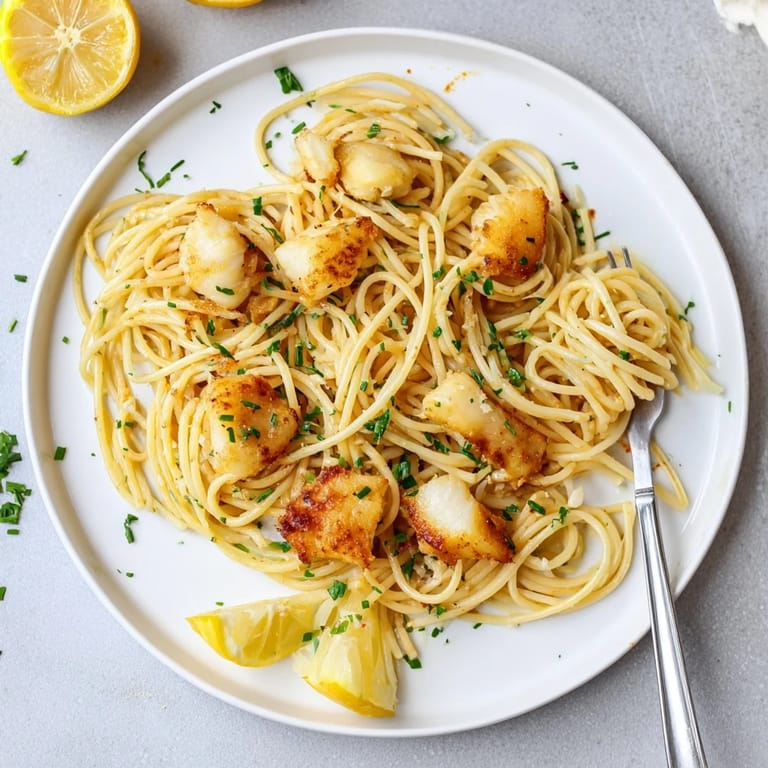
 This recipe has become my go-to when friends call and say they are coming over on short notice. There is something about the combination of crispy fish, bright lemon, and fresh herbs that feels like a celebration, even when the table is set with mismatched napkins and the wine is whatever was on sale.
Choosing the Right Fish
Not all white fish behaves the same way in this recipe. I have learned that firmer fish like sea bass and cod hold up beautifully to the pan-frying and stay in distinct flakes, while more delicate varieties can fall apart and turn into something closer to a fish stew. Trust your fishmonger, and if the fillets look thin or watery, they probably will not give you that crispy texture you are after.
Getting That Perfect Sauce Consistency
The sauce should look glossy and coat each strand of pasta without drowning it. If it feels too thick, add more pasta water a splash at a time, and if it is too thin, keep tossing over the heat for another minute or two until it emulsifies and clings to the pasta. The moment the sauce turns from loose and watery to velvety and cohesive is when the dish comes together.
Make It Your Own
Once you have made this recipe a few times, you will start seeing opportunities to tweak it to your taste. Some nights I add a handful of capers for briny bursts, or toss in some arugula at the very end so it wilts slightly but still keeps its peppery bite. The framework stays the same, but the personality of the dish can shift depending on what is in the fridge or what kind of mood everyone is in.
- A handful of cherry tomatoes, halved and added with the garlic, bring sweetness and color
- Toasted breadcrumbs sprinkled on top add another layer of crunch
- A spoonful of crème fraîche stirred in at the end makes the sauce even creamier
 Save to Pins
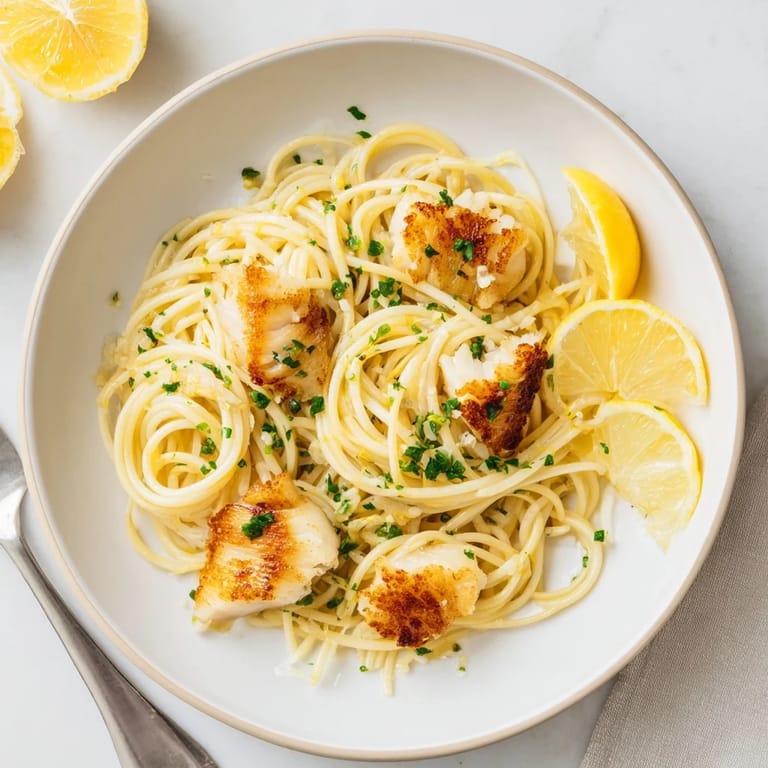
 There are few things more satisfying than a pasta dish that comes together this quickly and tastes this bright. I hope it finds its way into your regular rotation.
Questions & Answers
- → What type of fish works best?
Firm white fish fillets like cod, haddock, sea bass, tilapia, or snapper hold up well during pan-frying and maintain their texture when flaked into the pasta.
- → Can I make this gluten-free?
Yes, simply substitute gluten-free flour for dredging the fish and use gluten-free pasta in place of regular spaghetti or linguine.
- → How do I prevent the fish from breaking apart?
Let the cooked fish rest for 2 minutes before flaking. Handle gently with a fork or your fingers to create large bite-sized pieces rather than small shreds.
- → What can I add for extra flavor?
Capers bring a briny punch, while fresh arugula adds peppery notes. Extra garlic, more chili flakes, or grated Parmesan are also delicious additions.
- → How long does this keep?
Best enjoyed immediately while the fish remains crispy. Leftovers can be refrigerated for up to 2 days, though the texture will soften—gently reheat with a splash of water or olive oil.
- → What wine pairs well?
A chilled Sauvignon Blanc or Pinot Grigio complements the citrus and seafood elements beautifully, cutting through the rich olive oil and butter.