 Save to Pins
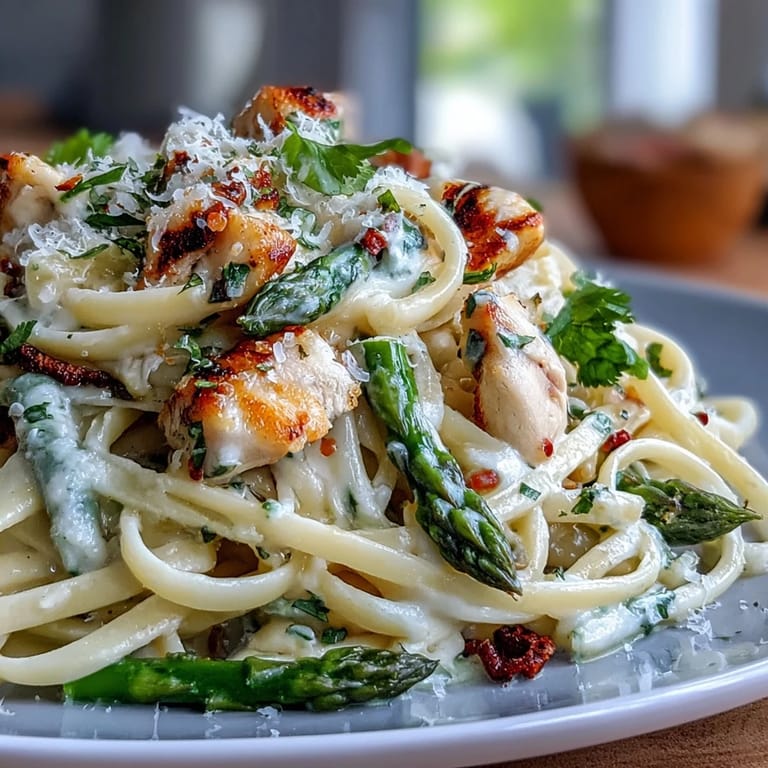
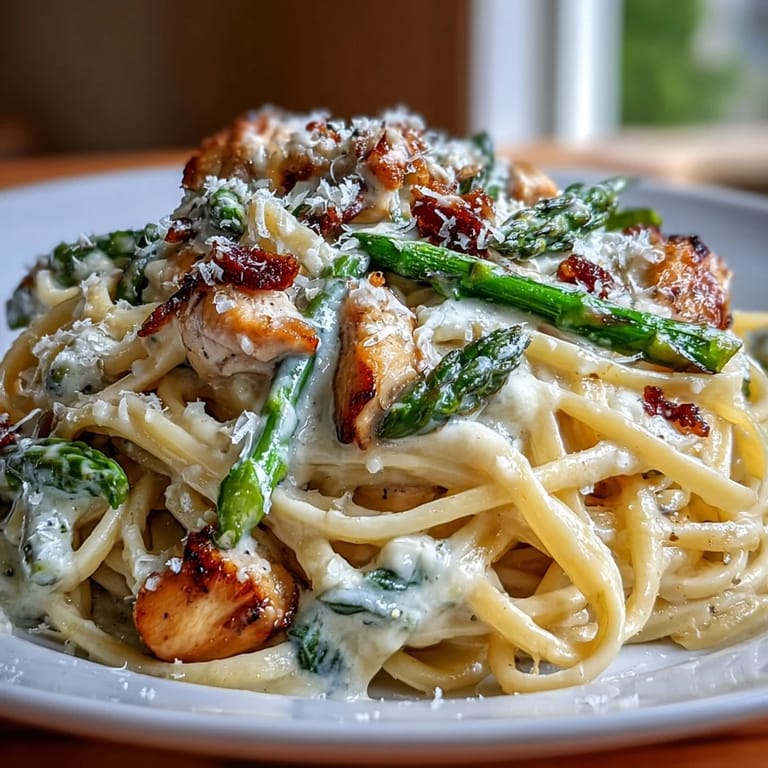
 There's something about spring that makes me crave pasta with actual vegetables in it, and this Creamy Asiago Chicken & Asparagus dish emerged one April evening when I had three things in the fridge fighting for attention: chicken breasts, a bunch of asparagus that was about to turn mushy, and a wedge of Asiago I'd picked up on a whim. I threw the asparagus in the oven with cheese and forgot about it for exactly the right amount of time, which is how I learned that roasted Asiago gets this impossibly crispy, salty crust that changes everything. The pasta came together so naturally after that, cream and more cheese creating this sauce that felt both indulgent and somehow light with all those spring vegetables.
I made this for my partner last spring when we were both tired of the same rotation of weeknight dinners, and watching him actually ask for seconds without me prompting was its own kind of victory. He's the type who picks through pasta looking for vegetables to avoid, but somehow the combination of crispy cheese on the asparagus and that creamy sauce made him stop complaining about greens. That meal became our default when we wanted something that felt restaurant-quality but didn't require me to spend my whole evening cooking.
Ingredients
- Chicken breasts: Cut them into bite-sized pieces so they cook quickly and absorb the sauce flavor rather than sitting like sad chunks.
- Asparagus: Trimming the woody ends is worth the two minutes it takes, and cutting into 2-inch pieces gives you something that feels substantial in the pasta.
- Garlic and onion: These build the flavor base, and mincing the garlic small means it disappears into the cream sauce rather than attacking your teeth with surprise garlic chunks.
- Linguine: The thin strands catch the sauce better than thicker pastas, but use whatever shape you have on hand.
- Asiago cheese: Freshly grate it yourself if you can, since the pre-grated stuff has anticaking agents that make it grainy in warm sauce.
- Heavy cream: This is the backbone of the sauce, so don't skip it entirely even if you want to lighten things up.
- Butter: Just a tablespoon, but it keeps the garlic and onion from sticking and browns them slightly for flavor.
- Olive oil: Use it for roasting the asparagus and cooking the chicken, keeping the flavors separate until they meet in the pasta.
- Red pepper flakes and lemon zest: Optional, but they wake up the dish if your sauce tastes one-note.
Tired of Takeout? 🥡
Get 10 meals you can make faster than delivery arrives. Seriously.
One email. No spam. Unsubscribe anytime.
Instructions
- Get your oven ready and start the asparagus:
- Preheat to 220°C (425°F) and line a baking sheet with parchment paper so nothing sticks. Toss your asparagus pieces with olive oil, salt, pepper, and half the Asiago cheese, then spread them out in a single layer—this is important because crowded asparagus steams instead of roasts.
- Roast the asparagus until crispy:
- Let them sit in the oven for 12–15 minutes until the cheese turns golden and crispy at the edges and the asparagus is tender but still has a slight snap. This is where the magic happens, so don't wander away completely.
- Cook the pasta while the asparagus finishes:
- Bring a big pot of salted water to a rolling boil and add linguine, stirring occasionally so nothing sticks. Cook until al dente—you want it slightly underdone because it'll finish cooking when you toss it with the hot sauce. Reserve about 120 ml of pasta water before draining, which is your secret weapon if the sauce gets too thick.
- Brown the chicken pieces:
- While the pasta is cooking, season your chicken with salt and pepper and heat olive oil in a large skillet over medium-high heat. Once the oil shimmers, add the chicken and let it sit undisturbed for a minute or so before stirring, which gives it a chance to get golden instead of steamed.
- Build the sauce foundation:
- Remove the golden chicken to a plate, then melt butter in the same skillet over medium heat. Add your chopped onion and cook for 2–3 minutes until soft and translucent, then add minced garlic for just 30 seconds—any longer and it starts to burn and tastes bitter.
- Create the creamy cheese sauce:
- Pour in the heavy cream and stir in the remaining Asiago cheese, letting it simmer gently for 2–3 minutes while the cheese melts and everything thickens slightly. If it looks too thick, splash in some of that reserved pasta water a little at a time, stirring until you get a sauce that coats the pasta but isn't pooling on the bottom of the pan.
- Bring everything together:
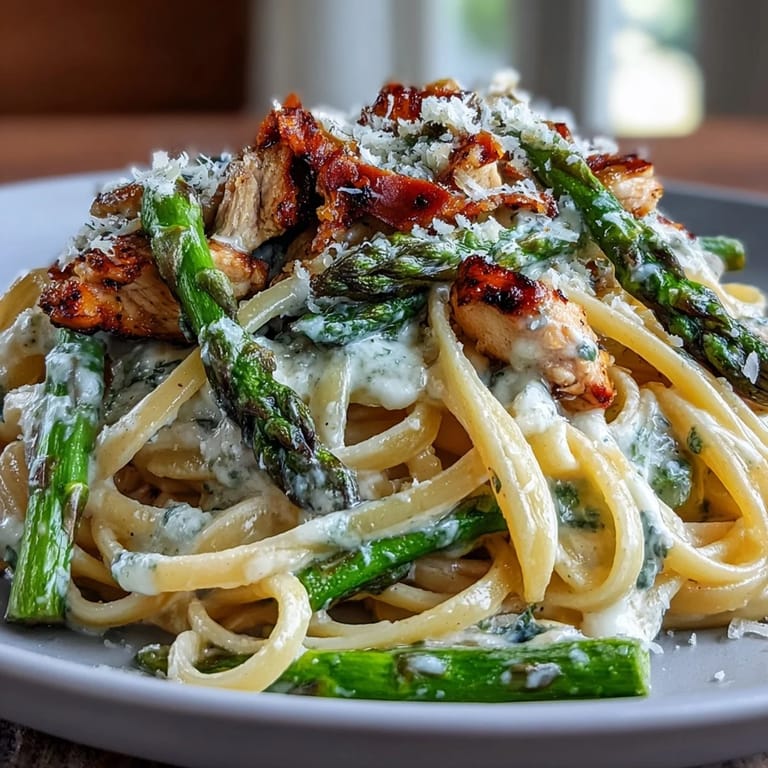
- Add the cooked linguine, browned chicken, and roasted asparagus to the skillet with the sauce and toss everything gently to coat. Let it warm through for a minute, then taste and adjust with salt, pepper, lemon zest, or red pepper flakes depending on your mood.
- Plate and serve immediately:
- Transfer to bowls right away and top with extra Asiago or Parmesan if you have it, because the pasta loses its magic if it sits around getting cold and congealed.
 Save to Pins
  Save to Pins
 There was one night when I served this to friends who were all deep into some food challenge thing, counting macros and avoiding cream like it was poison, and I almost didn't make it because I thought they'd judge me. But I made it anyway because it's just good, and watching them all quietly demolish their plates while still talking about their diet restrictions was genuinely funny. The dish proved something I needed to remember: sometimes feeding people something delicious matters more than pretending you're eating differently than you actually want to.
Why Spring Vegetables Matter Here
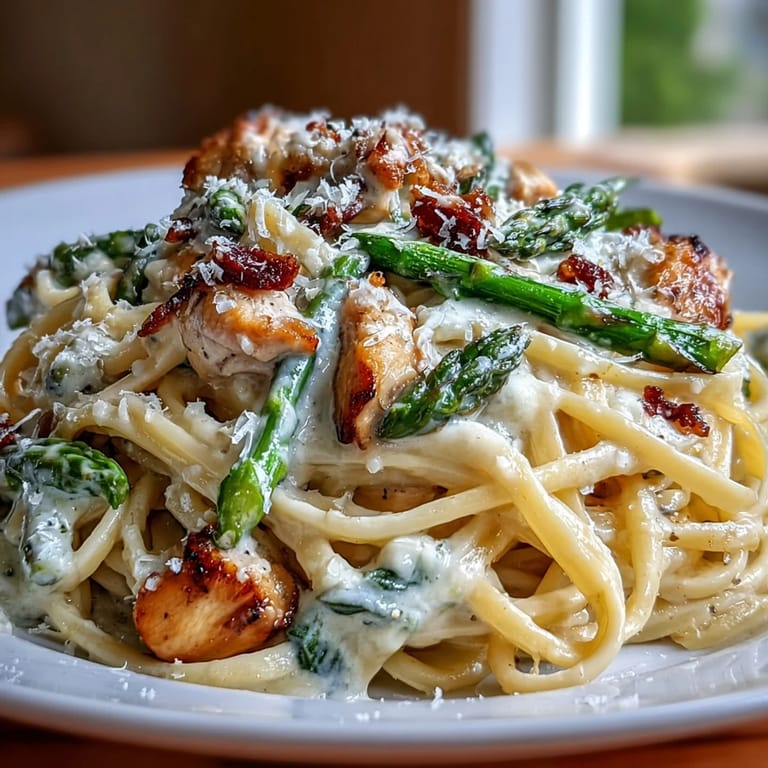
Asparagus in a creamy pasta feels counterintuitive until you actually taste it, because cream usually makes vegetables disappear into mush. But when you roast the asparagus separately with cheese until it's crispy, then add it to the pasta at the last second, it keeps its texture and personality. The vegetable doesn't surrender to the sauce—it stands up to it, and that tension is what makes the whole dish interesting instead of just rich and heavy.
Adjusting the Recipe to Your Mood
This pasta is forgiving enough to bend to what's actually in your kitchen, which is usually how the best weeknight dinners happen. If heavy cream feels like too much, half-and-half works fine and makes the sauce lighter without making it taste thin or sad. You can throw in peas or spinach if you want more vegetables, roasted cherry tomatoes if you're feeling fancy, or literally nothing else if you just want chicken and asparagus and cheese doing their thing.
The Cheese Decision
Asiago is the star here because it brings this subtle nuttiness and umami that regular Parmesan doesn't quite hit, but it's also more expensive and less common in most grocery stores. If you can't find it, Gruyère works beautifully in its place, or even a good sharp Cheddar if you want the sauce to taste slightly different but still delicious. Just remember that harder cheeses like Pecorino can turn grainy when they heat, so grate them fresh and add them slowly to the warm cream.
- Taste the sauce before serving and add salt carefully, since both the cheese and the pasta water already bring saltiness.
- Keep the heat medium and gentle when the cream is in the pan so it doesn't break and separate into greasy streaks.
- Serve immediately, because pasta waits for no one and this dish is best when everything is still warm and creamy.
 Save to Pins
  Save to Pins
 This pasta has become my default when I want to feel like I'm cooking something special on a regular Tuesday, which is maybe the highest compliment a weeknight dinner can get. Make it, adjust it, make it again with different vegetables next week—it's yours now.
Questions & Answers
- → Can I make this dish ahead of time?
You can prep components in advance—roast the asparagus, cook the chicken, and even make the sauce. Store everything separately in the refrigerator. When ready to serve, gently reheat the sauce with a splash of pasta water, then toss with freshly cooked linguine and the prepped ingredients.
- → What other vegetables work well in this dish?
Baby spinach, peas, or broccoli florets make excellent additions. Add spinach during the last minute of tossing so it wilts gently. Frozen peas can go straight into the sauce while it simmers. Broccoli should be roasted alongside the asparagus or blanched before adding.
- → Can I use a different type of pasta?
Fettuccine, penne, or rigatoni all work beautifully here. Fettuccine has similar width to linguine and holds the sauce well. Short pasta like penne or rigatoni captures the creamy sauce and cheesy bits in their tubes. Just adjust cooking time according to package directions.
- → Is there a lighter version of this dish?
Substitute half-and-half for the heavy cream to reduce fat content while maintaining creaminess. You can also use less cheese overall—save some for garnish rather than adding it all to the sauce. Increasing the asparagus and adding more vegetables creates a more balanced plate with pasta.
- → What should I serve with this pasta?
A crisp green salad with vinaigrette cuts through the richness. Garlic bread or crusty Italian bread helps scoop up every bit of sauce. For wine, a Sauvignon Blanc or Pinot Grigio complements the creamy elements and brightens the asparagus flavors.
- → Can I freeze the leftovers?
The pasta freezes reasonably well for up to 2 months, though the cream sauce may separate slightly upon reheating. Thaw overnight in the refrigerator, then reheat gently with a splash of milk or cream while stirring constantly to bring the sauce back together. The texture is best enjoyed fresh, but leftovers make a quick lunch the next day.