 Save to Pins
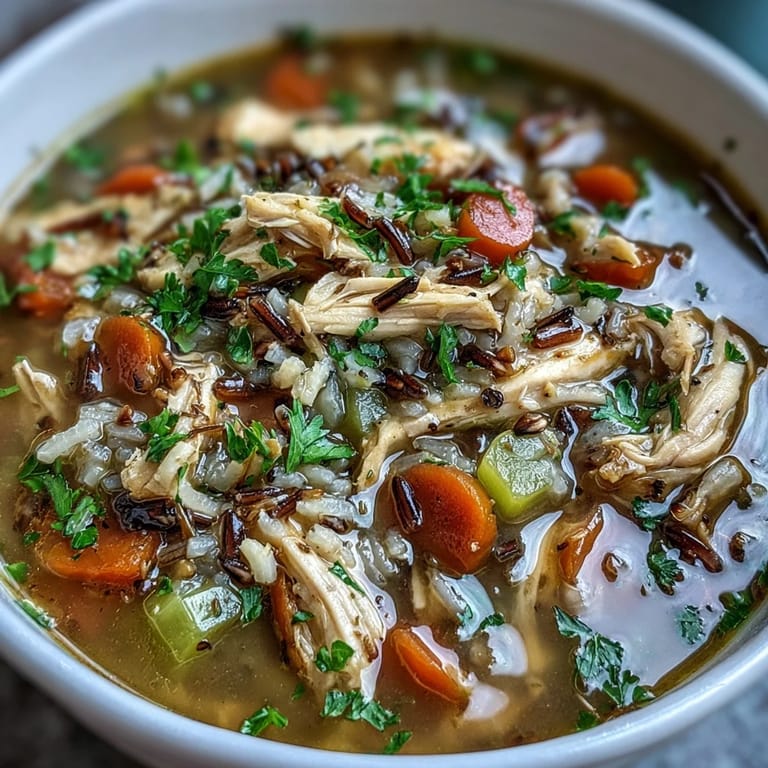
 There's something about the smell of wild rice toasting in a hot pot that immediately makes a kitchen feel like home. My neighbor stopped by one October afternoon while I was testing this soup, and within five minutes she was asking for the recipe—that's when I knew I'd found something special. The combination of nutty rice, tender chicken, and those bright carrot coins simmering in savory broth felt like the kind of dish that deserves to become a regular rotation in any kitchen. It's the sort of soup that tastes even better the next day, when all the flavors have had time to get to know each other.
I made this for my sister when she was recovering from the flu, and she said it was the first thing that tasted like actual food again. There's real power in a soup like this—it's warm, it's nourishing, and somehow it communicates care in a way that other dishes can't quite manage.
Ingredients
- Cooked chicken breast, shredded or diced (2 cups): Using pre-cooked rotisserie chicken will save you time and honestly adds more flavor than cooking it separately.
- Wild rice, uncooked and rinsed (3/4 cup): Rinsing removes excess starch and prevents the soup from becoming gummy—this small step makes a surprising difference.
- Carrots, peeled and sliced (3 medium): The natural sweetness of carrots balances the earthiness of the wild rice beautifully.
- Celery stalks, diced (2): Don't skip the celery; it builds a flavor foundation that quietly supports everything else in the pot.
- Yellow onion, diced (1 small): Yellow onions turn sweet and mellow as they soften, creating the aromatic base for this soup.
- Garlic, minced (2 cloves): Fresh garlic makes all the difference—jarred will work in a pinch, but fresh has a brightness that lifts the whole dish.
- Low-sodium chicken broth (7 cups): Low-sodium lets you control the salt level and keeps the flavors clean and distinct.
- Bay leaf (1): This single leaf infuses the entire pot with subtle depth; always remember to fish it out before serving.
- Dried thyme (1 teaspoon): Thyme is the quiet backbone of this soup, adding herbaceous warmth without shouting.
- Dried rosemary (1/2 teaspoon): Just enough rosemary to add a woody, sophisticated note—too much and it overpowers everything.
- Salt and freshly ground black pepper: Taste as you go; the amount you need depends on the saltiness of your broth and personal preference.
- Fresh parsley, chopped (2 tablespoons): A bright shower of parsley at the end adds color and a fresh herbal note that makes people actually notice the garnish.
- Olive oil (2 tablespoons): Good olive oil helps everything cook evenly and adds a subtle richness to the broth.
Tired of Takeout? 🥡
Get 10 meals you can make faster than delivery arrives. Seriously.
One email. No spam. Unsubscribe anytime.
Instructions
- Start with the aromatics:
- Heat your olive oil in a large pot over medium heat until it shimmers slightly, then add your onion, carrots, and celery. You're looking for the vegetables to soften and become fragrant after about 5 to 6 minutes—they should look translucent at the edges but still hold their shape.
- Build the flavor base:
- Add your minced garlic and let it cook for just about a minute until the raw edge comes off and the kitchen smells incredible. Don't let it sit too long or it'll start to brown and turn bitter.
- Add the rice and broth:
- Stir in your rinsed wild rice, pour in all the broth, and add your bay leaf, thyme, and rosemary. Bring the whole pot to a boil—you'll see the surface bubble and steam rising—then immediately lower the heat to a gentle simmer, cover it, and let it do its thing for 40 to 45 minutes.
- Cook the rice until tender:
- The wild rice will gradually soften and some of the grains may even burst open, creating little pockets of texture. You'll know it's ready when a grain bends easily between your fingers without being mushy.
- Warm through the chicken:
- Stir in your cooked chicken and let it simmer for another 5 to 8 minutes just to heat through. This is when your house will smell absolutely incredible—like pure comfort in vapor form.
- Finish and season:
- Fish out that bay leaf (set a reminder if you need to), then taste the soup and add salt and pepper gradually until it tastes right to you. Remember that broth has salt already, so season conservatively.
- Serve with style:
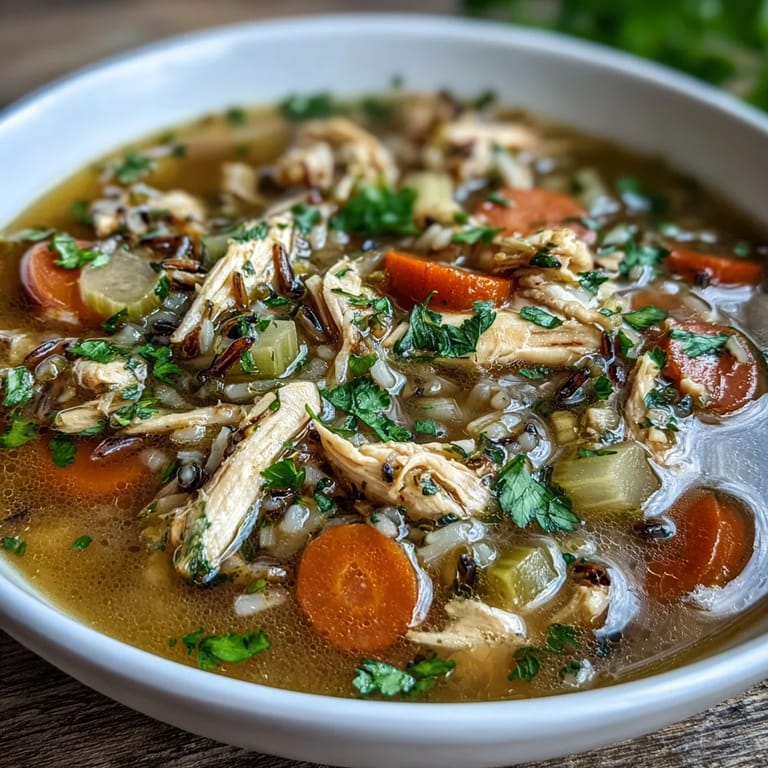
- Ladle into bowls and scatter that fresh parsley across the top. The green flecks catch the light and signal freshness to everyone at the table.
 Save to Pins
 There was a moment when I served this soup to a table of people on a cold November evening, and everyone went quiet for a few seconds before commenting. That's when you know a dish has crossed from being merely practical to being genuinely nourishing in both obvious and invisible ways.
Why Wild Rice Makes This Soup Special
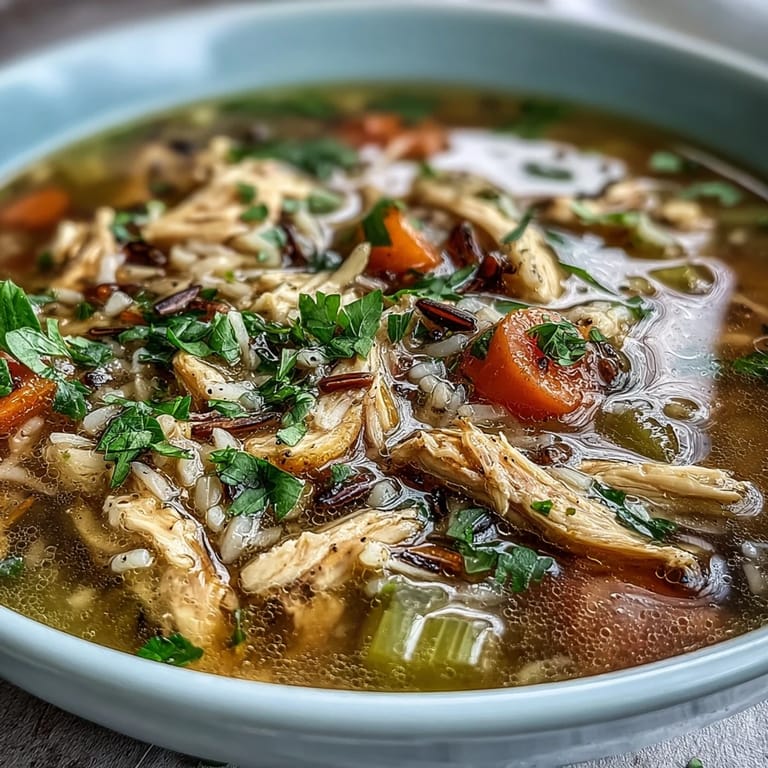
Wild rice has a completely different personality than regular white rice—it's chewier, nuttier, and holds its texture even after simmering for nearly an hour. The grains expand and sometimes split, creating little bursts of flavor throughout the soup that keep your palate interested. This isn't a soup where you can zone out while eating; every spoonful has something different happening, which is part of what makes it so satisfying.
The Make-Ahead Advantage
This soup actually improves if you make it a day ahead and reheat it gently before serving. The flavors have time to meld and deepen overnight, and the wild rice continues to absorb broth, becoming even more tender. Just keep it refrigerated in an airtight container, and when you're ready to eat, warm it slowly on the stovetop—never a hard boil, which can make the rice turn mushy.
Customizing Your Soup
This recipe is genuinely flexible, and I've learned that flexibility is what makes a soup recipe worth keeping. You can easily swap in brown rice if you prefer a milder flavor, add diced mushrooms for earthiness, or stir in cream at the end for richness. The core technique stays the same, and the result is always comforting.
- For a creamier version, stir in half a cup of heavy cream or whole milk in the final minute, just long enough to warm it through without boiling.
- Rotisserie chicken from your grocery store rotisserie counter works perfectly and saves you cooking time and cleanup.
- Always taste before serving and keep salt handy at the table—some people prefer their soup seasoned more boldly than others.
 Save to Pins
 This soup has become the thing I make when I want to feel capable and generous in the kitchen, and when I want to eat something that tastes like it took much more effort than it actually did. Keep this recipe close at hand.
Questions & Answers
- → How long does it take to cook wild rice properly?
Wild rice typically needs 40–45 minutes of simmering until tender but still slightly chewy, which ensures it holds texture in the dish.
- → Can I use leftover chicken for this dish?
Yes, cooked chicken such as rotisserie meat works well. Add it towards the end to warm through without overcooking.
- → What vegetables enhance the flavor in this soup?
Carrots, celery, onions, and garlic are sautéed first to develop a flavorful base before adding liquids and grains.
- → Is it possible to substitute wild rice with another grain?
Brown rice can be used as a substitute, but cooking time should be adjusted accordingly to ensure it cooks through.
- → How can I make the soup creamier?
Stirring in half a cup of heavy cream or whole milk at the end creates a richer, creamier texture without overwhelming the flavors.
- → What herbs are recommended for seasoning?
Dried thyme and rosemary balance the savory broth, complemented by fresh parsley garnish for brightness.