 Save to Pins
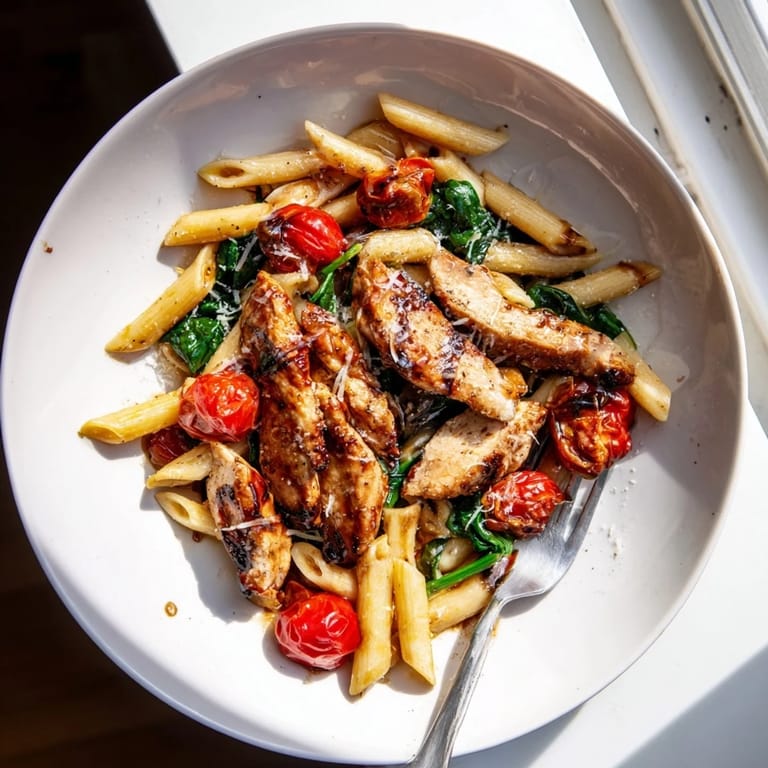
 There was a Tuesday night when I opened the fridge to find chicken, a half-empty bottle of balsamic vinegar, and not much else. I tossed pasta into boiling water, sliced the chicken thin, and started building something out of instinct. The balsamic reduced into this glossy, tangy glaze that clung to everything, and suddenly dinner felt special. That improvised meal became this recipe, one I now make whenever I want something quick but never boring.
I made this for a small dinner party once, and someone asked if I had taken a cooking class. I laughed because the truth was I had just learned to trust the smell of garlic hitting hot oil and the way balsamic thickens when you let it simmer. Watching everyone twirl their forks and go quiet for a few bites told me everything I needed to know. It became my go-to whenever I wanted to impress without the stress.
Ingredients
- Boneless, skinless chicken breasts (500 g, sliced thin): Thin strips cook fast and soak up the glaze better than thick chunks, plus they stay tender if you don't overcook them.
- Penne or spaghetti (350 g): Penne catches the sauce in its ridges, but spaghetti twirls beautifully with the glaze, so pick whichever makes you happier.
- Garlic (3 cloves, minced): Fresh garlic is the backbone here, toasted just until fragrant so it doesn't turn bitter.
- Cherry tomatoes (200 g, halved): They burst and blister in the pan, adding little pockets of sweetness that balance the tangy balsamic.
- Baby spinach (60 g): Wilts in seconds and adds color and a subtle earthiness without overpowering anything.
- Olive oil (3 tbsp, divided): Use a decent one since it flavors the chicken, the garlic, and gets whisked into the glaze.
- Balsamic vinegar (60 ml): The star of the sauce, it reduces into a sticky, glossy coating that clings to every bite.
- Honey (1 tbsp): Balances the acidity and helps the glaze thicken without tasting overly sweet.
- Dijon mustard (1 tsp): A small amount adds complexity and a hint of sharpness that keeps the glaze interesting.
- Dried Italian herbs (1 tsp): A mix of oregano, basil, and thyme works wonders when you don't have fresh herbs on hand.
- Salt and black pepper: Season at every step so the flavors build rather than taste flat at the end.
- Parmesan cheese (30 g, grated): Finish with this for a salty, nutty bite that makes everything feel complete.
- Fresh basil (optional): Torn leaves on top add a pop of green and a sweet, peppery aroma.
Tired of Takeout? 🥡
Get 10 meals you can make faster than delivery arrives. Seriously.
One email. No spam. Unsubscribe anytime.
Instructions
- Boil the pasta:
- Cook your pasta in well-salted water until it has just a bit of bite left, then save half a cup of that starchy water before draining. That reserved liquid is your secret weapon for a silky sauce later.
- Sear the chicken:
- Heat a tablespoon of olive oil in a large skillet over medium-high, add the seasoned chicken strips, and let them sizzle undisturbed for a minute before tossing. You want golden edges and no pink in the center, which takes about five to seven minutes.
- Sauté the aromatics:
- In the same skillet, add another tablespoon of oil and toss in the garlic, stirring for just thirty seconds until it smells incredible. Then add the cherry tomatoes and cook until they start to collapse and release their juices.
- Whisk the glaze:
- In a small bowl, combine the balsamic vinegar, honey, Dijon mustard, and the last tablespoon of olive oil. Whisk it until smooth so everything comes together evenly when it hits the heat.
- Glaze the chicken:
- Return the cooked chicken to the skillet, pour the balsamic mixture over everything, and let it simmer for two to three minutes. Watch it thicken and coat the chicken in a glossy, tangy layer that smells like a restaurant.
- Toss with pasta and spinach:
- Add the drained pasta and the spinach to the skillet, tossing everything together until the spinach wilts and the pasta is coated. If it looks dry, splash in some of that reserved pasta water until the sauce clings beautifully.
- Serve and garnish:
- Take the skillet off the heat and divide among bowls, topping each with grated Parmesan and torn basil if you have it. Serve immediately while the pasta is hot and the glaze is still glossy.
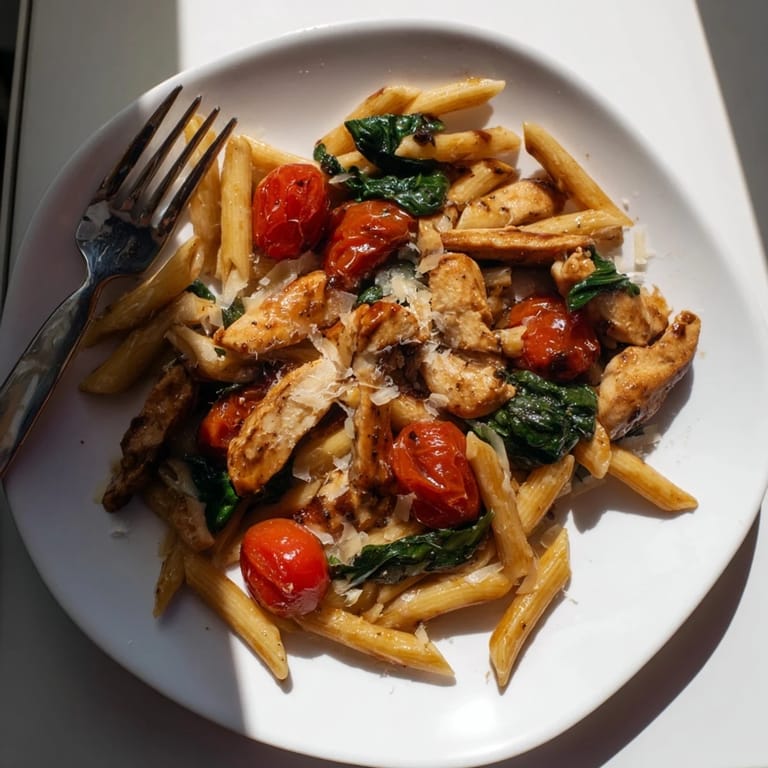 Save to Pins
 One evening, I served this to my brother who claimed he didn't like balsamic anything. He finished his plate and asked for seconds, scraping up every bit of sauce with a piece of bread. Watching him change his mind with each bite reminded me that food has a way of surprising people when you cook it with care. Now he requests this dish whenever he visits.
Choosing Your Pasta Shape
Penne works beautifully because the ridges trap the glaze and bits of tomato inside each tube. Spaghetti, on the other hand, twirls elegantly and lets the sauce coat every strand. I've also used rigatoni when I wanted something heartier, and farfalle when I was feeling whimsical. Pick whatever shape makes you excited to eat, because that enthusiasm shows up in the final dish.
Getting the Glaze Just Right
The first time I made this, I let the balsamic reduce too much and ended up with a sticky mess instead of a silky glaze. Now I know to watch for that moment when it coats the back of a spoon but still drips slowly. If it gets too thick, a splash of pasta water or a little extra olive oil brings it back. The glaze should cling to the chicken and pasta without pooling at the bottom of the bowl.
Make It Your Own
This recipe is forgiving and loves improvisation. I've swapped spinach for arugula when I wanted a peppery bite, and once I added sun-dried tomatoes because they were sitting in the pantry. A friend made it vegetarian by using thick slices of portobello mushrooms instead of chicken, and it worked perfectly. You can also toss in a handful of toasted pine nuts or a pinch of red pepper flakes if you're feeling adventurous.
- Try arugula or kale instead of spinach for a different flavor profile.
- Add a splash of balsamic reduction at the end for extra tang and shine.
- Pair with a light Pinot Noir or a crisp Sauvignon Blanc to complete the meal.
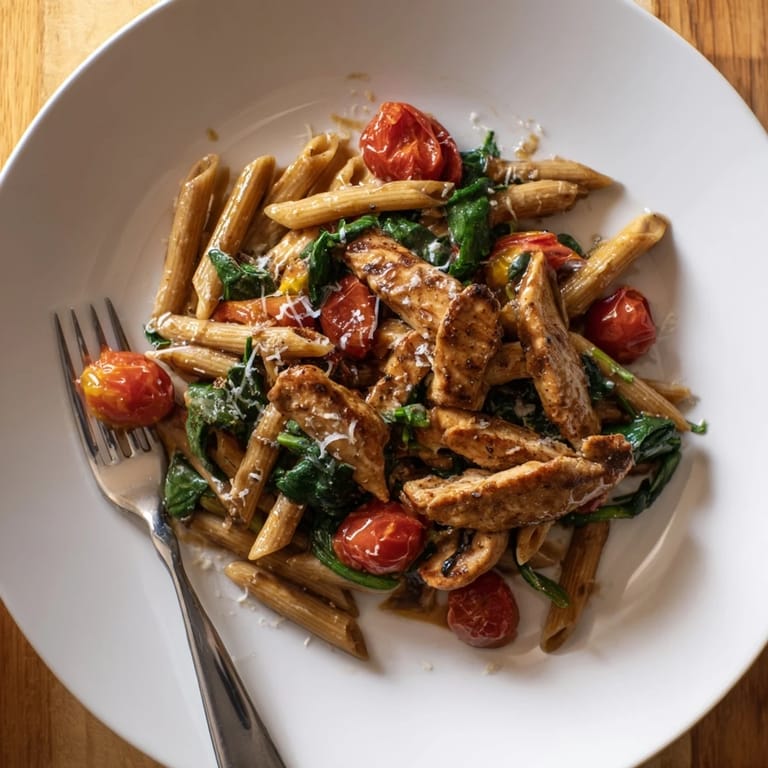 Save to Pins
 This dish has become one of those recipes I turn to when I want comfort without fuss, elegance without pressure. I hope it finds a place in your kitchen the way it has in mine.
Questions & Answers
- → Can I use chicken thighs instead of breast?
Yes, chicken thighs work wonderfully and stay particularly juicy. Increase cooking time to 8–10 minutes to ensure they're cooked through, as thighs are slightly thicker and take longer to sear.
- → How do I prevent the balsamic sauce from becoming too thick?
Use the reserved pasta water to adjust the sauce consistency. Add it gradually while tossing, as the starch in the pasta water helps create a silky coating without making the sauce heavy.
- → What's the best pasta shape for this dish?
Penne and spaghetti both work excellently. Penne's tube shape catches the glaze beautifully, while spaghetti creates elegant strands that coat easily. Choose based on your preference.
- → Can I make this ahead and reheat it?
Yes, you can prepare it up to 2 hours ahead and store it covered in the refrigerator. Reheat gently over medium heat with a splash of water or pasta water to restore the silky sauce texture.
- → What wine pairs best with this dish?
Light Pinot Noir complements the balsamic's acidity and the chicken's richness beautifully. Alternatively, crisp Sauvignon Blanc brightens the dish with citrus notes that echo the tangy glaze.
- → Is there a vegetarian alternative to chicken?
Absolutely. Sauté meaty mushrooms like portobello or cremini for 6–7 minutes until golden and tender. Firm tofu pressed and pan-fried until crispy also works wonderfully as a protein substitute.